
Beyond the Number: Why Eye Appeal is the Secret to Winning in the Comic Market

You have seen the census reports. You have tracked the auction results on Heritage and eBay. In the world of CGC grading, the numeric score is the undisputed king of value. We are conditioned to believe that a 9.4 is always better than a 9.2, and that the only reason to invest in comic book pressing is to chase that next decimal point.
But I am here to tell you a truth that most high-volume flippers won't admit: The number is a floor, not a ceiling.
When two books sit side-by-side on a dealer's table, and both have "CGC 9.2" on the label, they are not equal. One might be a "weak" 9.2: wavy, dull, and structurally tired. The other is a "strong" 9.2: crisp, flat, and vibrant. The second book has what we call eye appeal. It will sell for a premium. It will sell faster. And most importantly, it will be the one you actually want to keep in your collection.
The Reality of the "Grade Ceiling"
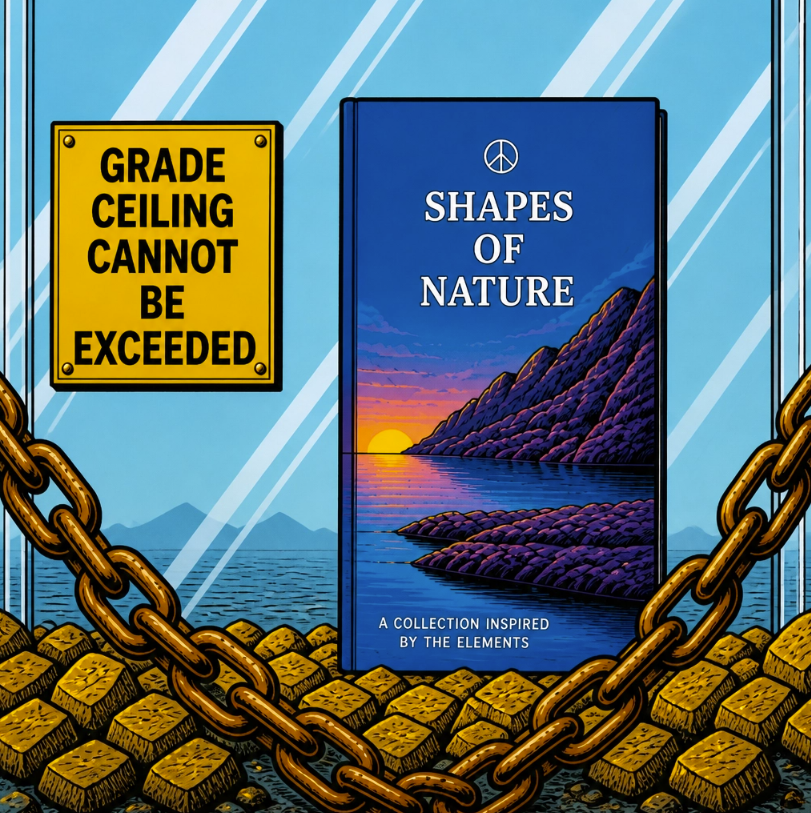
We need to talk about the physical limitations of paper. Every book has a Grade Ceiling. This is the maximum possible grade a book can achieve based on its permanent, non-fixable defects.
If your copy of The Amazing Spider-Man has a color-breaking spine tick, no amount of heat or pressure will make it vanish. That tick is a structural reality. It caps the grade. You might be holding a book that looks like a 9.8 from three feet away, but because of that single break, its ceiling is a 9.2.
Many collectors see a ceiling and give up. They think, "If it won't hit a 9.6, why bother pressing it?"
This is a mistake born of wishful thinking. You are ignoring the visual impact of the book. Even if a book is "stuck" at a certain grade, professional comic pressing and cleaning can remove the non-color-breaking ripples, light bends, and surface dirt that distract the eye. A flat, clean 9.2 is a beautiful object; a wavy, dirty 9.2 is a disappointment.
Why Flatness is King
Human beings are hardwired to respond to symmetry and smoothness. When light hits a comic book cover, it should reflect evenly. If the cover has "handling waves" or "ripples" (often caused by moisture or improper storage), the light breaks. It creates shadows. It makes the artwork look distorted.
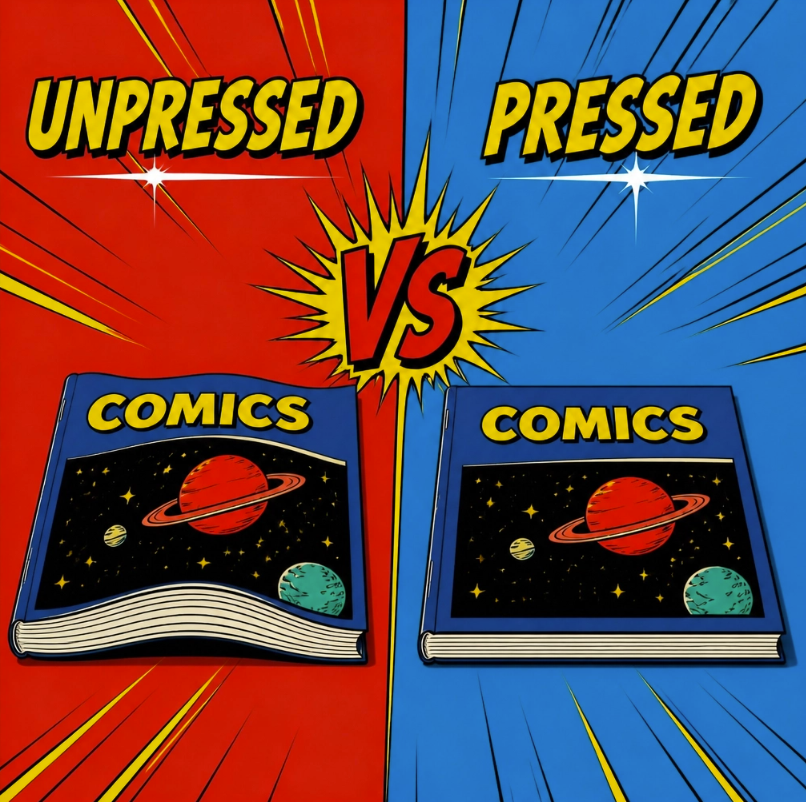
Pressing isn't just about improving a comic book grade. It is about comic book preservation and restoration of the original aesthetic intent. When we press a book, we are returning the paper fibers to their original, flat state.
The result is sensory:
The Look: Colors appear deeper because the surface is uniform.
The Feel: The book feels structurally sound, not flimsy or "mushy."
The Pride: You no longer have to make excuses for the "condition" of your key issues.
The Market Math: The Tie-Breaker Premium
Let’s look at the financial math. In a liquid market, "Eye Appeal" acts as a tie-breaker.
If there are ten copies of a book available at the same CGC grade, the one with the best eye appeal sells first. If the average price for a 9.2 is $500, a copy with "exceptional eye appeal" can often command $550 or $600. If you track platforms like GoCollect, that premium becomes easier to spot in real market behavior. Why? Because investors know that when they eventually go to sell that book, they won't have to wait for a buyer. The book sells itself.
At Pressing Issues, we handle high-value keys like the one shown above: a copy of The Amazing Spider-Man #129. For a book of this caliber, the difference between "average" and "exceptional" eye appeal can represent thousands of dollars in market liquidity.
How to Inspect for Eye Appeal
I want you to slow down. The next time you are evaluating a book for your collection or for CGC submission assistance, don't just look for the defects. Look for the potential. Tools like Key Collector Comics can help you identify which issues deserve extra attention.
Check the Light: Tilt the book under a single, strong light source. Look for "hidden" waves and ripples that don't break the color. These are your biggest opportunities for an eye appeal boost.
Inspect the Spine: Are there dents that haven't cracked the ink? Those can be smoothed out.
Evaluate the "Whites": Is there surface soot or "dirt" that makes the white areas look grey? A dry cleaning can make those whites pop again.
We use a meticulous appraisal process to identify these nuances. We aren't just looking for what's wrong; we are looking for what can be made right.
What I Have Learned
In my years of doing this, I have learned that "hope" is a dangerous investment strategy. I have seen collectors send in books hoping for a 9.8, only to get a 9.2 because they ignored a tiny color-break on the back cover.
The sting of a lower-than-expected grade is real. However, the collectors who are happiest are those who focused on the look of the book. When they get that 9.2 back, but it's the flattest, cleanest 9.2 they’ve ever seen, the disappointment vanishes. They have a "top-tier" example of that grade.
Brutal honesty time: A number on a plastic slab is just a number. But a beautiful book is a piece of history. Don't let a "grade ceiling" stop you from making your book the best version of itself.
The Pressing Issues System
If you are unsure whether your book is worth the investment, we offer a Complimentary Value Analysis. We won't just tell you the grade it might hit; we will tell you if the eye appeal boost is worth the cost.
Key Takeaways:
Numeric grades have ceilings; eye appeal does not.
Pressing fixes waves and ripples, even if it can't fix color breaks.
Better eye appeal equals faster sales and higher premiums within the same grade.
Flatness is the foundation of a high-quality collection.
Stop chasing the ghost of a higher number and start focusing on the reality of a better-looking book. If you want to stay plugged into the broader hobby conversation, ComicBook.com is one more useful source to keep on your radar. Your collection: and your wallet( will thank you.)