
What Is Comic Book Flipping? A 2026 Investor's Guide

Comic book flipping is the practice of buying comics at below-market prices and reselling them at a profit, using grading standards, market timing, and demand cycles to maximize returns. Known in the broader collectibles trade as "comic arbitrage," flipping ranges from quick raw sales on eBay to long-term graded key investments through CGC. The market rewards collectors who understand condition, scarcity, and timing. This guide breaks down every major strategy, from beginner thrift store flips to Silver Age key investments, so you can build a disciplined, data-driven approach.
What is comic book flipping and how does it work?
Comic book flipping is the process of identifying undervalued comics, acquiring them at low cost, and reselling them at a higher price through platforms like eBay, Whatnot, or local comic shows. The core mechanic is simple: buy low, sell high. The execution is where most beginners struggle.
Every successful flip depends on three variables: condition, scarcity, and timing. A first appearance issue in high grade commands a premium. The same book in poor condition, or sold at the wrong moment in the market cycle, may barely cover your costs. CGC, the Certified Guaranty Company, is the dominant grading service in the hobby. A CGC-slabbed book carries a verified grade and typically sells for more than an ungraded "raw" copy.
The comic book resale market has matured significantly since the speculative bubble of 2020 and 2021. Market data-driven flipping has replaced speculative hype as the dominant approach among serious resellers. That shift means beginners entering in 2026 face a more rational market, but also one that rewards research over luck.
How does comic flipping compare to traditional investments?
Comics are an alternative asset class, not a replacement for stocks or bonds. Top-tier key issues have delivered average annual returns of 8–15% over 20 years, which is comparable to the S&P 500 long-term average. The difference is in the costs and liquidity.
Stocks trade in seconds. Comics can sit unsold for months. Storage, insurance, grading fees, and platform commissions all eat into your margin. Comics provide portfolio diversification and inflation protection but require expert knowledge to flip effectively. Most financial advisors treat comics as a satellite holding, not a core position.
"Comics are best treated as a satellite portfolio asset, representing no more than 5–15% of a collector's total investment exposure. Illiquidity is the biggest risk; never invest funds you may need in the short term."
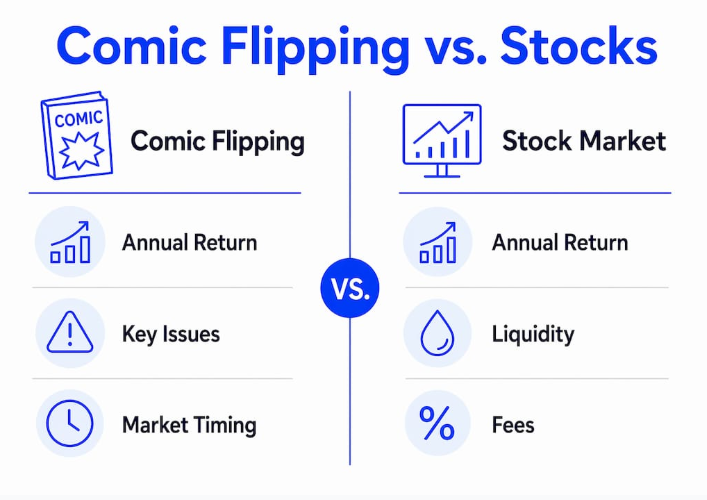
Comic Book Investment - flipping vs stocks
What are the main methods to flip comics?
Three primary methods define how flippers operate: raw flipping, grading arbitrage, and the hybrid approach.
Raw flipping
Raw flipping means buying and selling ungraded comics. The margins are lower, but the turnaround is fast. You buy a book at a thrift store or estate sale, list it on eBay, and sell within days or weeks. Practical beginners start with low-cost comics priced at $1–$5, flipping small profits of $20–$50 per book before scaling up. This method builds market knowledge quickly without tying up large capital.
Grading arbitrage
Grading arbitrage means buying a raw book, submitting it to CGC, and selling the graded copy at a premium. The risk is higher because grading takes time and money. CGC grading costs $25–$65 per book, and the strategy only works when the expected graded sale price exceeds the raw purchase price plus all fees by at least $150. Most new flippers waste grading fees on low-value comics. Grade only your strongest candidates.
The hybrid approach
Successful flippers use hybrid methods combining bulk buying, raw flipping, and grading for both cash flow and higher margins. Raw flips generate steady income. Graded keys generate larger, less frequent paydays. The hybrid model manages multiple revenue streams and reduces the risk of waiting months for a single graded sale.
Starting budgets by segment:
Modern keys (post-1980): Start with at least $500
Silver Age keys (1956–1969): Budget $2,000–$5,000 for CGC 9.8 copies
Pro Tip:Before submitting any book to CGC, calculate your total cost: purchase price plus grading fee plus shipping. If the expected CGC sale price does not beat that total by $150 or more, sell it raw instead.
How does market timing affect comic flipping profits?
Timing is the single most controllable variable in comic book flipping. The market moves on news, and the biggest news driver is the MCU and major TV announcements. Movie and TV character announcements create short-term price spikes, and experienced flippers position themselves before the news breaks.
The most disciplined flippers monitor official MCU production schedules and submit books for CGC grading before a character announcement. By the time the news breaks, their graded copies are ready to list at peak demand. That window can last days or weeks before prices normalize.
Short-term speculation carries real risk. Flipping quickly under 12 months often results in net losses after fees. The best gains come from holding 5–10 years, particularly for Blue Chip keys from the 1940–1970 era. The market correction since 2021 shifted serious buyers toward these proven keys and away from speculative modern variants.
Four timing tactics that work in 2026:
Filter eBay sold listings by the last 30 days to see what the market actually paid, not what sellers are asking.
Track GoCollect or similar price databases for trend lines on specific issues before buying.
Submit grading candidates early in a media cycle, not after the announcement when everyone else is doing the same.
Hold key issues through at least one full MCU phase before evaluating a sale.
Pro Tip:Speculative spikes are real but brief. If you buy after the announcement, you are buying at the top. The money is made in the research phase, not the reaction phase.
Practical steps to start flipping comics in 2026
Starting small is the correct move. The goal in your first six months is to learn the market, not to maximize profit.
Your starting checklist:
Search eBay sold listings (not active listings) to find real transaction prices for any book you consider buying.
Visit local thrift stores, estate sales, and comic shows weekly. Underpriced books appear in physical locations more often than online.
Use Whatnot for live selling if you have a collection of mid-grade raw books. The platform's auction format often beats fixed-price eBay listings for popular titles.
Calculate your margin before every purchase. eBay charges approximately 13% in fees, and shipping typically adds $5–$10 per book. Factor both into your break-even price before you buy.
Store all inventory in Mylar bags with acid-free boards. Condition loss between purchase and sale destroys margin.
Professional flippers prioritize key issues with first appearances and hold their best books for 3–10 years. That discipline separates consistent earners from collectors who break even at best.
Pro Tip:Use the comic appraisal and value analysis service at Pressing-issues before submitting high-value books to CGC. Knowing a book's realistic grade before you pay grading fees saves money and prevents disappointment.
For condition improvement before grading, professional comic pressing services can remove spine ticks, reduce stress marks, and restore flatness to books that would otherwise grade lower than their true collectible quality warrants.
Key Takeaways
Comic book flipping is most profitable when you combine disciplined condition assessment, honest fee math, and patient holding periods rather than chasing short-term speculation.
What I have learned after years in the comic flipping market
The biggest mistake I see new flippers make is treating every comic like a potential CGC submission. Grading is a tool, not a default. Most books do not justify the cost, the wait, or the risk of a lower-than-expected grade. The $150 premium rule exists for a reason, and ignoring it is the fastest way to turn a profitable hobby into an expensive one.
What actually works is patience combined with honest research. I have watched collectors buy Silver Age keys at what felt like high prices, hold them through a full MCU cycle, and sell for multiples of their purchase price. I have also watched flippers buy speculative modern variants at peak hype and sell at a loss six months later when the buzz faded. The difference between those two outcomes is almost never luck. It is discipline and timing.
The hybrid model is where I think most serious flippers should land. Raw flips keep cash moving. Graded keys build long-term value. Using both means you are never entirely dependent on one slow-moving asset to generate income. The illiquidity risk in this market is real, and the hybrid approach is the most practical way to manage it.
My outlook for 2026 is cautiously positive. The post-2021 correction cleared out a lot of speculative noise. The collectors who remained are more knowledgeable, more data-driven, and more focused on genuine keys. That is a healthier market for serious flippers, and it rewards the kind of research-first approach that should define your strategy from day one.
— Charles
How Pressing-issues helps flippers get better grades and higher returns
A comic's condition is its most important price driver. Pressing-issues, based in Seattle, Washington and Portland, Oregon, specializes in professional comic cleaning and comic pressing that can meaningfully improve a book's grade before CGC submission. Spine ticks, stress marks, and surface dirt all suppress grades and reduce resale value. Professional pressing and cleaning address those issues before they cost you money at grading. Pressing-issues also handles CGC submission processing end to end, removing one of the most time-consuming steps in the grading arbitrage process. If you are preparing a high-value key for submission, contact Pressing-issues before you ship anything to CGC.
FAQ
What is the difference between raw and graded comic flipping?
Raw flipping means selling ungraded comics directly. Graded flipping means submitting books to CGC first and selling the certified copy at a higher price. Graded books typically sell for more but require additional time and fees.
Is comic book flipping profitable for beginners?
Yes, but only with disciplined fee math and realistic expectations. Beginners who start with $1–$5 books and focus on learning sold listing data can generate $20–$50 profit per flip before scaling to higher-value keys.
How long should you hold a comic before selling?
The best returns come from holding key issues 5–10 years. Selling within 12 months often results in net losses after eBay fees, shipping, and grading costs are deducted.
Which comics are best to flip for profit?
First appearance issues and key story milestone books from the Silver Age (1956–1969) and Bronze Age (1970–1984) consistently outperform modern variants. Blue Chip keys from the 1940–1970 era have shown the strongest long-term price stability.
Does pressing a comic before grading actually help?
Professional pressing removes spine ticks, stress marks, and surface defects that lower CGC grades. A higher grade directly increases resale value, often by more than the cost of the pressing service itself.
Recommended
Comic Book Cleaning | Comic Services | Pressing Issues — Pressing Issues
Comic Book Cleaning | Comic Services | Pressing Issues — Pressing Issues
Comic Book Cleaning | Comic Services | Pressing Issues — Pressing Issues
Are you happy with the article?
You'll earn a backlink credit for your feedback!