
Comic Book Consignment Best Practices for Collectors
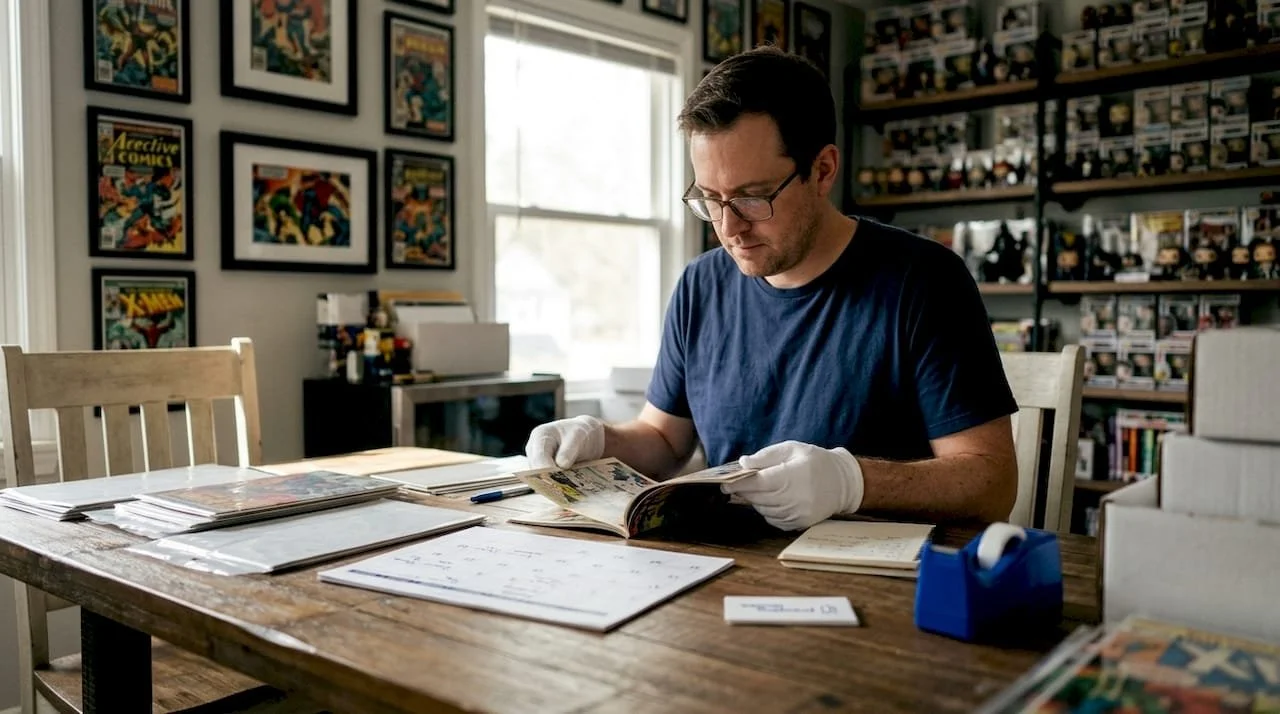
Comic book consignment best practices are the strategies collectors and dealers use to select the right books, prepare them properly, understand fee structures, and choose partners who maximize sale prices while protecting each comic's condition and value. The consignment model gives you access to a larger buyer pool than a local sale, but it rewards preparation and realistic expectations far more than luck. Get the process wrong and you face months of waiting, unexpected fees, and returns that leave you worse off than a quick dealer offer. Get it right and your key issues and graded slabs can achieve prices that justify every step.
1. Comic book consignment best practices start with choosing the right books
Not every comic belongs in a consignment pipeline. The strongest candidates are key issues, first appearances, vintage books from the Golden and Silver Ages, and graded slabs with recognized CGC or CBCS labels. These categories attract competitive bidding and justify the time and commission costs that consignment requires.
Sort your collection into three tiers before you submit anything:
Bulk: Common runs, reading copies, and low-demand titles. Sell these locally or through direct dealer offers.
Mid-tier: Clean, ungraded copies of popular runs with moderate demand. Evaluate on a case-by-case basis.
Key issues and graded slabs: First appearances, origin issues, and high-grade certified copies. These are your prime consignment candidates.
This multi-channel sales approach reduces the risk of unsold inventory and maximizes net proceeds across your whole collection. Sending bulk books to auction wastes consignment slots and dilutes your submission's perceived quality.
Pro Tip: Research completed sales on eBay and major auction platforms, not active listings. Asking prices reflect hope; sold prices reflect reality.
2. How to prepare your comics for submission

Condition determines price. Every handling decision you make before submission either protects or reduces your comic's grade, and by extension, its sale value.
Follow these packaging standards without exception:
Place each comic in a properly sized polypropylene bag with an acid-free backing board.
Store comics upright, never stacked flat, to prevent spine stress and page warping.
Keep them in a cool, dry location away from direct light before shipping.
Ship in a rigid box with adequate padding to prevent corner and spine damage in transit.
Proper packaging using bags, boards, and upright storage preserves condition during transport and storage. A book that arrives in worse shape than it left your hands is a book that sells for less than you planned.
Never attempt to clean, press, or repair a comic yourself before consigning it. Amateur interventions can damage value irreversibly. Leave restoration decisions to certified professionals.
Pro Tip:Create a spreadsheet inventory listing every title, issue number, condition notes, and any grading certification number before you submit. A detailed inventory reduces undervaluation risk and gives your consignment partner the information they need to price accurately.
3. Understanding consignment fee structures and timelines
Fees and timelines are where many collectors get surprised. Understanding the full cost structure before you sign anything is non-negotiable.
Fee or Timeline ItemTypical RangeSeller consignment fee10–15% of hammer priceBuyer premium~20% of hammer priceEvaluation period1–2 weeksAuction placement window1–6 weeksSale duration1–2 weeksPost-sale processing and payout30–45 days
Seller fees range from 10–15% for smaller consignors, with buyer premiums adding roughly 20% on top. That means the price a buyer pays is significantly higher than what you receive. A book that hammers at $1,000 may net you $850 after seller fees, while the buyer paid $1,200.
The full consignment timeline runs 2–4 months from submission to payout. That is a meaningful cash flow consideration if you need liquidity quickly.
Dealer cash offers pay less, typically 40–60% of retail for bulk and 70–80% for key issues, but the money arrives in days, not months. Weigh speed against maximum return when deciding which route fits your situation.
Watch for hidden costs in your consignment contract:
Photography and cataloging fees for premium listings
Return shipping costs for unsold items
Reserve price risks if your book does not meet the minimum bid
4. How to choose and communicate with consignment partners
The right consignment partner shares your goal of achieving the highest possible sale price. That alignment matters because partners earn commissions, so their financial incentive runs parallel to yours. A partner who undersells your books hurts themselves too.
Evaluate any consignment service on these criteria before committing:
Transparent fee disclosure: Every fee, including photography, cataloging, and return shipping, should appear in writing before you sign.
Network reach: A larger, more active buyer base produces more competitive bids on key issues.
Marketing capabilities: Does the partner promote individual lots through email, social media, and catalog placement?
Real-time tracking: You should be able to monitor your submission status without chasing updates.
Clear return policy: Understand exactly what happens to unsold books and who pays for their return.
Pro Tip:For large consignments, negotiate your seller fee before submitting. Partners often reduce fees for high-value or high-volume submissions. Get every agreed term in writing.
Consignment partnerships work best when both parties communicate openly about sales progress. If a partner resists giving you updates or avoids answering direct questions about your submission, treat that as a warning sign.
5. Comic book pricing strategies that actually work
Unrealistic pricing is the single most common reason consignments fail. Dealers consistently warn that consignors rely on asking prices rather than completed sales data, which sets expectations far above what the market will pay.
"The market does not care what you paid for a comic or what another seller is asking. It cares only about what a buyer will pay today. Sold comps are the only honest baseline."
Use these pricing principles to protect your returns:
Pull sold data from eBay, auction archives, and grading company population reports before setting any reserve price.
Factor in the grade. A CGC 9.8 copy of a key issue sells for multiples of a raw 9.0, not just a modest premium.
Set reserve prices conservatively. An aggressive reserve risks the book going unsold, costing you return shipping and another round of waiting.
Grade comics only when the value uplift justifies the cost. CGC grading fees run $22–$120 per book, so grading makes financial sense only when the certified value exceeds the raw value plus all costs by at least 50%.
Sophisticated sellers reserve consignment for their highest-value and graded comics while moving lower-tier books through faster, lower-cost channels. That split approach protects cash flow and keeps consignment slots focused on books with the best return potential. Understanding comic grade impact on value is the foundation of every sound pricing decision you will make.
6. Avoiding the most common consignment mistakes
Most consignment losses are preventable. The mistakes that hurt collectors most are not market-driven. They are process failures that happen before a book ever reaches a buyer.
Avoid these errors:
Skipping the contract review: Read every line, including clauses about photography fees, cataloging charges, and what triggers a return.
Consigning the wrong books: Bulk and low-demand titles waste time and money in a consignment pipeline. Sell them through faster channels.
Emotional pricing: Attachment to what you paid or what a book means to you does not translate to market value. Price from data, not sentiment.
Ignoring condition before submission: A book with a spine tick or a small crease that a professional could address before grading may grade two points higher with proper treatment.
Over-concentrating on one channel: Putting your entire collection into a single consignment submission creates unnecessary risk. Spread across channels based on book tier.
For collectors preparing key issues for grading, understanding which comics to send for pressing before submission can meaningfully improve the final grade. A higher grade on a key issue often translates directly to a higher hammer price at auction. For auction-specific preparation, the Heritage Auction preparation guide from Pressing Issues walks through the full process in detail.
Key Takeaways
Successful comic book consignment requires preparation, realistic pricing, and the right partner working with the right books.
PointDetailsSort before you submitSplit your collection into bulk, mid-tier, and key issues before choosing a sales channel.Protect condition at every stepUse bags, boards, and upright storage; never attempt amateur cleaning or repairs.Know the full fee pictureSeller fees of 10–15% plus a 20% buyer premium reduce net proceeds significantly from hammer price.Price from sold dataUse completed sale comps, not asking prices, to set realistic reserve prices and expectations.Grade strategicallySubmit for CGC grading only when the certified value will exceed raw value plus all costs by at least 50%.
My honest read on the consignment process
Charles here. After years of working with collectors and dealers at Pressing Issues, the pattern I see most often is this: collectors rush the consignment decision and then wait out the consequences for months.
The collectors who do best treat consignment as a business transaction, not an emotional one. They sort their collections coldly, research sold comps without attachment, and submit only the books that genuinely belong in an auction pipeline. They also prepare those books properly before submission, which means addressing condition issues through professional pressing and cleaning before grading, not after.
The hardest lesson I have watched collectors learn is that patience at the front end saves frustration at the back end. A book submitted without research, without proper packaging, and without a realistic reserve price is a book that either sells for less than it should or comes back to you at your expense. Slow down, do the work, and the consignment process rewards you. Rush it, and the fees and timelines punish you.
— Charles
Pressing Issues can help you get your comics ready
Before you submit your key issues to any consignment partner, their condition is the one variable you can still control. A book with a spine tick, a small bend, or surface debris may grade lower than its true potential, and a lower grade means a lower hammer price.
At Pressing Issues, we specialize in professional comic pressing and cleaning for collectors and dealers in Seattle and Portland. Our services are designed to bring your comics to their best possible condition before grading submissions or consignment. We also offer comic cleaning services for books that need surface treatment before they go under a grader's eye. Reach out to us before your next submission and give your key issues the best shot at the grade they deserve.
FAQ
What is comic book consignment?
Comic book consignment is an arrangement where a collector or dealer places comics with a third party, such as an auction house or dealer, who sells them on their behalf and takes a commission from the proceeds.
How long does the consignment process take?
The full process from submission to payout typically takes 2–4 months, covering evaluation, auction placement, sale duration, and post-sale payment processing.
What fees should I expect when consigning comics?
Sellers typically pay a consignment fee of 10–15%, and buyers pay a premium of around 20% on top of the hammer price. Additional costs may include photography, cataloging, and return shipping for unsold books.
Should I get my comics graded before consigning them?
Grade your comics before consigning only when the certified value will exceed the raw value plus all grading and shipping costs by at least 50%. For most common books, grading costs outweigh the benefit.
What comics are best suited for consignment?
Key issues, first appearances, high-grade vintage books, and already-graded slabs are the strongest consignment candidates. Bulk and low-demand titles sell faster and more cost-effectively through direct dealer offers or local sales.