
Types of Comic Book Damage: A Collector's Guide

Comic book damage refers to any defect that degrades a comic's physical condition and reduces its market value, from spine ticks and color-breaking creases to staple rust and moisture staining. Collectors who understand the types of comic book damage can make smarter buying decisions, protect their collections, and submit books for grading with confidence. Modern comics can lose 20–60% of value within five years if improperly stored. That number shows how quickly neglect turns a valuable book into a disappointment. Whether you collect Golden Age keys or modern variants, knowing your defects is the foundation of smart preservation.
1. What are the most common types of comic book damage?
The most impactful defects include spine stress, color-breaking creases, edge chipping, foxing, and detached centerfolds. Each one affects grade and value differently, and recognizing them early is the first step toward protecting what you own.
Spine ticks and spine stress. These are small white marks or breaks along the spine caused by repeated opening or bending. They are among the most common defects graders note on mid-grade books.
Spine roll. A spine roll occurs when a comic has been stored flat under weight or read repeatedly in one direction, causing the spine to curve. It is pressable in many cases, but a severe roll with color breaks is not.
Staple stress and staple rust. Staple stress appears as small tears or pulls around the staple holes. Staple rust causes brown halo stains that migrate into the surrounding paper and degrade it permanently. Rust can develop within 6–12 months in high-humidity storage.
Color-breaking creases. A crease that fractures the ink layer leaves a white or light-colored line visible on the cover. This is a permanent defect that pressing cannot fix.
Non-color-breaking bends. A bend that does not break the ink is pressable. The paper deforms but the color layer stays intact, making this one of the few defects a professional press can correct.
Edge chipping and corner blunting. Physical paper loss at the edges or corners is irreversible. Even small chips reduce a book's grade by a full tier or more.
Tears and tape pulls. Tears represent actual paper loss or separation. Tape pulls are especially damaging because old tape adhesive bonds to the paper and tears the surface when removed, leaving a raw, discolored patch.
Foxing and moisture staining. Foxing appears as small reddish-brown spots caused by mold or oxidation. Moisture staining creates tide lines or rippling across pages. Both are signs of poor storage conditions.
Pro Tip: Run your finger lightly along the spine before buying a raw book. Spine ticks you can feel but not immediately see are common on books that look clean at first glance.
2. How do color-breaking defects differ from pressable defects?

The single most important distinction in comic grading is whether a defect breaks the color layer. Color-breaking creases irreparably fracture the ink layer, making them permanent regardless of how skilled the pressing technician is. Non-color-breaking defects deform the paper but leave the ink intact, which means heat and pressure can often restore the original shape.
Here is how to tell them apart and what to do about each:
Look for white lines on the cover. A white or silver line running across a colored area is a color break. The ink has cracked and separated. No amount of pressing will close that gap.
Check the interior pages. Color breaks on interior pages reduce grade less than cover breaks, but they still count as permanent defects during grading.
Assess the bend angle. A gentle curve with no visible line is likely non-color-breaking. A sharp fold with a visible crease line almost always breaks color.
Test under direct light. Hold the book at an angle under a bright light. Color breaks catch the light differently than the surrounding ink and become easier to spot.
Decide whether pressing makes sense. Pressing can fix minor non-color-breaking bends but cannot repair tears, chips, or color-breaking creases. Pressing an unpressable defect risks further damage without any grade benefit.
Seek professional pressing for borderline cases. If you are unsure whether a defect is pressable, a professional assessment protects the book from additional harm.
Pro Tip:Never press a book yourself if you see any white lines on the cover. The heat can set the crease permanently and make the color break more visible, not less.
3. What environmental factors cause comic book degradation?
Most comic damage emerges gradually through improper storage and handling, not sudden trauma. Temperature swings, humidity, and UV exposure are the three biggest environmental threats to any collection.
Humidity above recommended levels triggers mold growth and accelerates staple rust. The recommended range is 50–55% relative humidity. Anything above that puts your books at risk within months.
Humidity below recommended levels causes paper to become brittle. Vintage comics with acidic paper are especially vulnerable because their composition already makes them prone to yellowing and brittleness without added stress.
Temperature fluctuations cause paper to expand and contract repeatedly, weakening the fibers over time. The recommended storage temperature is 64–68°F. Garages, attics, and basements rarely stay within that range year-round.
UV exposure fades cover colors and accelerates paper yellowing. Even indirect sunlight through a window causes measurable fading over months.
Poor storage materials compound every other factor. Not all acid-free products offer equal protection. Collectors must use both acid-free and lignin-free bags and boards, and replace them on schedule. Polyethylene bags need replacement every 5–10 years; polypropylene bags every 2–3 years.
For high-value books, professional encapsulation creates a sealed micro-environment that removes most of these variables entirely. Mylar D bags at 2 mil minimum thickness provide archival-grade protection rated for 50 or more years of stability.
4. How does comic book wear affect grading and market value?
Key condition drivers include creases that break color, spine ticks, tears, chips, trimmed edges, restoration signs, brittle pages, and writing or stamps. Each defect type carries a different weight in the grading scale, and location on the book matters as much as severity.
Spine stress and staple rust are among the most grade-damaging defects on Golden Age and Silver Age books. A single staple rust stain that has migrated into the cover can drop a book from a mid-grade to a low-grade in one grading session. Color-breaking creases on the front cover cause the steepest value drops because they are the first thing a buyer sees.
Tears and chips represent physical material loss, which graders treat as among the most serious defects. A small chip at the corner of a key issue can mean the difference between a 6.0 and a 4.5 grade. That gap can represent hundreds or thousands of dollars on a high-demand book.
Detached centerfolds and brittle pages signal structural failure. A detached centerfold means the staples have failed or the paper has separated from the binding. Brittle pages that crack when turned indicate severe paper degradation. Both conditions drastically reduce value because they suggest the book is actively deteriorating.
Subtle defects often overlooked reduce value significantly. Writing, stamps, and price stickers on covers are permanent defects that many collectors underestimate. Even a small pencil mark in the corner of a key book can cost a full grade point.
Pro Tip:When evaluating a raw book for purchase, check the inside front cover and first page under bright light. These areas reveal handling wear, moisture damage, and restoration attempts that the cover hides.
5. How to identify restoration and manufacturing defects
Collectors often confuse manufacturing quirks with post-production damage. Mistaking a printing defect for a crease can cause you to undervalue a book. Missing signs of restoration, such as color touch or trimmed edges, is a far more costly error.
Restoration refers to any attempt to improve a comic's appearance through non-original means. Color touch uses paint or ink to fill in color breaks. Trimming removes chipped edges to make a book appear cleaner. Both are detected by professional graders and result in a "Restored" label that significantly reduces market value compared to an unrestored copy in the same apparent condition.
Manufacturing defects include miscut covers, off-center staples, and printing errors. These are not damage in the traditional sense. Grading distinguishes manufacturing defects from true damage to avoid incorrect devaluation. A miscut cover is a factory condition, not collector neglect, and graders account for that distinction.
The best way to spot color touch is to hold the book at an angle under a UV light. Touched areas often fluoresce differently than the original ink. Trimmed edges appear perfectly straight and uniform in a way that aged paper rarely does naturally. If the edges look too clean on a 1960s book, measure the dimensions against a known copy.
Key takeaways
The most damaging comic book defects are those that break the ink layer or cause physical material loss, because these are permanent and cannot be corrected through pressing or cleaning.
What I've learned from years of looking at damaged comics
The defect that surprises collectors most is not the dramatic tear or the obvious crease. It is the staple rust they stored right past for years. I have seen books that looked clean in their bags but had rust halos spreading across the inside front cover, quietly eating into the paper. By the time the collector noticed, the staining had migrated an inch in every direction. That kind of damage is entirely preventable with the right storage conditions, and it is heartbreaking to see on a key book.
The other mistake I see constantly is collectors pressing books that have color breaks. They assume pressing will help, or at least not hurt. It can make things worse. Heat sets the crease differently and can make a white line more pronounced. If you see any white lines on a cover, do not press it yourself. Get a professional opinion first.
My honest advice: prioritize your most valuable and most fragile books first. A reading copy of a common issue does not need Mylar D storage. A first appearance key in a polypropylene bag from ten years ago absolutely does. Triage your collection by value and age, replace your storage materials on schedule, and learn which defects respond to pressing before you spend money on a service that cannot help a particular book.
The collectors who protect value best are not the ones with the most expensive storage setups. They are the ones who know exactly what they are looking at when they pick up a book.
— Charles
Professional pressing and cleaning from Pressing Issues
Understanding your comic's defects is only half the work. Acting on that knowledge is what protects value long term.
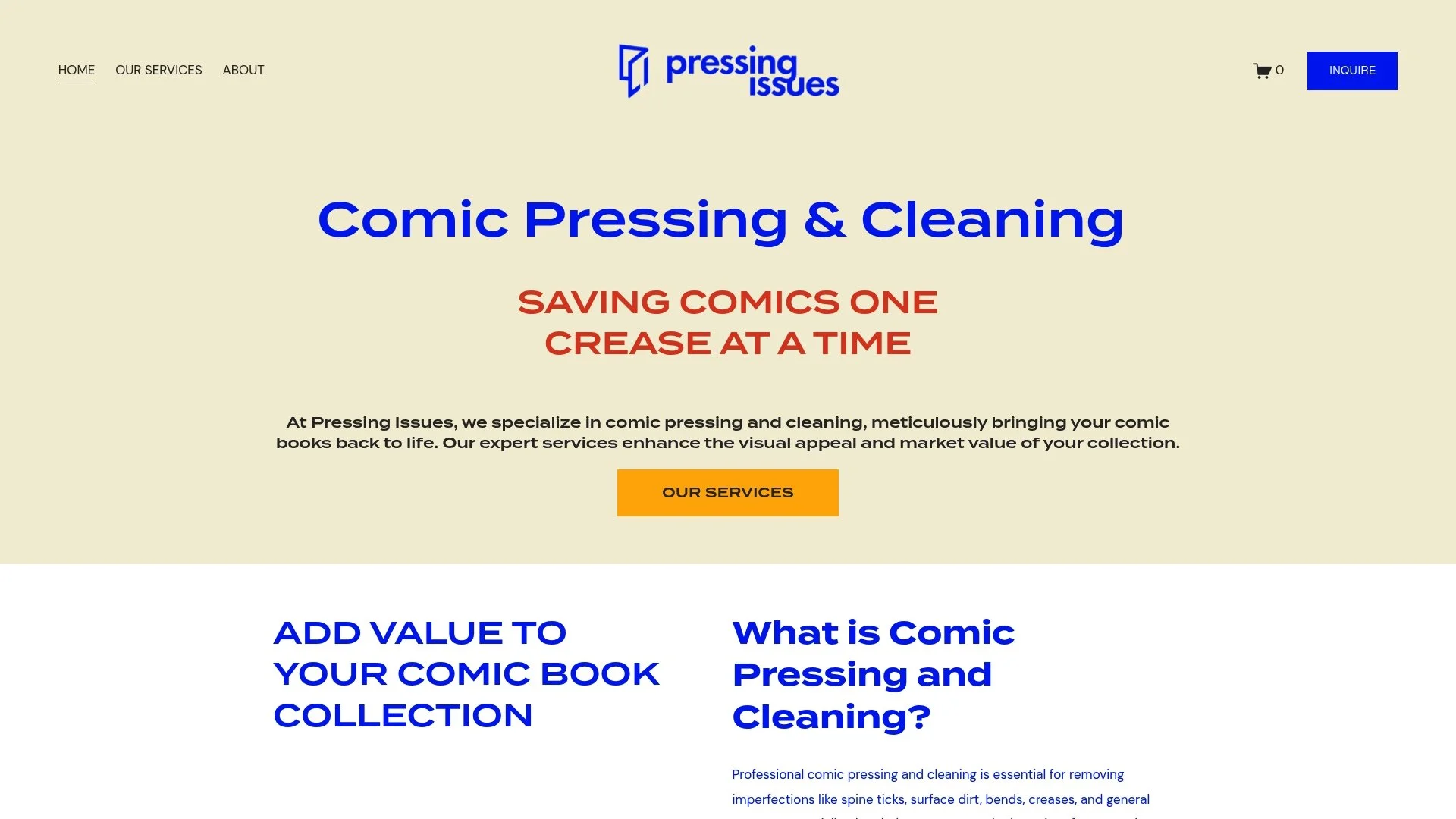
Pressing Issues serves collectors in Seattle, Washington and Portland, Oregon with professional comic book pressing and comic cleaning services designed to address pressable defects before grading submissions. Non-color-breaking bends, spine rolls, and surface grime all respond well to professional treatment. For books that need more than pressing, proper comic book storage practices and encapsulation options round out a complete preservation plan. If you have a book worth protecting, we want to help you protect it right.
FAQ
What is the difference between a pressable and unpressable defect?
A pressable defect is a non-color-breaking bend or spine roll where the ink layer remains intact. An unpressable defect, such as a color-breaking crease or tear, has fractured the ink and cannot be corrected by heat and pressure.
How does staple rust affect a comic's grade?
Staple rust produces brown halo stains that migrate into surrounding paper and cause permanent discoloration. It is treated as a significant defect by graders and can drop a book by one or more full grade points.
What storage conditions best prevent comic book damage?
The recommended conditions are 50–55% relative humidity and 64–68°F temperature, combined with acid-free, lignin-free bags and boards. These conditions slow yellowing, prevent mold, and stop staple rust from forming.
Can restoration improve a comic's grade?
Restoration does not improve grade in standard grading. Grading services label restored books separately, and restored copies typically sell for less than unrestored copies in equivalent apparent condition.
How often should I replace comic storage bags and boards?
Polyethylene bags should be replaced every 5–10 years. Polypropylene bags degrade faster and need replacement every 2–3 years to maintain effective protection against acid transfer and moisture.