
Comic Book Pedigree Explained: What Collectors Need to Know

What is a comic book pedigree and why it matters
A comic book pedigree is a historically identified private collection of vintage comics, purchased by a single original owner directly from newsstands, preserved in exceptional condition, and formally recognized by CGC with a dedicated pedigree label on the slab. This is not a grade. It is a certified provenance designation that tells you exactly where a book has been since the day it was printed.
Pedigree status carries real weight in the hobby. CGC currently recognizes 61 pedigree collections, each representing a finite, closed group of comics with a documented chain of ownership. Once a collection earns that recognition, every book from it carries the pedigree name on its CGC label permanently, regardless of who owns it today.
Here is what separates a pedigree comic from a standard high-grade copy:
Verified provenance: A traceable, documented ownership history from original purchase to present
Superior preservation: White or off-white pages from careful, long-term storage under controlled conditions
CGC pedigree label: The slab reads "CGC Universal Pedigree" instead of the standard grade designation
Permanent status: Pedigree designation stays with the book through every ownership change
Famous pedigree collections and what makes them legendary
The most celebrated pedigrees in the hobby share one thing: they surfaced as intact, time-capsule collections that left collectors speechless. Understanding them gives you a feel for what pedigree really means in practice.
Mile High (Edgar Church): The first collection ever called a pedigree, and still the most famous. Church, a Denver commercial artist, stored his comics flat in boxes away from light and humidity. Many copies carry a small pencil mark in the upper-right corner of the cover, written by Church himself. A Captain America Comics #1 Mile High in CGC 9.4 sold for $915,000 in March 2022.
Pacific Coast: Consistently produces some of the highest-graded Golden Age books ever certified, with brilliant inks and supple pages that make other high-grades look tired by comparison.
San Francisco (Reilly): Alongside Mile High and the Gaines File Copies, Heritage Auctions and dealers widely regard this as one of the three most sought-after pedigrees in the market.
Gaines File Copies: Bill Gaines kept personal file copies of EC Comics titles. The provenance alone, straight from the publisher's estate, makes these among the most desirable books a collector can own.
Bethlehem and Allentown: Smaller collections, but packed with rare Golden Age keys in grades that simply do not exist elsewhere.
New Hampshire: Approximately 1,400 books focused on western genre comics from the late 1940s and 1950s, each identified by a distinct penciled date on the cover.
Cookeville: Nearly 5,000 superhero comics assembled by Leroy Mackie, recognized by CGC in 2019 and identified by an "SN" mark written by Mackie's sisters.
Pro Tip: When you see a pedigree name on a CGC label at auction, look up that collection's known physical identifiers before bidding. Confirmed marks like pencil dates or owner initials are your best authentication checkpoint.
Criteria that define a pedigree collection

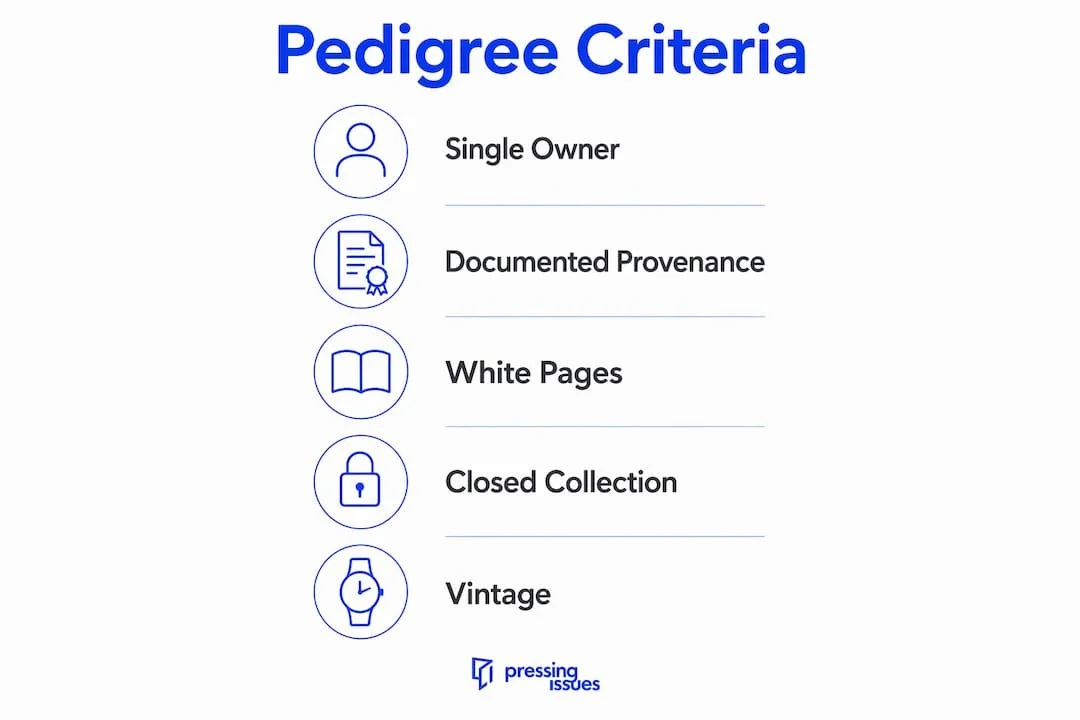
CGC applies four strict criteria before recognizing any collection as a pedigree. Meeting three out of four is not enough.
Single original owner: Every book must have been bought off the newsstand as it was published. A collector cannot assemble high-grade vintage books from multiple sources and claim pedigree status later.
Vintage material: Comics from 1966 and after are relatively common in high grade, so collections consisting primarily of post-1966 books must average at least a 9.4 CGC grade to qualify.
Considerable size: Most pedigrees contain a large number of books. Smaller collections qualify only because they contain extremely rare or key material.
High-grade condition: Silver Age books generally need to grade 9.2 or higher. Golden Age books must be high-grade for their era, or represent the highest-known surviving copies of a given issue.
Page quality is equally critical. White pages from careful storage, including controlled temperature, low light, and stable humidity, are a defining characteristic of pedigree collections. Newsprint naturally yellows over decades, so white pages on a 1940s comic are a powerful signal of exceptional care.
Pedigree status is also historical and closed. No modern collection can qualify because the window for buying comics off the newsstand as a single original owner during the Golden and Silver Age has passed.
How pedigree status affects comic book value in the U.S. market
Pedigree comics typically command a
above standard guide values for identical-grade non-pedigree copies. That gap is not arbitrary.
Verified provenance reduces risk: A pedigree label tells buyers the book has not been misrepresented, restored without disclosure, or passed through unknown hands. That certainty has real dollar value.
Superior physical quality: Two comics at CGC 9.2 are not equal if one has white pages and brilliant inks and the other has off-white pages and faded colors. Pedigree copies often look dramatically better than their grade suggests.
Rarity in high grade: A 9.2 Mile High will frequently outsell a non-pedigree 9.4 because experienced collectors understand the physical difference. The eye appeal gap between pedigree and generic copies is often striking.
Auction confidence: Pedigree books sell with documented histories, which matters enormously at Heritage Auctions and similar venues where auction preparation and provenance drive final prices.
Understanding comic book grading is the foundation for appreciating why pedigree premiums exist. A grade tells you condition. A pedigree tells you history. Together, they tell you everything.
Where the term "pedigree" comes from in comic collecting
The word pedigree was borrowed directly from dog breeding and equestrian fields, where it means a verified, documented lineage. In comics, the parallel is exact: a pedigree book belongs to a named, historically identified collection whose membership CGC has formally certified.
Objective, not marketing: The designation is expert-certified, not self-declared. A collector cannot call their own books a pedigree.
Provenance over grade: Physical markers like penciled dates and distributor stamps link individual books to their collection, giving CGC the documentary evidence needed to award the label.
Permanent recognition: Once CGC certifies a collection, pedigree status travels with each book forever, independent of who currently holds it.
The Edgar Church find was the moment collectors first used the word pedigree for a comic collection, and the standard it set has defined the term ever since.
Key Takeaways
A comic book pedigree is a CGC-recognized, single-owner vintage collection with documented provenance, white pages, and high grades that together command a 20%–50% market premium over standard copies.

If you own vintage comics you believe could reach pedigree-level grades, condition is everything. At Pressing Issues, we specialize in comic pressing and cleaning that helps collectors in Seattle and Portland get the most from their books before CGC submission. Every crease we remove and every page we stabilize is one step closer to the grade your comic deserves.