
Comic Book Pressing Secrets Revealed: What Experts Don't Want You to Know
. Hero image (technician inspecting comic)
You are standing in front of your collection, holding a book you’ve owned for a decade. To your eyes, it looks perfect. But when you send it to a grading service, it comes back as an 8.5. You feel a pang of frustration. You look at the grader’s notes: "light finger bends," "minor spine ripples," "surface indentations."
These are the "invisible" flaws. They don't break the color, they don't tear the paper, but they are the silent killers of market value.
There is a secret to moving that 8.5 to a 9.4 or higher. It isn't magic, and it isn't "restoration" in the way most collectors fear. It is the disciplined application of professional comic book pressing.
In this guide, I’m going to pull back the curtain on how the experts actually look at your books. We are going to move from "hope" to "math."
The Anatomy of a Pressable Defect
The first thing you must learn is how to see. Most collectors look at a comic; experts look across it.
To truly evaluate a book, you need a single, strong light source, a "raking light." Tilt the book until the light skims the surface. Suddenly, the "flat" cover reveals its true topography. You’ll see waves (cockling), shallow dents (indentations), and those dreaded finger bends from decades of reading.
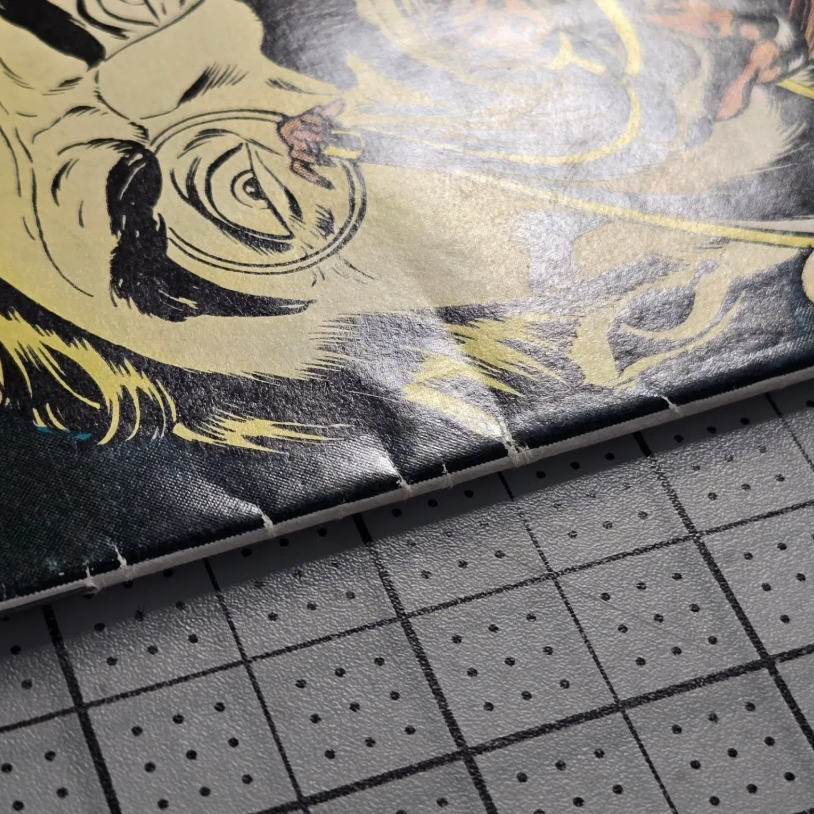
Spine under raking light
What can be fixed (The "Good" Pile):
Non-color-breaking defects: If you see a bend, look closely at the ink. Is the paper white inside the crease? If not, that is a non-color-breaking bend. These are prime candidates for pressing.
Spine Rolls: When the cover has shifted over time, creating a curve at the staples.
Surface Ripples: Often caused by humidity or improper storage.
What cannot be fixed (The "Reality" Pile):
Color Breaks: If the ink is physically cracked and the white paper underneath is showing, no amount of pressure will put that ink back.
Stains and Tears: Pressing is mechanical; it does not remove chemical stains or mend fibers.
Brittleness: If the paper is "toasted" (dark brown and fragile), a press will likely shatter it.
Key Takeaway: The back cover matters as much as the front. Graders spend a significant amount of time on the back because that’s where collectors get lazy.
The "Unrestored" Standard: Why This Matters
A common anxiety among hobbyists is that pressing counts as "restoration." Let’s be clear: professional comic book pressing is considered a non-restorative process by major grading companies like CGC.
Restoration involves adding something (glue, ink, paper) or removing something (trimming). Pressing is simply "resetting" the paper fibers to their original flat state using controlled heat and pressure. When done correctly, it leaves no trace except for a flatter, more vibrant-looking book. This is how you improve a comic book grade without earning the dreaded "purple label."
The DIY Trap: Why Your Home Setup Is a Risk
I see it every week: a collector buys a $100 T-shirt press or tries to use a household iron on a Silver Age key. They think, "How hard can it be?"
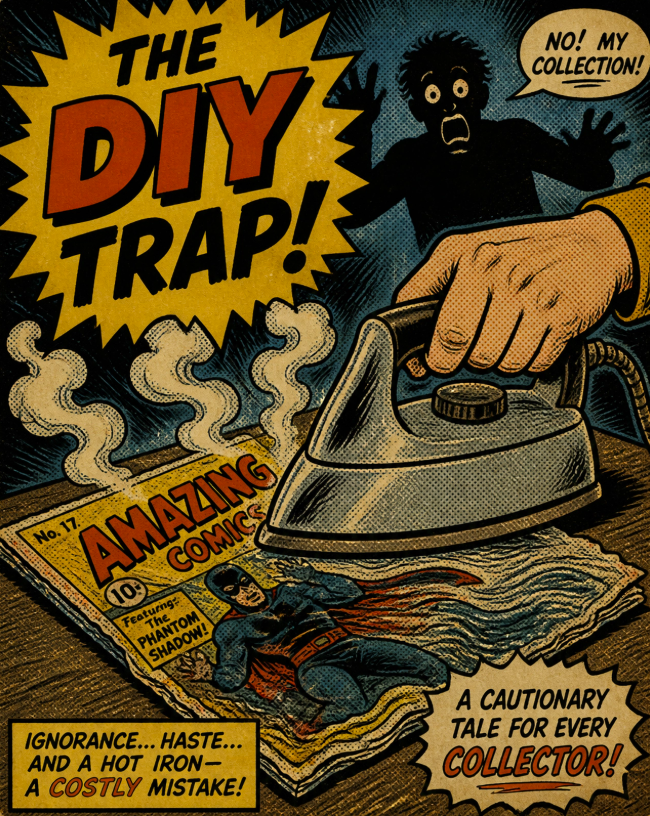
DIY pressing trap
The DIY trap is built on "wishful thinking." Professional pressing requires an exact balance of temperature, humidity, and duration. If you are off by 5 degrees or 10 minutes, you risk:
Shrinkage: Modern books with high-gloss covers can actually shrink or warp under improper heat.
Staining: If you haven't properly cleaned the surface first, heat can "bake" dirt and oils permanently into the paper fibers.
Spine Splits: Brittle paper expands and contracts. Without a controlled humidity chamber, the spine can pop under pressure.
Possibility can make us see what we want to see. You see a potential 9.8; the iron sees a piece of wood pulp ready to scorched. Don't gamble with your "grails."
The Pressing Issues System: Our Professional Process
At Pressing Issues, we don't just "squish" books. We follow a repeatable framework designed to protect your investment and maximize comic book preservation.
1. Complimentary Value Analysis
Before we touch your book, we run the numbers. Is the potential grade jump worth the cost? If you have an 8.0 that might become an 8.5, but the market value remains the same, we’ll tell you. We focus on the financial math, not just the aesthetics. You can start this process with our Complimentary Value Analysis.
2. Meticulous Dry Cleaning
Before the press, we perform a deep surface clean. We use specialized archival tools to lift surface dirt, soot, and light pencil marks. If you press a dirty book, you are permanently sealing that dirt into the fibers.
3. Precision Pressing
Every era of paper, from the pulpy Golden Age to the slick Moderns, requires a different "recipe." We use industrial-grade equipment and precision timing to ensure a perfectly flat result without compromising the integrity of the staples or the gloss.
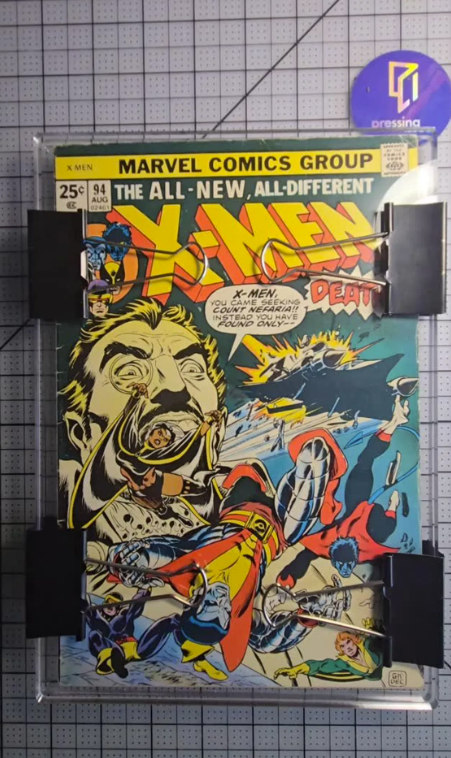
X-Men #94 pressing
4. High-Touch Communication
We know the anxiety of sending your "kids" away in the mail. That’s why we provide photo updates and maintain a fast turnaround time. You aren't just a number in a queue; you are a partner in the preservation of your collection.
What I Have Learned: A Note from the Workbench
Early in my career, I handled a copy of Amazing Spider-Man #129. The owner was convinced it was a 9.6. He wanted a "quick press" to get it to a 9.8.
When I put it under the raking light, I saw it: a tiny, almost microscopic color-breaking tick on the spine. A press would have flattened the book, but it would have never reached a 9.8. I told him the truth. I told him to save his money on the pressing and the grading fees.
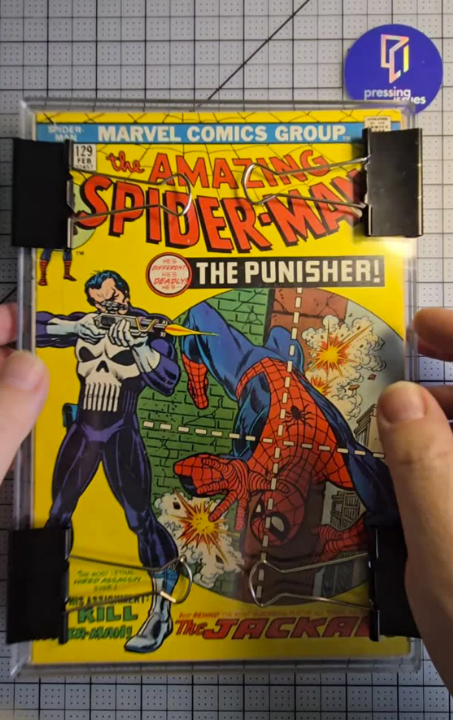
Amazing Spider-Man #129
That is the "secret" most experts won't tell you: The best press is the one you decide not to do.
My job is to protect you from wasted money. Sometimes that means telling you a book has reached its ceiling. Sometimes it means finding the one hidden ripple that, once removed, adds $1,000 to the book's value.
Key Takeaways for the Disciplined Collector
Slow Down: Never submit a book for grading without a professional evaluation.
Inspect Closely: Use a raking light to find indentations and finger bends.
Math Over Emotion: Only press if the estimated grade bump results in a tangible increase in market value.
Professionalism Wins: For high-value keys, the risk of DIY damage far outweighs the cost of professional cgc pressing assistance.
Are you ready to see what your collection is actually worth? Let us take a look. We offer a transparent, value-focused appraisal process that ensures you know exactly what results to expect.
Contact Pressing Issues Today for your Complimentary Value Analysis.
FAQ: Comic Book Pressing Secrets
Does pressing always increase the grade?
No. Pressing removes specific mechanical defects. If your book is held back by "bad" defects like stains, color-breaks, or tanning, the grade may remain the same even after it is flattened.
How long does professional pressing take?
At Pressing Issues, we pride ourselves on fast turnaround times, typically much faster than the months-long waits at massive grading conglomerates. Contact us for current lead times.
Is cleaning included in the pressing service?
Yes, we provide meticulous dry cleaning as part of our Comic Pressing and Cleaning service to ensure the best possible results.