
Comic Book Double Cover: What Collectors Need to Know
A comic book double cover is defined as a single issue containing two complete, manufacturer-bound covers produced during the original print run as an unintentional manufacturing error. This is not a variant cover or a reprint. It is a genuine factory mistake, and it carries real weight in the world of comic book grading and collecting. Understanding what a double cover is, how to spot one, and what it means for your collection is knowledge every serious collector needs.
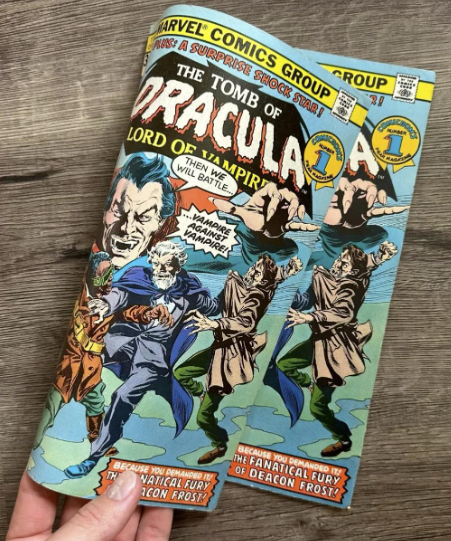
Comics books with a double cover are rare and valuable.
What is a comic book double cover?
A double cover is an authentic manufacturing error in which two complete covers are stapled together as part of the original binding process. The key word is "unintentional." Nobody at the printer planned this. It happened because of a mechanical failure during production, and the result slipped through quality control. That rarity is exactly what makes these books interesting to collectors.
Variant covers are intentional marketing efforts created by publishers to drive sales. Double covers are the opposite. Confusing the two leads to costly collecting mistakes, so the distinction matters from the moment you pick up a book. A variant cover is planned and printed in volume. A double cover exists because something went wrong on the factory floor.
Double covers also differ from reprints, which are entirely separate print runs. A double cover comes from the same print window as the original issue. Both covers share the same paper stock, the same ink chemistry, and the same staples. That shared origin is what graders look for when authenticating these books.
How do double covers happen during production?
The binding stage of comic production is where double covers are born. Comics are assembled using a saddle stitching process, where folded pages are fed through a machine that drives staples through the spine. When the saddle stitcher jams during binding, two covers can feed through simultaneously and get stapled together as one unit. The result is a book with two complete front covers bound as one.
Two types of double covers exist in the market:
Identical double covers: Both covers are from the same issue. The book looks normal from the outside but has a second, complete cover beneath the first.
Different title double covers: The secondary cover belongs to a completely different comic printed during the same production run. Collectors value the connection between two different titles linked by the same manufacturing error, making these especially desirable.
Thicker staples: The staples on a double cover are often more strained or visibly thicker than standard because they are binding extra paper stock.
Paper alignment irregularities: The interior pages may sit slightly off-center relative to the outer cover, a telltale sign of a binding anomaly.
No visible trimming or glue: Authentic double covers show no signs of aftermarket alteration at the spine.
These errors escape initial quality control because high-volume print runs move fast. Inspectors checking thousands of books per shift miss the occasional anomaly. The defect is subtle enough that it often goes undetected until a collector or grader examines the book closely.
Pro Tip:Gently flex the spine of any suspected double cover. An authentic error will feel noticeably stiffer than a standard copy of the same issue because of the extra cover stock bound inside.
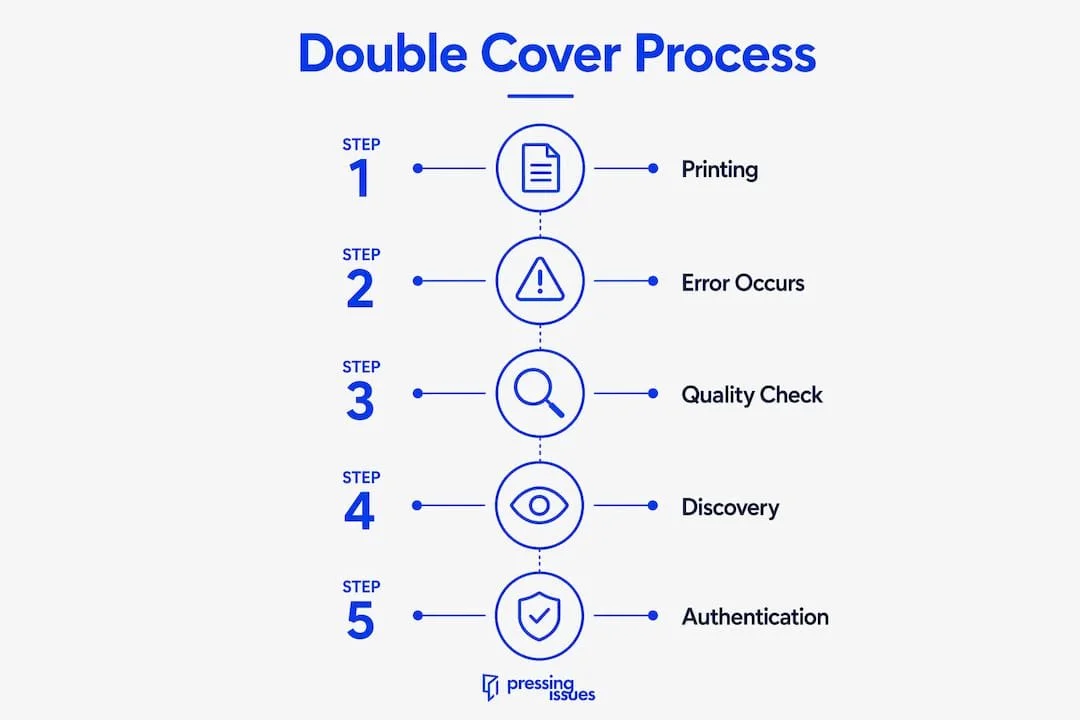
How the comic book printing process results in a double cover
How do you identify and authenticate a double cover?
Authentication is the single most important step for any collector who believes they have a double cover. Third-party authentication is mandatory to confirm the error originated from the same print window and was not created after the fact. The three major grading services that handle this are CGC (Certified Guaranty Company), CBCS (Comic Book Certification Service), and PGX (Professional Grading Experts). Each service has its own process, and you can review a detailed comparison of grading services before deciding which to use.
Here is what graders examine during authentication:
Staple integrity: Authentic double covers show both covers stapled through the same staples, often resulting in a thicker or more strained staple. Any sign of a second staple hole or re-stapling is a red flag.
Paper stock match: Both covers must share the same paper weight and texture. A mismatch suggests an aftermarket addition.
Ink and printing consistency: The ink on both covers must match in color profile and printing style, consistent with the same press run.
Absence of adhesive: Fraudulent "marriages" occur when an aftermarket cover is glued or stapled onto a comic. Graders check for glue residue, scoring marks, or any manipulation at the spine.
Interior page alignment: The pages inside must align naturally with both covers, as they would if the book came off the press that way.
Aftermarket "marriages" are the biggest fraud risk in this niche. A dishonest seller can take a spare cover from a high-value issue and staple or glue it onto a lower-value copy. To an untrained eye, it looks like a double cover. To a trained grader, the evidence of manipulation is clear. Experienced graders look beyond just the presence of a second cover, checking materials and binding to detect these alterations.
Pro Tip:Never pay a premium for an uncertified double cover. Without a graded slab from CGC, CBCS, or PGX confirming the error, you have no protection against fraud and no market-accepted proof of authenticity.
How does a double cover affect comic book value?
The value impact of a double cover depends on three factors: the base value of the issue, the rarity of the error, and whether the book is certified. Defects documented in only a few dozen copies can increase value up to 10 times the standard issue price. That is a significant premium for what is, at its core, a printing mistake.
A well-documented example illustrates the point clearly. A CGC 9.4 copy of Amazing Spider-Man #252 with a double cover sold for $425, while a standard copy of the same issue in the same grade typically sells for $75–$90. That price difference reflects the rarity of the error and the collector demand it generates.
"Certified double covers command much higher premiums than uncertified ones. The label is not just a grade. It is proof the error is real." — Industry consensus among professional graders
Certification significantly impacts market premiums because buyers in the secondary market need assurance. Without a certified slab, most serious collectors will not pay a double cover premium. The certification is the product as much as the book itself.
Where do double covers fit in comic book grading and collecting?
Double covers belong to a broader category of printing errors that collectors track and prize. Other error types include reverse covers (the cover is printed upside down or backward), missing color errors (a printing plate fails and one ink color is absent from the entire run), and typo errors (text mistakes that were corrected in later printings). Each error type has its own collector community and price behavior.
Among these, double covers are considered one of the more visually dramatic and physically verifiable errors. The book is literally thicker than it should be. You can feel the difference before you even open it.
Best practices for collectors interested in double covers:
Buy certified first. A graded slab from a recognized service is the only safe entry point into this niche.
Research the print run. Some issues have documented double cover populations. Knowing how many certified copies exist helps you evaluate rarity.
Understand the base issue. A double cover of a key issue (first appearance, first print) carries far more value than the same error on a filler issue.
Preserve condition. Even a certified double cover loses value if the book is damaged after grading. Store it properly and handle it minimally.
The grading upgrade game is relevant here too. If you find an uncertified double cover in good condition, professional pressing and cleaning before submission can improve the grade and the final sale price.
My honest take on collecting double cover comics
I have seen collectors get burned on double covers more than almost any other error type. The fraud risk is real, and the excitement of finding what looks like a double cover can cloud judgment fast. My advice is simple: slow down.
The market for certified double covers is genuine and growing. A well-documented error on a key issue, graded at 9.0 or above, is a legitimate asset. But the uncertified market is a minefield. I have personally seen "double covers" that were obvious aftermarket marriages, sold to collectors who paid three to four times what the book was worth.
The other misconception I see constantly is treating all double covers as equally valuable. A double cover of a low-print filler issue from the 1990s is interesting but not necessarily worth much. A double cover of a first appearance from the Bronze Age is a different story entirely. Rarity of the error combined with the significance of the base issue is what drives real value.
If you find a suspected double cover, get it authenticated before you tell anyone what you paid for it. Document everything: the seller, the purchase price, the condition when you received it. Then submit it to a grading service. That paper trail protects you and adds credibility to the book's history.
— Charles
Protect and authenticate your double cover comics with Pressing Issues
Finding a potential double cover is exciting. What you do next determines whether it becomes a valuable certified asset or a costly mistake.
At Pressing Issues, we work with collectors in Seattle and Portland who take their books seriously. Before you submit a suspected double cover for grading, professional comic book pressing and cleaning can remove surface defects and improve the book's presentation, giving it the best chance at the highest possible grade. We also offer CGC submission handling so you do not have to navigate the grading process alone. If you are unsure what your book is worth before you invest in pressing or grading, our comic book appraisal service gives you a clear picture of market value first.
Key takeaways
A certified double cover comic is a documented manufacturing error that can command prices up to 10 times the standard issue value, but only when authenticated by a recognized grading service.
FAQ
What is a double cover in comic book collecting?
A double cover is an unintentional manufacturing error where two complete covers are stapled together during the original print run. It is distinct from a variant cover, which is an intentional publisher decision.
How do I know if my double cover is authentic?
Authentic double covers show both covers bound through the same original staples, with matching paper stock and ink from the same print window. Submission to CGC, CBCS, or PGX is the only reliable way to confirm authenticity.
Are double cover comics worth more money?
Certified double covers can sell for significantly more than standard copies, with documented examples reaching up to 10 times the normal price. Uncertified copies carry fraud risk and rarely command the same premium.
What is the difference between a double cover and a variant cover?
Variant covers are planned by publishers and printed intentionally in multiple versions. Double covers are factory errors that occur without intent during the binding process.
Can pressing improve a double cover comic before grading?
Professional pressing can remove surface defects and improve a book's grade, which directly affects its final certified value. Pressing Issues offers comic book pressing services specifically for collectors preparing books for grading submission.