
What Is Comic Book Slabbing? A Collector's Guide
Comic book slabbing is defined as the professional process of submitting a comic to a third-party grading company, which authenticates it, assigns a numerical grade from 0.5 to 10.0, and seals it inside a tamper-evident plastic slab. The industry term for this process is "comic book grading and encapsulation," though collectors universally call it slabbing. Leading grading companies include CGC (Certified Guaranty Company), and PSA (Professional Sports Authenticator). The slab itself protects the comic from physical handling while creating a standardized, trusted condition report that buyers and sellers can rely on. Whether you collect for passion, investment, or both, understanding slabbing is the first step toward making smart decisions about your collection.
What is comic book slabbing and how does it work?
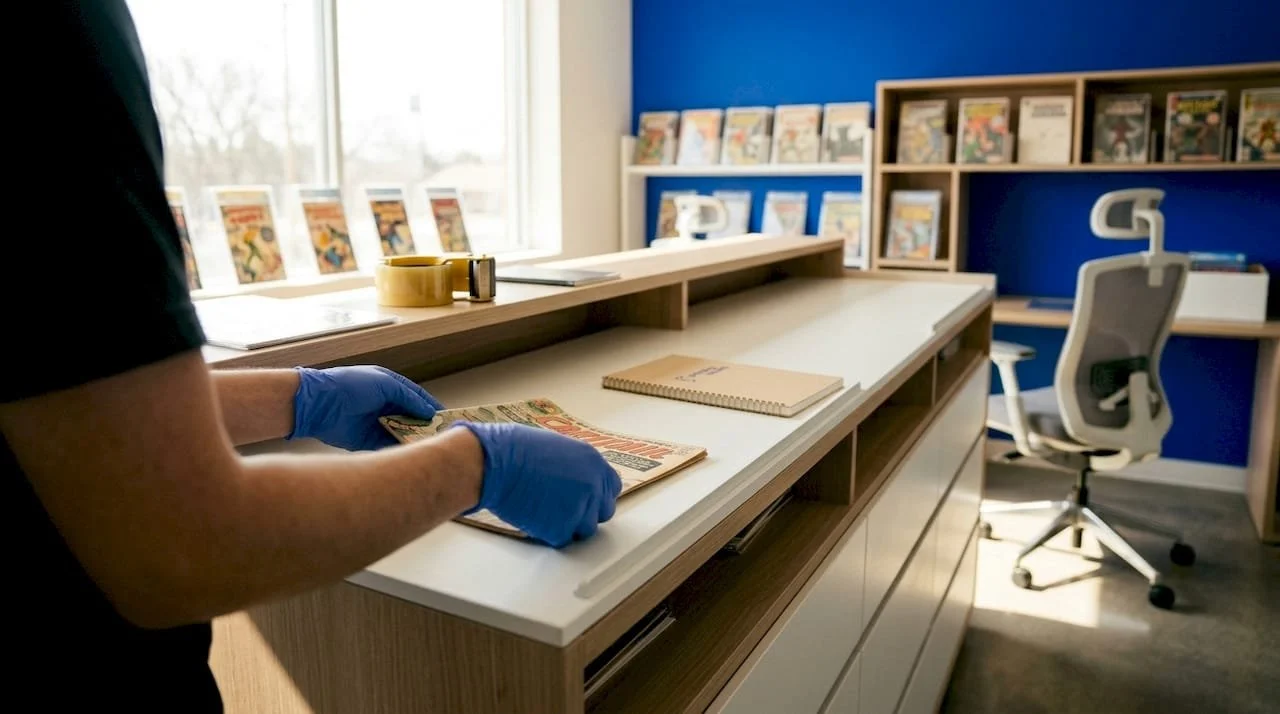
Prepping comic books for CGC is an Art and a Science! A clean workspace is a must,
Comic book slabbing is a multi-step process that begins long before a comic ever reaches a grader's hands. The journey from raw book to sealed slab typically involves preparation, submission, professional evaluation, and return shipping. Each step carries its own cost and timeline, so knowing the full picture helps you plan.
Here is how the process works from start to finish:
Prepare your comic. Before submission, many collectors send their books to a professional pressing and cleaning service. Pressing removes non-color-breaking defects like spine ticks, creases, and bends. Cleaning removes surface dirt and residue. Both steps can meaningfully improve the final grade.
Create an account and choose a service tier. Grading companies like CGC require membership before you can submit. Service tiers vary by declared comic value and desired turnaround speed. Faster turnaround costs more.
Package and ship your comic. Comics must be packaged securely to survive transit. Collectors typically use rigid mailers, backing boards, and bubble wrap. Insuring the shipment for its full value is standard practice.
Grading and authentication. Once received, graders examine the comic under controlled conditions. They assess cover gloss, spine stress, staple condition, page quality, and any restoration. The comic receives a grade on the 0.5 to 10.0 scale, where 10.0 is Gem Mint.
Encapsulation and return. The graded comic is sealed inside a hard plastic case with a label displaying the grade, title, issue number, and any notes. The slab is then shipped back to you.
Turnaround times range from weeks to months depending on the service tier you select. That delay is a real cost for collectors who planned to sell quickly.
Pro Tip:Submit your comic to a professional pressing service before grading. A single grade bump on a key issue can add far more value than the pressing fee costs.
What are the benefits and trade-offs of slabbed versus raw comics?
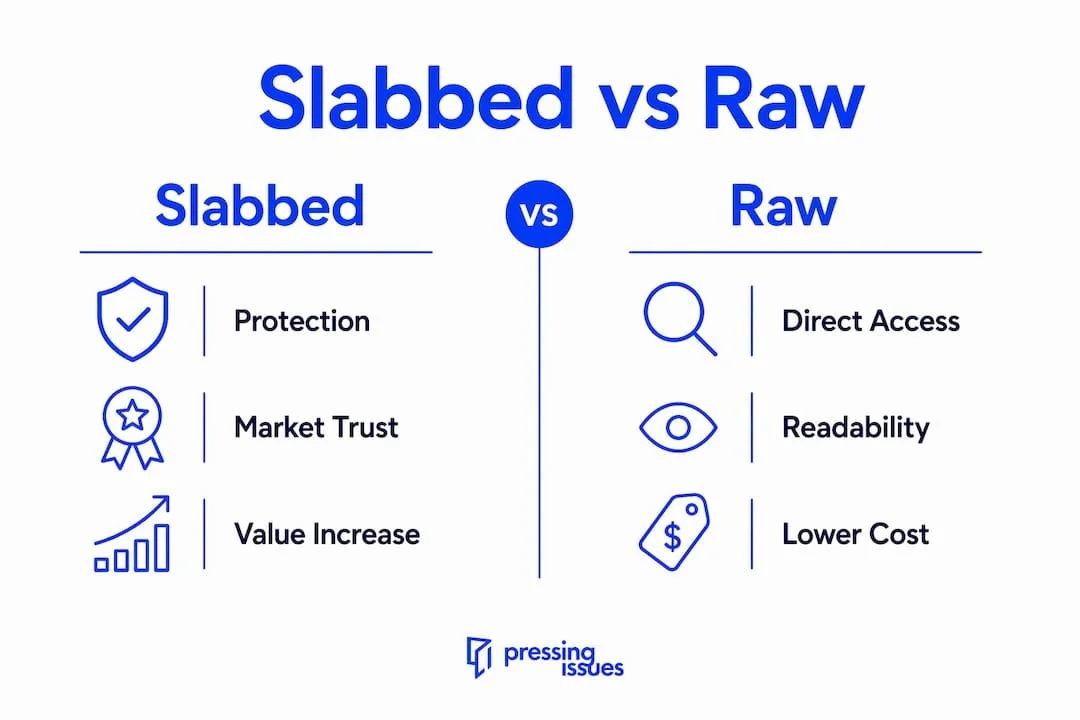
Diagram showing advantages of keeping books raw vs having them encapsulated.
The choice between keeping a comic raw or having it slabbed comes down to what you value most as a collector. Both formats have genuine strengths, and neither is universally better.
Why slabbed comics win on protection and market trust
Slabs protect comics from physical handling and environmental damage, making them the clear choice for long-term preservation of high-value books. The hard plastic shell prevents bending, fingerprints, and accidental tears. Slabbed comics also standardize condition reporting, which reduces disputes and increases buyer confidence on resale platforms like eBay and Heritage Auctions. When a buyer sees a CGC 9.8 label, they know exactly what they are getting. That clarity commands higher prices and faster sales.
Where raw comics still make sense
Raw comics offer something slabs cannot: direct access. You can read them, handle them, and enjoy them as physical objects. For collectors who buy affordable reading copies or who frequently trade books within a local community, keeping comics raw provides flexibility that a sealed slab eliminates. The decision between raw and slabbed ultimately depends on your collecting goals, whether you prioritize security and investment or flexibility and personal enjoyment.
One important caveat: slabs are tamper-evident but not completely hermetic. They do not fully block humidity or UV exposure. Proper storage in a climate-controlled environment remains necessary even after slabbing.
When is comic book slabbing financially worthwhile?
Slabbing makes financial sense only when the expected increase in value clearly outweighs every dollar you spend to get there. Many collectors focus only on the grading fee and miss the full picture.
The real cost of slabbing a comic
The total cost of slabbing includes grading fees, pressing and cleaning fees, inbound and return shipping, insurance for a high-value book, and the opportunity cost of waiting months for your book to return. Most collectors underestimate these total costs, and that underestimation turns what looked like a profitable submission into a break-even or losing proposition.
Pro Tip:Add up every cost before you submit: grading tier fee, pressing service, two-way shipping, and insurance. Then check what a slabbed copy in your expected grade actually sells for. If the math does not work on paper, it will not work in practice.
The 3x rule for grading submissions
Professionals recommend submitting only when the expected slabbed value is at least three times the total cost of grading, pressing, shipping, and insurance. That buffer exists for good reason. Grading outcomes are never guaranteed, and marketplace fees on platforms like eBay typically run 12–15%. The 3x rule absorbs both of those risks.
Grade risk is real
An optimistic grading expectation leads to overpayment. Experienced collectors always run a downside scenario: what happens if the book comes back one full grade lower than expected? If that lower grade still produces a profitable outcome, the submission is sound. If it does not, the risk is too high.
Comics that typically justify slabbing
Not every comic belongs in a slab. The books that most consistently justify the cost share a few traits:
Key issues: First appearances, origin stories, and landmark story arcs hold strong collector demand.
High-grade copies: A book grading 9.6 or above in a key issue can be worth multiples of a 9.0 copy.
Low print-run variants: Newsstand editions, regional variants, and error copies often carry premiums in slabbed form.
Golden Age and Silver Age books: Older comics in any decent condition are rare enough that grading adds meaningful credibility.
Common reader copies of modern comics rarely justify slabbing costs. Pressing costs alone can exceed the value gain on low-value books, making the math impossible to justify.
How does professional pressing and cleaning affect grading outcomes?
Professional pressing and cleaning are the most direct ways to improve a comic's grade before submission. Understanding what these services do, and what they cannot do, helps you use them wisely.
Pressing applies controlled heat and pressure to a comic to remove physical defects that do not break the color of the paper. Spine ticks, corner bends, and reading creases are common targets. Cleaning removes surface grime, finger oils, and light foxing that graders note as condition flaws. Together, these services can lift a comic by one or even two full grade points on the right book.
Here is what pressing and cleaning can and cannot address:
Can fix: Spine stress lines, corner creases, bends, light soiling, and surface dirt
Cannot fix: Color-breaking creases, tears, missing pieces, water stains, and restoration marks
Will not help: Books already in Gem Mint or Near Mint condition with no visible flaws
The grading upgrade sweet spots for pressing and cleaning tend to fall in the 6.0 to 8.5 grade range, where cosmetic defects are present but the book's structure is still sound. Books in that range often have the most to gain from professional preparation. Pressing is valuable primarily as a tool to lift grade by improving cosmetic flaws, but it is not a fix-all. Use it selectively on books where the math supports the added cost.
For collectors in Seattle and Portland, Pressing Issues offers professional comic pressing and cleaning designed specifically to prepare books for grading submissions. Every book gets careful, hands-on attention before it ever reaches a grader.
Key takeaways
Comic book slabbing delivers the most value when collectors choose the right books, account for every cost, and prepare comics professionally before submission.
My honest take on slabbing as a collector
Slabbing changed how I think about comic collecting, and not entirely in the way I expected. The financial logic is real. A CGC 9.8 copy of a key issue can sell for multiples of what the same book fetches raw. That math is hard to argue with.
But here is what nobody tells new collectors: slabbing a book you love is a one-way door. Once it is sealed, you are no longer a reader. You are a custodian. I have watched collectors slab books they genuinely cherished, then feel a quiet loss every time they looked at the case. The book is preserved perfectly. The experience of owning it is gone.
My practical advice is this: be honest about why you are collecting. If a book is a financial asset, slab it and treat it like one. If it is a book you love and want to revisit, keep it raw and store it well. The mistake most new collectors make is slabbing everything out of excitement, then realizing they spent hundreds of dollars grading books that did not justify the cost and cannot be enjoyed anymore.
The collectors I respect most keep two categories: a curated group of key issues they slab with intention, and a working collection of raw books they actually read and trade. That balance keeps the hobby alive without turning it into a spreadsheet exercise.
— Charles
Pressing Issues can prepare your comics for grading
Getting a comic graded is only half the equation. The condition it arrives in determines the grade it earns.
At Pressing Issues, we specialize in comic pressing and cleaning that prepares your books for the best possible grading outcome. We work with collectors in Seattle and Portland who want their key issues to arrive at CGC, CBCS, or PSA in the strongest condition possible. Every book we handle gets careful, experienced attention. We also offer full CGC submission handling for collectors who want a single point of contact from preparation through grading return. Check our services and rates to see what we offer and how we can help your collection reach its potential.
FAQ
What does a comic book slab actually look like?
A comic book slab is a rigid, clear plastic case that holds the comic flat and displays both covers through the case. A printed label inside shows the grade, title, issue number, and grading company name.
How long does the slabbing process take?
Turnaround times vary by service tier and grading company, ranging from a few weeks for premium tiers to several months for economy submissions. Shipping time adds to the total wait on both ends.
Does slabbing a comic always increase its value?
Slabbing does not automatically increase value. The grade must be high enough, and the book must have enough collector demand, to justify the total cost of grading, pressing, and shipping.
Can I get a comic out of its slab?
Yes, slabs can be cracked open, but doing so voids the grade and the authentication. Once cracked, the book returns to raw status and loses the credibility the slab provided, but it can now be pressed, cleaned and reslabbed at a higher grade.
Is professional pressing worth it before grading?
Professional pressing is worth it for books where a grade improvement would meaningfully increase value. For low-value reader copies, pressing costs typically exceed the value gained, so it is best reserved for key issues and high-grade candidates.