
Comic Dealer Population Report Strategy: 2026 Guide

A comic dealer population report strategy is the practice of using census data on graded comics, combined with demographic sales metrics, to guide inventory decisions, pricing, and customer engagement for maximum profitability. The U.S. and Canada comics market reached $2.2 billion in 2025, with direct market comic store sales growing nearly 30% year over year. That growth means more competition, more data, and more opportunity for dealers who know how to read the signals. This guide gives you a practical framework for turning population reports and demographic data into decisions that actually move inventory and protect your margins.
What is a comic dealer population report strategy?
A population report, most commonly associated with CGC (Certified Guaranty Company), is a public census of every graded copy of a given comic at every grade level. Dealers use this data to assess scarcity, predict price premiums, and evaluate whether a raw book is worth submitting for grading. The strategy part comes from combining that census data with real market sales to make decisions that go beyond gut instinct.
The grade distribution within a population report tells you more than the top number. A book with 50 copies at 9.8 and 400 copies at 9.6 signals a meaningful scarcity premium at the top grade. Comics with low population counts at high grades like 9.8 command price premiums of 300–800% over lower grades, making census data central to any ROI calculation. That spread is not just a collector curiosity. It is the difference between a $40 book and a $400 book.

How submission waves distort the census
Population reports are not static documents. Submission waves cause sudden spikes in certified copies, which can temporarily distort supply and market pricing for certain grades. A book that looked scarce in january may show triple the 9.8 population by march if a major collection hits the grading queue. Dealers who treat a snapshot as a permanent truth get burned.
The fix is straightforward. Track sales frequency alongside population counts. If 9.8 copies are selling every week despite a rising population, demand is absorbing supply. If sales slow while population climbs, the premium is likely to compress.
Pro Tip:Always check the 90-day sold comps on eBay or Heritage Auctions alongside the CGC census before pricing a graded book. The census tells you supply. Sold comps tell you what buyers actually paid.
Dealers also analyze the population at the grade immediately below a target grade. Assessing the grade below helps you judge how difficult a grading jump actually is, rather than viewing the target grade census in isolation. A book with 800 copies at 9.6 and only 12 at 9.8 tells you the jump is structurally hard. That matters when you are deciding whether pressing and cleaning a raw copy is worth the submission cost.
How to analyze comic dealer demographics and sales trends
Demographic data is the second pillar of any market analysis worth acting on. Knowing who buys comics, at what income level, and through which channels shapes every inventory and pricing decision you make.
Female comic readership now makes up 52% of digital comic readers, with 32% of all readers aged 18–24. Median reader income sits around $65,000. That profile matters because it tells you which genres, formats, and price points resonate with the fastest-growing buyer segments. A dealer stocking only back-issue superhero keys is ignoring more than half the market.
The sales data reinforces this shift. Direct market sales grew 30% for comics and 28% for graphic novels in 2025, with Q1 2026 continuing at 23% growth. That momentum is not uniform across genres. Manga and female-skewed titles are driving a disproportionate share of new reader acquisition.
Key market segments worth prioritizing in your inventory and outreach:
Younger female readers (18–34): Manga, slice-of-life, and romance-adjacent titles. This segment shops digitally first and values accessibility over collectibility.
High-income collectors (55+): Silver and Bronze Age keys, high-grade slabs, and first appearances. This group drives auction prices but carries demographic risk as the population ages.
Mid-range collectors (25–44): Modern age keys, variant covers, and first print runs. This segment responds well to grading-based value narratives.
Emerging manga buyers:Younger, female-dominated manga consumers now represent over 50% of fans in some high-growth retail channels. Dealers who ignore this segment are leaving consistent foot traffic on the table.
Pro Tip:Review your sales data by genre and format quarterly. If your manga section turns inventory twice as fast as your key issues wall, that ratio should influence your next buying trip.
Check out 10 comic collecting trends to watch for a broader view of how demographic shifts are reshaping collector behavior in 2026.
Step-by-step strategy for using population reports in pricing decisions
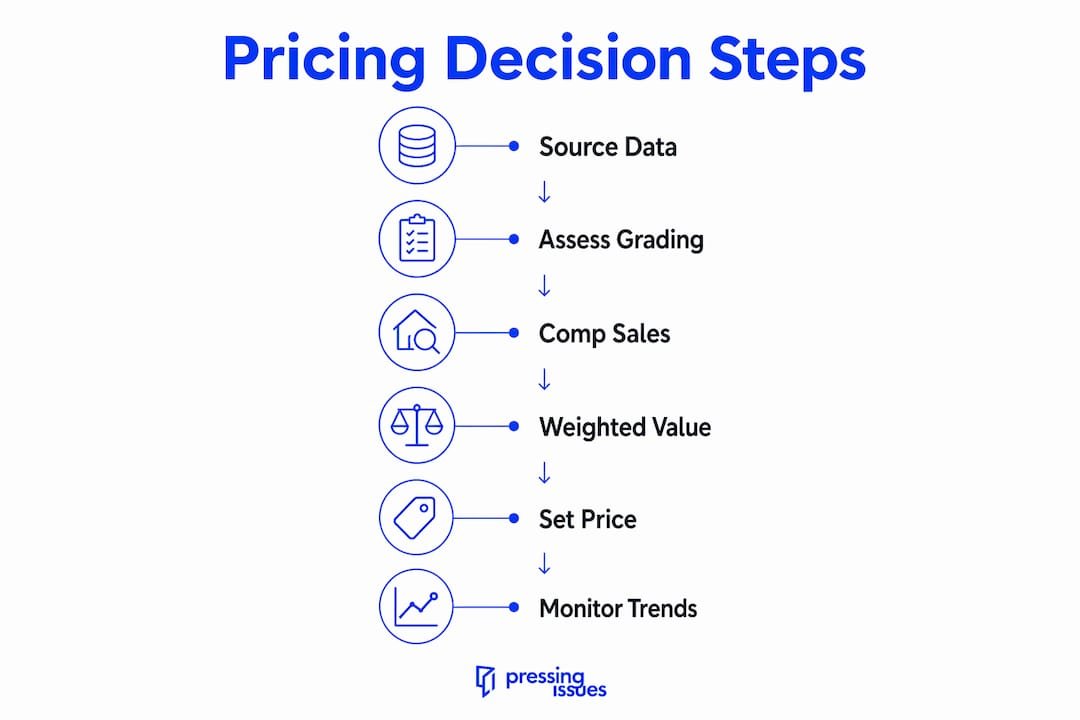
A reliable process removes emotion from buying and pricing decisions. Here is a sequential framework built around census data and market comps.
Step 1: Source the census data. Pull the CGC population report for the specific issue and grade you are evaluating. Note the total population at your target grade and the grade immediately below it.
Step 2: Assess grading difficulty. If the population gap between 9.6 and 9.8 is large, the book is structurally hard to grade up. Factor pressing and cleaning costs into your ROI before committing. The grading upgrade sweet spots for pressing and cleaning are not always the highest-profile keys.
Step 3: Pull 90-day sold comps. Use verified sale platforms, not listing prices. Relying only on raw eBay asking prices often misleads valuation. Sold data reflects what buyers actually paid, not what sellers hoped for.
Step 4: Build a weighted valuation. Weight your market value derivation using 40% grade-specific census data, 30% long-term auction history, 20% recent verified sales, and 10% external market drivers. This blend prevents any single data source from skewing your number.
Step 5: Set your price floor and ceiling. Your floor is the cost basis plus submission fees. Your ceiling is the top of the recent comp range. Price within that band based on current demand velocity.
Step 6: Monitor in real time. Population reports update continuously. Set a calendar reminder to recheck census data for your highest-value inventory every 30 days.
Common mistakes when using population report strategies
Most errors in population report analysis come from treating one data source as the whole picture. These are the mistakes that cost dealers real money.
Misreading submission waves as permanent supply. A spike in 9.8 population after a major collection grading does not mean the book is suddenly common. Submission waves can distort population reports for weeks or months. Always cross-reference with confirmed sale velocity before adjusting your pricing.
Pricing from listings instead of realized comps. Sellers list at hope prices. Buyers pay market prices. The gap between those two numbers is where dealers lose margin.
Ignoring grade transition populations. A book with a massive 9.6 population and a tiny 9.8 population is not a pressing opportunity. It is a structural grading wall. Submitting raw copies without understanding this relationship wastes submission fees.
Neglecting demographic shifts in inventory planning. A back-issue wall built entirely around Silver Age superhero keys serves a shrinking buyer pool. The aging collector demographic of vintage comic buyers, mostly males aged 55–80, poses a long-term risk due to potential estate liquidation and reduced new entrants.
Treating population reports as static. Low population today does not guarantee low population in six months. Population reports should always be considered dynamic, factoring submission timing and the structural fragility of key issues.
Pro Tip:Before buying any graded book above $500, run a 12-month population trend check, not just the current snapshot. A rising population curve at 9.8 is a warning sign even if the current number looks low.
Future trends impacting comic dealer population strategy in 2026 and beyond
The collector base is shifting in ways that will reshape which books hold value and which demographics drive demand. Dealers who plan around the current buyer profile alone are building on a shrinking foundation.
The aging vintage collector segment carries real risk. Estate liquidations from collectors aged 55–80 will push significant supply into the market over the next decade. That supply pressure will compress premiums on common Silver and Bronze Age keys unless new buyers absorb the volume. Shifting dealer focus toward younger, female, and digital-centric markets is the most direct hedge against that risk.
Growth opportunities are concentrated in manga, digital-first formats, and female-skewed periodicals. A female-skewing breakout title would create significant new engagement, similar to the past impact of Saga in comic shops. Online retail growth also pressures profit margins compared to traditional storefronts, which means dealers must protect their high-grade collector base while diversifying into formats that attract new buyers. The dealers who will thrive are those who use population data to protect their existing high-value inventory while actively building relationships with the next generation of buyers.
Key Takeaways
A comic dealer population report strategy works best when census data, demographic trends, and verified sold comps are combined into a single weighted decision framework rather than used in isolation.
What I've learned from watching dealers use population data
Charles here. After years of working with comic dealers across the Pacific Northwest, I have watched the same pattern repeat. A dealer finds a book with a low 9.8 population, gets excited, submits a stack of raw copies, and then watches the grade come back at 9.4 across the board because the book has a notoriously fragile spine. Population data told them the opportunity existed. It did not tell them whether the book could actually get there.
The dealers I respect most treat population reports as one input in a larger conversation. They combine census data with comic book appraisal and value analysis to understand not just what a book is worth at a given grade, but whether reaching that grade is realistic. They also stay close to their customers. Demographic data tells you who is buying in aggregate. Your regulars tell you what is actually moving off your shelves this week.
My honest advice: do not let the data replace the relationship. The numbers tell you where the market is. Your customers tell you where it is going in your specific store, city, and community. Use both.
— Charles
How Pressing Issues supports your grading and inventory strategy
Pressing Issues serves comic dealers in Seattle and Portland who want to maximize the grade potential of their inventory before submission. When population data shows a meaningful price gap between 9.6 and 9.8, professional pressing and cleaning can be the difference between leaving money on the table and capturing that premium.
Our team at Pressing Issues specializes in comic pressing and cleaning that improves grade potential without compromising the integrity of your books. We work with dealers who use population report data to identify which books are worth the investment. If you want to know which books in your inventory are worth sending for pressing, our comic selection guide walks you through the exact criteria we use every day.
FAQ
What is a comic book population report?
A comic book population report is a public census maintained by grading companies like CGC that lists the total number of graded copies of a specific comic at each grade level. Dealers use this data to assess scarcity and estimate price premiums at high grades.
How do submission waves affect population report accuracy?
Submission waves occur when large collections are graded at once, causing sudden spikes in population counts that can temporarily inflate supply and compress price premiums. Dealers should track confirmed sale velocity alongside census data to identify these distortions.
Why do comic dealer demographics matter for inventory strategy?
Female readers now make up 52% of digital comic readers and younger buyers aged 18–24 represent 32% of the market, meaning dealers who stock only vintage superhero keys are missing the fastest-growing buyer segments.
What is the most reliable way to value a graded comic?
The most reliable valuation blends 40% grade-specific census data, 30% long-term auction history, 20% recent verified sales, and 10% external market drivers. Relying on listing prices alone produces misleading results.
How does pressing affect a comic's population report position?
Professional pressing and cleaning can improve a raw book's grade potential, which directly affects where it lands in the population report and what price premium it commands. Books with large grade gaps between 9.6 and 9.8 are the strongest candidates for pressing before submission.
Recommended
Comic Dealer Heritage Auction Preparation: 2026 Guide — Pressing Issues
What Is Comic Book Flipping? A 2026 Investor's Guide — Pressing Issues
Top 3 Youtube Alternative Comic Book Pressers 2026 — Pressing Issues
The Grading Upgrade Game: Where Are the Sweet Spots for Pressing and Cleaning? — Pressing Issues