
Newsprint vs. Glossy vs. Cardstock: Why Every Paper Type Demands a Different Pressing Protocol
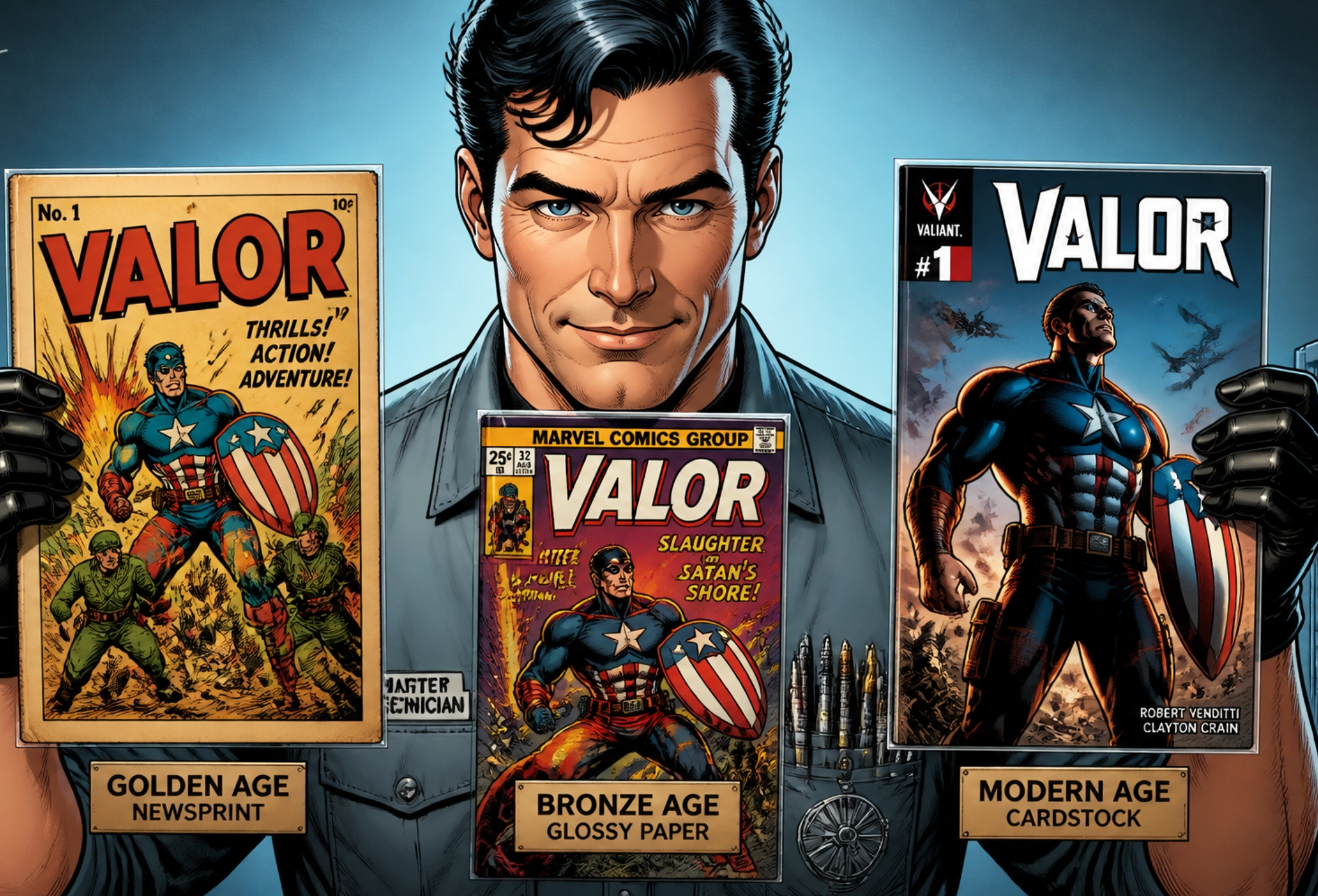
Possibility can make us see what we want to see. When you pull a raw, ungraded book from an old longbox, emotion takes over. You spot a nice pedigree, a sharp corner, and immediately start calculating how much a 9.8 slab will net you on the open market.
Then you notice the warp. Or the spine roll. Or a series of non-color-breaking dents shadowing the cover.
Your next thought is inevitable: "I'll just press it."
Stop. Slow down.
If you treat a Golden Age newsprint book with the same heat, pressure, and moisture protocol you use for a modern cardstock variant, you are not restoring a collectible: you are destroying it.
Every paper era demands its own specific protocol. Comic book restoration is not a blunt instrument; it is a discipline rooted in paper science. Let's break down how different paper stocks behave, why universal pressing is a recipe for disaster, and how to approach each era with disciplined, methodical care.
1. Newsprint (Golden Age & Early Silver Age): The Fragile Veteran
Step into any collection spanning the 1940s through the early 1960s, and you are handling newsprint. It is cheap, highly acidic, porous, and inherently brittle.
When you look at a vintage book under raking light, you are looking at wood-pulp fibers that have spent decades oxidizing.
The Behavior: Newsprint absorbs ambient moisture quickly and releases it agonizingly slowly. It has a remarkably low heat tolerance.
The Risk: If you apply high heat or aggressive pressure to an untreated newsprint book, the moisture trapped inside vaporizes too rapidly. The result? Ink flaking, micro-chipping along the edges, and permanent embrittlement.
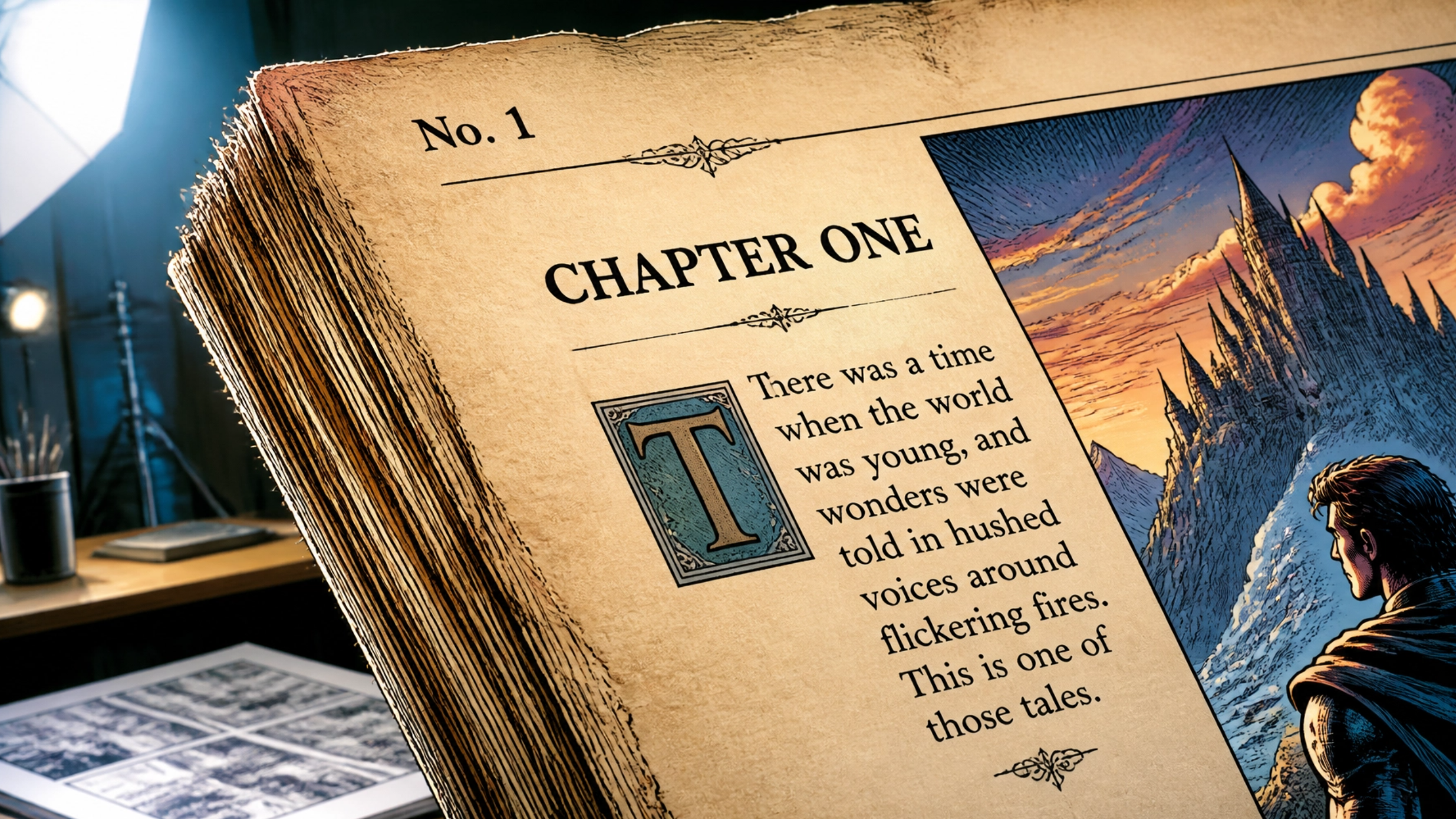
As we explore in our guide on types of comic book damage, vintage paper does not forgive mistakes. When pressing newsprint, your goal is stabilization and gentle flattening: not heavy-handed compression.
2. Glossy & Coated Stock (Late Silver & Bronze Age): The Balancing Act
By the late Silver and Bronze Ages, publishers transitioned to smoother, coated stocks. The addition of clay and chemical coatings gave covers and interiors a brilliant sheen, keeping ink crisp and vibrant on the surface.
This change alters the physics of pressing entirely.
The Behavior: The coated surface is more resilient than raw newsprint, but it is acutely sensitive to thermal friction.
The Risk: If your platen temperature spikes too high, the gloss layer can scuff, stick to your barrier paper, or suffer "gloss burn": a hazy, matte patch that ruins eye appeal. Furthermore, trapping unbalanced moisture under a sealed glossy cover creates an undesirable "orange-peel" texture.
> The back cover matters just as much as the front. Never press a glossy book without inspecting both sides for latent moisture and coating anomalies.
For a deeper look into how these eras compare, review our breakdown on pressing modern vs. vintage comics.
When working with Bronze Age keys, always pair your press with high-grade silicone release papers and monitor your dwell times closely.
3. Cardstock & Modern Stock (1990s–Present): The Memory Trap
Modern books, variants, prestige formats, and cardstock covers are thick, multi-layered, and frequently feature foil or chromium accents. Collectors often assume that because a book is thick and sturdy, it is indestructible in a press.
That assumption costs collectors thousands of dollars every year.
The Behavior: Cardstock has incredible structural rigidity, but it possesses stubborn warp memory.
The Risk: Heavy cardstock absorbs heat differently than standard text paper. If you pull a cardstock variant from a heated press even a few degrees too warm, the thick fibers lock in any lingering waves permanently. It requires extended, highly controlled cooldown cycles under heavy weight.
> The Bonehead Mistake: Treating a 1990s cardstock variant like a 1960s newsprint book: or vice versa: is where amateur restorations fail. Applying newsprint settings to cardstock leaves waves untouched; applying high-heat cardstock settings to brittle newsprint bakes acid into the fibers.
Before sending your books off for slabbing, make sure you align your submission workflow with our proven CGC submission dos and donts to protect your investment.
What I Have Learned: Moving From Hope to Discipline
When I first started pressing collections years ago, I fell into the trap of wishful thinking. I believed that every crease could be vanished if I just turned up the thermostat and left the book in the press a little longer.
I ruined a mid-grade Silver Age book because I ignored the paper stock's warning signs. That mistake taught me a hard truth: respect the material.
Professional pressing is not about forcing paper to do what you want; it is about working within the physical limitations of the era in which the book was printed. When you respect the chemistry of newsprint, the coating of Bronze Age gloss, and the memory of modern cardstock, consistency follows.
Key Takeaways for Collectors
Match Your Barriers: Use uncoated copy paper for newsprint interiors and specialized silicone release sheets for glossy and cardstock covers.
Control the Heat: Scale your temperatures downward for older, acidic paper; utilize moderate heat only when coated stocks can safely handle thermal transfer.
Never Rush Cooldown: Let modern cardstock and thick variant books cool completely under uniform weight before opening your pressing stack.
Audit Before You Press: Evaluate every book's paper stock during your initial appraisal to determine its specific structural threshold.
Take your time, inspect closely, and treat every comic book according to the science of its era.