
Variant Covers Then and Now: From 90s Holograms to Modern Speculation
Take a walk down the memory lane of any local comic shop, and you will inevitably find yourself standing before walls of shimmering, embossed, foil-stamped, and gatefold covers. Today, publishers offer endless variations for a single issue. But this is not a new invention. It is the continuation of a decades-long publishing strategy designed to capture your attention: and your wallet.
At Pressing Issues, we spend our days examining books at a microscopic level. We restore spine ticks, smooth out creases, and prepare collections for professional grading. Through that lens, we see both sides of the hobby: the genuine joy of incredible cover art and the cold, hard reality of market liquidity.
Let's slow down, examine the mechanics of variant covers, and look at how the shiny gimmick era of the 1990s compares to today's landscape of ratio incentives and retailer exclusives.
1. The 1990s Hologram Debacle: When Millions Meant Nothing
Possibility can make us see what we want to see. In the early 1990s, the comic book market was gripped by an intoxicating narrative: that modern comic books would fund your retirement, pay off your mortgage, and secure your financial future.
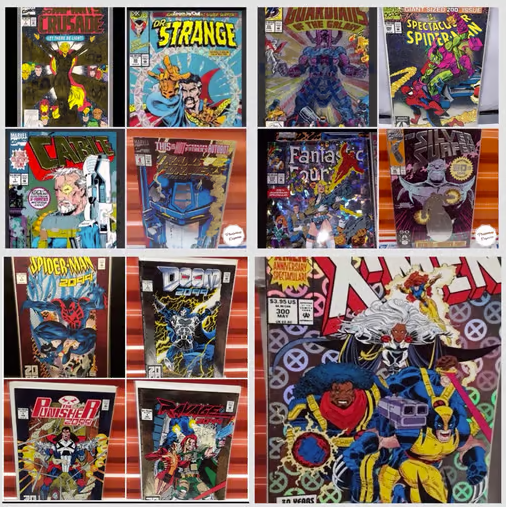
Publishers fed that narrative with an explosion of gimmicks. Suddenly, every major issue came wrapped in shiny silver foil, embossed cardstock, die-cut windows, or glowing holograms.
Here is the brutal truth of that era: Print runs were astronomical.
Titles that featured shiny hologram covers were often printed in hundreds of thousands: sometimes millions: of copies. Because collectors were told these books were instant investments, they bought multiple copies, immediately placed them in bags and boards, and stored them pristine in longboxes.
The math was unforgiving. When supply vastly outstrips actual demand over time, value collapses. Today, the vast majority of those 1990s foil and hologram covers sit in dollar bins. They are fun pieces of nostalgic pop culture, but they are not retirement funds.
What we learned from the 90s debacle is simple: A shiny surface does not equal scarcity. If a book is printed in massive quantities, no amount of foil will save it from the dollar bin.
2. Modern Variant Fatigue: Ratio Incentives and Manufactured Scarcity
If the 1990s relied on mass-market gimmicks printed for everyone, the modern era has perfected a different system: manufactured scarcity.
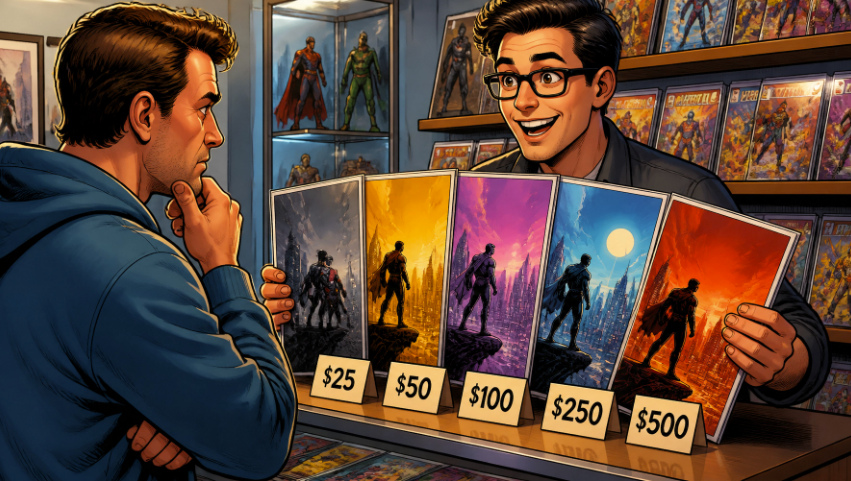
Today, publishers drive sales through incentive variants. You have seen them labeled on the shelf: 1:25, 1:50, 1:100, or even 1:500 ratio variants. For every 25, 50, or 100 regular copies a retailer orders, they earn the right to buy one copy of a special variant cover.
This system creates a completely different set of pressures:
Retailer Risk: Comic shop owners are forced to over-order regular stock just to secure a handful of high-ratio incentive covers.
Artificial Scarcity: While these variants are genuinely scarcer than their 90s predecessors because overall baseline print runs have dropped, their initial prices are often heavily inflated by pre-order hype.
Variant Fatigue: When a single issue #1 has fifteen different variant covers, the collector experience shifts from joyful reading to exhausting completionism.
When evaluating whether to chase a modern high-ratio variant, you have to look past the hype. As we explore in our guide on timing the market from rumor to premiere, chasing short-term speculation spikes without understanding true liquidity is a fast track to losing money.
3. What We Love About Variant Covers
Despite the marketing ploys and speculator traps, we love variant covers. When executed correctly, they are miniature masterpieces.
The modern variant landscape allows publishers to showcase incredible talent that might not otherwise anchor an entire ongoing series:
Celebrating Diverse Art Styles: From classic painted covers reminiscent of Alex Ross to bold, modern minimalist designs, variants give master artists a canvas to shine.
Personal Choice: Every collector connects with characters differently. If your favorite artist is illustrating a 1:25 variant of your favorite hero, having the option to display that specific piece of art on your shelf is a genuine thrill.
Honoring Milestones: Special anniversary issues and landmark character moments are elevated when paired with stunning variant wrappers that honor decades of comic book history.
When you handle a modern book, the physical presentation matters just as much as the art. Understanding how modern paper stocks, cardstock covers, and interior newsprint react over time is essential: something we break down in our insights on modern age comic pressing.
4. The Golden Rule: If You Love It, Buy It (With Caution)
We can deconstruct publisher strategies, analyze print runs, and calculate market liquidity all day long, but at the end of the day, collecting is a personal hobby.
So here is our golden rule: If you love something, buy it.
If a stunning variant cover speaks to you, brings a smile to your face, and anchors your collection in a way that brings you joy, buy it and enjoy it.
However, use caution. Never buy a heavily marked-up 1:100 variant purely as an "investment" without understanding true market liquidity. If you ever decide to liquidate or upgrade your collection down the road: a workflow we detail in our guide on maximizing your graded resale value: you want your collection to reflect smart, disciplined choices rather than impulse purchases driven by FOMO.
Conclusion: Patience Over Speculation
Whether we are looking back at the shiny foil bins of the 1990s or navigating today's towering walls of 1:50 incentive variants, the core lesson remains unchanged: Slow down and inspect closely.
Protect your books properly, buy what moves you emotionally, and let financial math guide your major investments. And when your favorite books arrive, make sure they are cleaned, pressed, and preserved with the care they deserve.
Frequently Asked Questions
Are 90s hologram and foil covers worth anything today?
With very few exceptions (such as major key issues or documented manufacturing errors), most 90s gimmick covers were printed in such massive quantities that they trade as common back issues.
What does a "1:25 variant" mean?
A 1:25 variant is a retailer incentive cover. For every 25 copies of the standard cover a comic shop orders, they have the right to purchase one copy of the special variant.
Should I buy variant covers as investments?
Most modern variants are subject to short-term speculation and high initial price volatility. Unless a variant is tied to a major first appearance or scarce historical print run, it should be purchased for its artistic enjoyment rather than guaranteed financial return.