
The Five Golden Rules of Comic Book Pressing and Cleaning
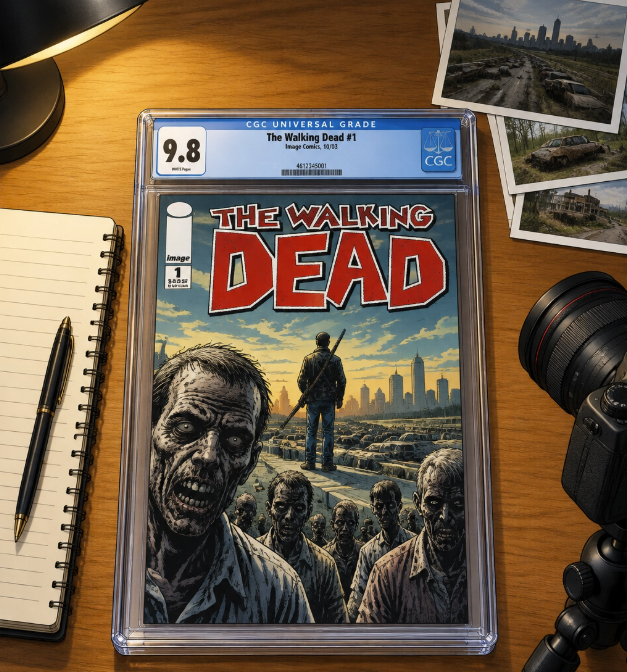
Absolutely, positively, do no harm.
That is the whole philosophy in one line.
Comic book pressing and comic book cleaning are preservation work. They are not contests to see how much intervention a book can survive. The goal is not to force a higher grade at any cost. The goal is to protect the book, improve what can be improved, and leave alone what should be left alone.
Every comic deserves that standard, whether it is a valuable key issue, a favorite reader copy, or a dollar-bin book you are using to learn. These are the five rules we follow at Pressing Issues.
Rule One: Absolutely, Positively, Do No Harm
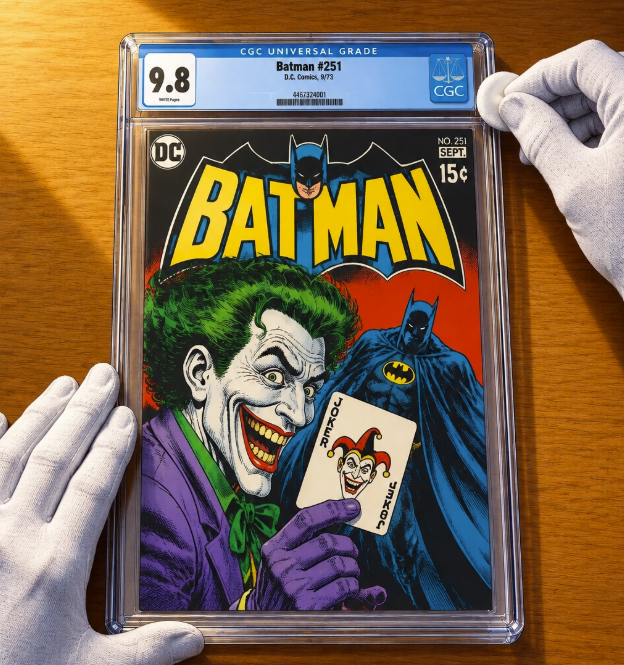
No action taken on a comic book, and no handling of it, should cause the comic any harm.
This rule comes before pressing. It comes before cleaning. It comes before improving comic book grade. It even comes before saving time.
A book should leave in no worse condition than it arrived.
That sounds obvious. In practice, it requires constant attention. A comic can be damaged before any treatment begins. A corner can catch while the book is removed from a package. A back cover can drag across grit on a work surface. A page can receive a new dent when it is turned too quickly. A spine can be stressed when a book is opened farther than it naturally wants to go.
Those mistakes do not happen because someone intended to be careless. They happen because someone moved too quickly.
Slow down. Inspect closely. Use angled light to look at the cover surface and spine before you decide what to do. A shallow dent may be difficult to see straight on but obvious when light moves across it. The same light can also show whether a crease breaks color, whether a mark is surface dirt, and whether a defect is changing as you work.
The rule is simple: no improvement is worth creating a new defect.
Practical takeaway
Before every action, ask:
What am I trying to improve?
What is the risk of this action?
How will I know if the action is working?
What will make me stop?
If you cannot answer those questions, do not proceed yet.
Rule Two, Do Not Perform an Action a Comic Does Not Need, in an Area That Does Not Need It
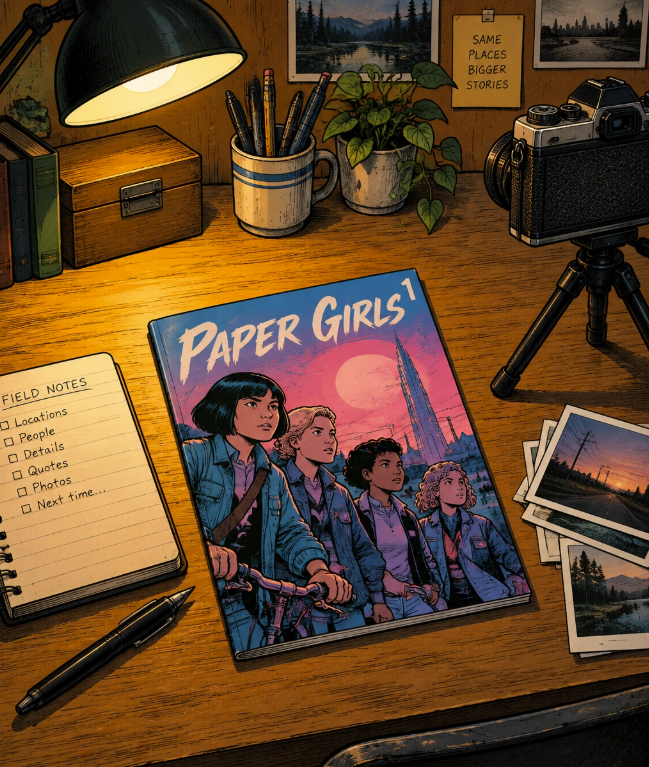
Restraint is the discipline.
A comic book is not improved simply because more work was performed on it. Every touch carries risk. Unnecessary work is not harmless work.
If the defect is on the front cover, that does not automatically mean the interior pages need treatment. If the back cover is clean and flat, it does not need to be handled repeatedly just because the front cover has a bend. If one area responds well to a careful process, that does not mean every similar-looking area will respond the same way.
Work only where the book will benefit.
This is especially important during comic book dry cleaning. Surface dirt should be evaluated before anyone attempts to remove it. Some marks are loose and removable. Others are embedded in the paper, tied to an old stain, or part of the book’s existing surface condition. Rubbing harder does not make every mark removable. It can burnish the paper, lift ink, or create a lighter patch that is more noticeable than the original dirt.
Professional pressers also do not use drafting powder as a casual dry cleaning method on valuable books. Powder can be abrasive, leave residue, migrate into paper texture, and make it difficult to control exactly what is happening at the surface. A preservation process should be precise, not improvised.
If you are learning a new technique, use inexpensive dollar books. Do not experiment on an expensive comic because you are curious about what might happen. Permanent damage is a poor teacher when the lesson costs more than the book.
The same restraint applies to pressing. Non-color-breaking bends, dents, waves, and some spine stress may respond to controlled treatment. Color-breaking creases, missing paper, severe tears, and certain stains cannot be pressed away. Trying to force those defects can make the damage worse.
What can improve, and what may not
No professional can promise that every defect will disappear. The honest question is whether the proposed action is justified by the condition of the book.
Practical takeaway
Separate the comic into areas and defects. Treat only what needs attention. Sometimes the most professional decision is to do less.
Rule Three, Handle Every Comic With Care, Not Merely as If It Were Your Own
“Treat it as if it were your own” is a good starting point.
It is not enough.
When a comic belongs to someone else, you are responsible for the physical consequences of every movement. Care is not just an emotional attitude. It is a handling system.
Use clean, dry hands. Work on a clean, flat surface. Support the comic instead of dragging it. Keep boards, sleeves, and work materials free of grit and debris. Make sure the book is fully supported when it moves from one surface to another.
Be cautious when removing a comic from a package. Do not pull against a tight bag. Do not slide the book across a table if you can lift it with support. Do not force a stiff cover open. Turn pages from a supported edge, one at a time, without pressing a finger into the paper.
Every transfer is an opportunity to create a new defect.
That includes moving the comic from a mailer to a table, from a bag and board to an inspection surface, from an inspection surface into a pressing setup, and back into storage. A new dented corner or interior crease may be small, but it was not part of the book when it arrived. That makes it a failure of care.
This is also why preservation matters even when you have no plan to submit a comic for grading. Raw comics are constantly exposed to handling, storage pressure, shifting bags, and changing conditions. Careful cleaning and pressing can be part of protecting the book’s existing condition, not merely a step toward a grade increase.
Practical takeaway
Handle every comic slowly enough that you could explain every movement afterward. If you cannot remember how the book was moved, you may have moved it too quickly.
Rule Four, Document Your Work
Take photographs. Keep yourself honest.
Documentation is not only for showing a customer a before-and-after comparison. It is a control system. Photographs help prove whether the actions you are taking are having a demonstrable effect on the comic.
Take clear images before work begins. Capture the front cover, back cover, spine, corners, and any specific defect under consistent lighting. If an area changes, photograph it again. If it does not change, document that too.
Sometimes a comic simply does not respond to a particular action.
That is an honest finding. It is not a problem to hide.
Repeating the same action over and over in the hope that the next attempt will finally make a difference is not a good idea. More pressure does not automatically create more improvement. More cleaning does not automatically remove more dirt. At some point, continued effort becomes additional risk.
Before-and-after photographs help identify that stopping point. They show whether a bend has relaxed, whether a dent is still present, and whether further handling is justified. They also make it easier to compare the book’s condition with the original intake record.
A careful professional should be willing to say, “This is as far as this book wants to go.”
Practical takeaway
Photograph the condition. Record the action. Check the result. Stop when the evidence says to stop.
Rule Five: Know That There Is Inherent Risk in Every Action You Take on a Comic, and Spend That Risk Wisely
Nothing on a comic book is risk-free.
Not opening it. Not cleaning it. Not pressing it. Not moving it across a table. Not turning a page. Not putting it into a new bag and board.
That does not mean the work should never be done. It means every action should have a reason.
Think of risk as a limited budget. Spend it only when the possible benefit justifies the exposure. A light surface mark may not justify aggressive cleaning. A minor bend on an otherwise fragile book may not justify pressing. A book already in excellent condition may have very little practical upside and a great deal to lose from unnecessary handling.
Every move should be strategic. None should be on a whim.
Even the most experienced comic book presser and cleaner slips up once in a while. It is rare, but it happens. Honest professionals do not pretend that experience makes them infallible. They build safeguards around the possibility of error: clean workspaces, controlled handling, detailed photographs, deliberate movements, and clear stopping points.
That is also why a complimentary value analysis matters before work begins. The condition of the book, its likely market position, the defects present, and the potential benefit of treatment should all be considered together. The answer is not always “press it.” Sometimes the correct preservation decision is to stabilize the book and leave it alone.
Practical takeaway
Do not ask only, “Can this action help?” Ask, “Is the possible benefit worth the risk to this specific comic?”
A Standard of Care, Not a Promise of Perfection
These five rules work together.
Do no harm.
Do not perform unnecessary work.
Handle every comic carefully.
Document the process.
Spend risk wisely.
That is the standard.
At Pressing Issues, our goal is to preserve the book’s existing character and condition while addressing defects that can be improved responsibly. Our approach to comic book pressing and comic book dry cleaning is preservation-focused and intended to maintain the book in an unrestored state. It is not a promise of a particular grade, and it is not an excuse to force a result that the paper, ink, or structure will not support.
Professional pressing and cleaning should serve the comic, not the other way around.
If you are preparing a book for cgc pressing, protecting a raw collection, or simply trying to understand whether a particular defect can be improved, begin with inspection. Slow down. Look at the light across the surface. Feel the paper without forcing it. Separate what can be fixed from what must be accepted.
And remember: “if you love something, buy it, but always use caution.”