
Spine Ticks 101: What You Can Fix, What You Can Only Live With
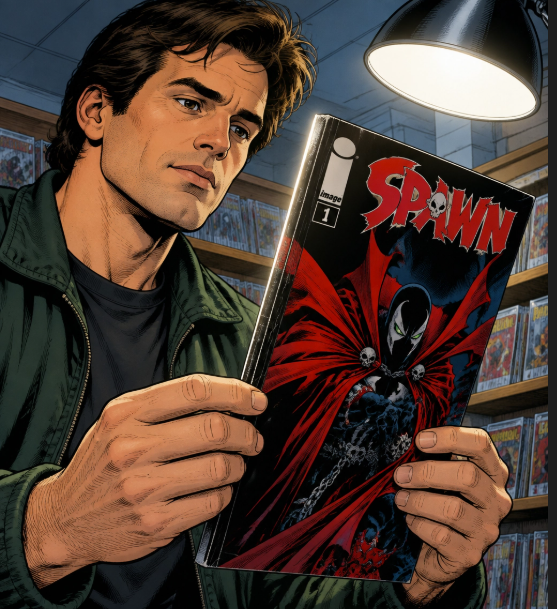
A spine tick is one of the first defects you learn to spot when buying raw comics. It is also one of the easiest to misunderstand.
Collectors often ask, “How many ticks does this book have?” That is not the best first question.
Ask this instead:
Does the mark break color?
A shallow, non-color-breaking stress mark may respond well to professional comic book pressing. A white line where the ink has fractured is permanent. Pressing may flatten the paper around it, but it cannot put missing ink back.
Slow down. Inspect closely. That habit will save you more money than optimistic grading ever will.
1. What a spine tick actually is
A spine tick is a short stress mark, bend, dent, or small crease along the spine of a comic book. It can result from:
Opening and reading
Stacking pressure
Shipping
Poor storage
Tight long boxes
Handling at conventions or shops
A cover being forced against the staples
The word “tick” is used loosely. One collector may call a shallow bend a tick. Another may use the word only for a short color-breaking line near the staples.
That difference matters.
When you inspect a spine tick, consider:
Depth: Is it a surface impression or a deep fold?
Length: Is it a tiny mark or a long crease?
Location: Is it on a blank margin, a dark color, or directly over the staples?
Texture: Does the cover feel smooth, raised, crushed, or sharply folded?
Color: Is the printed ink intact, or is lighter paper showing?
A few shallow ticks may be less important than one deep crease. Counting alone is not a grading system.
2. The key distinction: color-breaking versus non-color-breaking
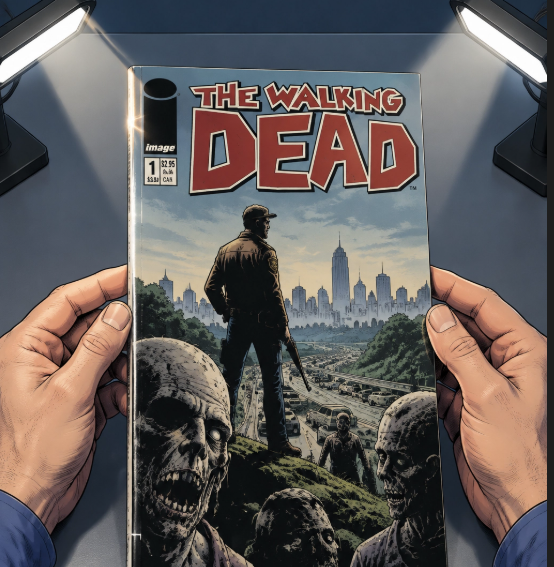
This is the foundation of remove spine ticks comics advice.
Non-color-breaking ticks
A non-color-breaking tick changes the shape of the paper but leaves the ink intact. Under the right light, you may see a shadow, depression, or slight ripple. The printed color still runs continuously across the mark.
These defects may be candidates for professional comic book pressing.
A controlled pressing process can sometimes improve:
Shallow spine stress
Light bends
Handling dents
Cover ripples
Waviness
Some impressions
Mild spine roll
There is no guarantee of complete removal. There is no guaranteed grade increase. The goal is to improve presentation and preserve the book appropriately, not to manufacture a result.
Color-breaking ticks
A color-breaking tick fractures the ink layer or paper fibers. It often appears as a white, silver, or lighter line crossing a colored area.
That line is a permanent defect.
Pressing may flatten the surrounding paper, but it cannot restore missing ink. Do not accept anyone’s promised grade cap, either. Comic book grading is cumulative. The effect of one defect depends on the book’s complete condition, including corners, edges, staples, pages, stains, and other structural problems.
For an official reference, review CGC’s grading scale and CGC’s Grader Notes information. These resources are useful standards, but no public checklist can predict the exact grade of an individual comic.
The simple diagnostic
3. How to inspect spine ticks under angled light
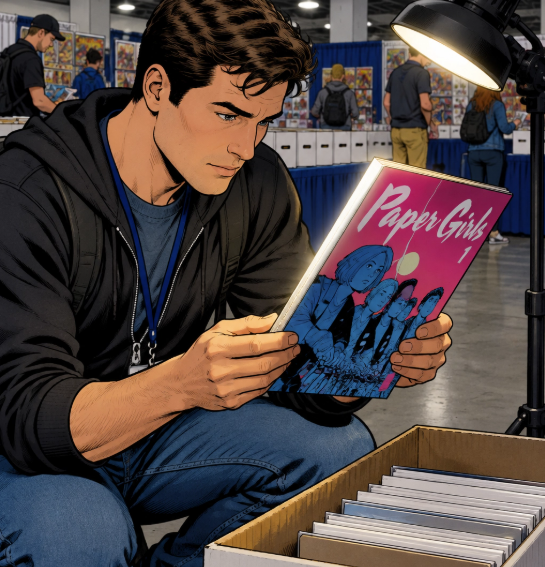
Flat overhead lighting hides defects. It washes the cover with even brightness and can make a bent area look clean.
Angled light tells the truth.
Place the comic on a clean, stable surface. Use a bright light source with permission if you are in a shop or at a convention. Hold the book carefully and rotate it slowly.
Watch the reflected highlight move across the cover.
A non-color-breaking bend may appear as:
A soft shadow
A shallow dip
A change in gloss
A slight ridge that disappears as you change the angle
A color-breaking mark may flash white or silver as the light skims across it. It can remain visible even after the reflection moves away.
Inspect the book from several directions:
Front cover
Back cover
Spine edge
Top and bottom edges
Corners
Staple areas
Interior pages, if the seller permits it
Run your eyes across the surface before you count marks. Look at texture and gloss. A smooth cover reflects light evenly. A crushed area scatters the reflection. A sharp crease creates a hard shadow.
Do not bend the comic to “test” it. That can turn stress into a tear.
4. Use a principal-defect hierarchy
Collectors frequently lose time counting minor spine ticks while missing the defect that actually controls the buying decision.
Use this hierarchy:
Missing pages or coupons
Detached covers or staples
Spine splits or tears
Water damage or moisture waviness
Staple rust and rust migration
Missing pieces
Brittle paper
Deep color-breaking creases
Heavy stains or embedded dirt
Minor non-color-breaking ticks
This is not a formal grading formula. It is a buying system.
A comic with four shallow non-color-breaking ticks may be a better purchase than a book that appears clean but has staple rust, a musty odor, hidden moisture damage, or a detached centerfold.
Rust deserves special attention. Localized oxidation on a staple may have a tight halo and short migration streak. Broad brown staining around the staple area suggests a more serious problem. Pressing does not stop rust or reverse migration.
The back cover matters. So does the inside.
Key Takeaway: Find the principal defect before deciding whether minor ticks matter.
5. What professional pressing can help
Professional comic book pressing is most appropriate when the book has structural defects that may respond to controlled treatment.
Possible candidates include:
Non-color-breaking spine stress
Shallow bends
Cover dents
Light wrinkles
Storage ripples
Waviness
Mild spine roll
Some cover impressions
Professional comic book cleaning may also improve surface dirt and presentation when the process is safe for that book.
The standard should be preservation. A clean, flat book is easier to store and inspect. It is not only a candidate for a CGC grading submission.
A professional should evaluate the paper, inks, age, gloss, moisture history, and severity of the defect before recommending treatment. A Silver Age book with delicate paper should not be handled like a modern dollar comic.
At Pressing Issues, our comic pressing and cleaning services include a complimentary value analysis before work begins. That is an educational estimate, not a promise of value creation or grade improvement. We also work toward an unrestored standard, which is important to collectors who want preservation without unauthorized restoration.
6. What pressing cannot fix
Pressing is not magic.
It cannot restore:
Color-breaking lines
Missing ink
Tears
Detached covers
Detached staples
Spine splits
Missing pieces
Brittle pages
Water stains
Deep moisture damage
Rust migration
Stains embedded in the paper
Severe structural crushing
Do not experiment on an expensive key issue.
Professional pressers also do not use the old dry clean method involving drafting powder. Powder can abrade the surface, lodge in the paper, alter gloss, or create uneven results. It can also introduce contamination that is difficult to remove. This is why professional comic book dry cleaning relies on controlled, book-appropriate methods rather than casual powder application.
If you are determined to test a new technique, use a true dollar book, not a valuable first appearance, scarce variant, or family heirloom. Permanent damage is a cheap lesson only when the book was cheap.
For more context, see our guide to why professional pressers never use drafting powder.
7. A smarter buying strategy
When a raw book looks rough, do not automatically pass. Do not automatically call it a bargain, either.
Work through the system:
Confirm the exact issue, printing, and version.
Use Key Collector Comics to verify key-issue significance.
Inspect the front and back covers.
Check completeness, inserts, coupons, and centerfolds.
Look for restoration or conservation.
Check staples, page quality, odor, and moisture.
Identify color-breaking defects.
Separate pressable defects from permanent damage.
Calculate the purchase price plus treatment, shipping, and grading costs.
Ask whether you would still enjoy the book if pressing produced only a modest visual improvement.
A hypothetical $15–$20 pressing cost may be reasonable for one book, but actual pricing varies by provider, condition, service, shipping, and collection size. Do the math before buying.
For market research, compare GoCollect, CovrPrice, and GPA/GPAnalysis in that order when appropriate. Then check Heritage Auctions, eBay completed listings, and relevant coverage from ComicBook.com. These tools provide context. They do not turn an uncertain raw copy into a guaranteed investment.
8. Buying online
Online listing photos regularly hide spine ticks.
Common problems include:
Glare on bagged books
Plastic reflections
Low resolution
Straight-on photography
Cropped spine edges
Heavy image editing
Photos that show only the front cover
Ask the seller for clear spine and back-cover photos under angled light. Ask direct questions:
Do the marks break color?
Has the book been pressed?
Has it been cleaned?
Is there staple rust?
Has the book ever been exposed to moisture?
Are all pages and inserts present?
What is the return policy?
A high-volume seller may honestly miss a small defect. Verify rather than accuse. Good communication protects both sides.
9. Conventions, shops, and long boxes
At a convention or local comic shop, inspect with permission. Handle the book carefully. Do not force the spine or repeatedly remove it from a tight bag.
When searching long boxes:
Support the books on both sides.
Avoid dragging covers across neighboring comics.
Inspect promising books at a table.
Check the back cover before negotiating.
Price uncertainty honestly.
A relationship with a professional presser can improve your eye quickly. You will learn to recognize the difference between a shallow stress mark and a crushed, color-breaking crease. That knowledge can prevent expensive mistakes before you buy the book.
10. Preservation drift
A dirty, bent, or wavy raw comic can age poorly in a bag and board. Pressure, unstable humidity, surface dirt, and poor support can allow small problems to become larger ones.
Pressing and cleaning are not only for improving comic book grade or preparing graded comic books. They can be part of responsible comic book preservation.
After treatment, use:
Archival Mylar where appropriate
A properly sized backing board
Rigid comic boxes
Stable room humidity
Protection from direct sunlight
Silica gel packets only in a controlled storage setup, never touching the comics
Our preservation guide explains why long-term storage deserves attention even when you never plan to submit a book.
Quick spine-tick checklist
Before buying or submitting a raw comic, ask:
Have I identified the exact issue and printing?
Did I inspect it under raking light?
Did I rotate it slowly and watch the reflection?
Did I check both covers?
Are the marks color-breaking?
What is the principal defect?
Are the staples clean and secure?
Are the pages, inserts, and centerfold complete?
Is there odor, moisture damage, or brittle paper?
Is there restoration or conservation?
What would treatment cost?
Would I still want the book if pressing helped only modestly?
Your decision is then simple:
Buy if the price and condition make sense.
Negotiate when the defect is real but manageable.
Ask a professional presser when the book may benefit from treatment.
Pass when the principal defect makes the all-in cost unreasonable.
Final thoughts
Spine ticks are not all equal.
A shallow, non-color-breaking stress mark may be a cosmetic and potentially pressable defect. A white line, deep crease, tear, rust problem, or moisture issue is a different category entirely.
Learn to separate what can be improved from what must be accepted. Slow down before you buy. Inspect closely before you hope.
And if you love something, buy it, but always use caution.