
Staple Rust: The Sneakiest Defect in Comic Book Collecting
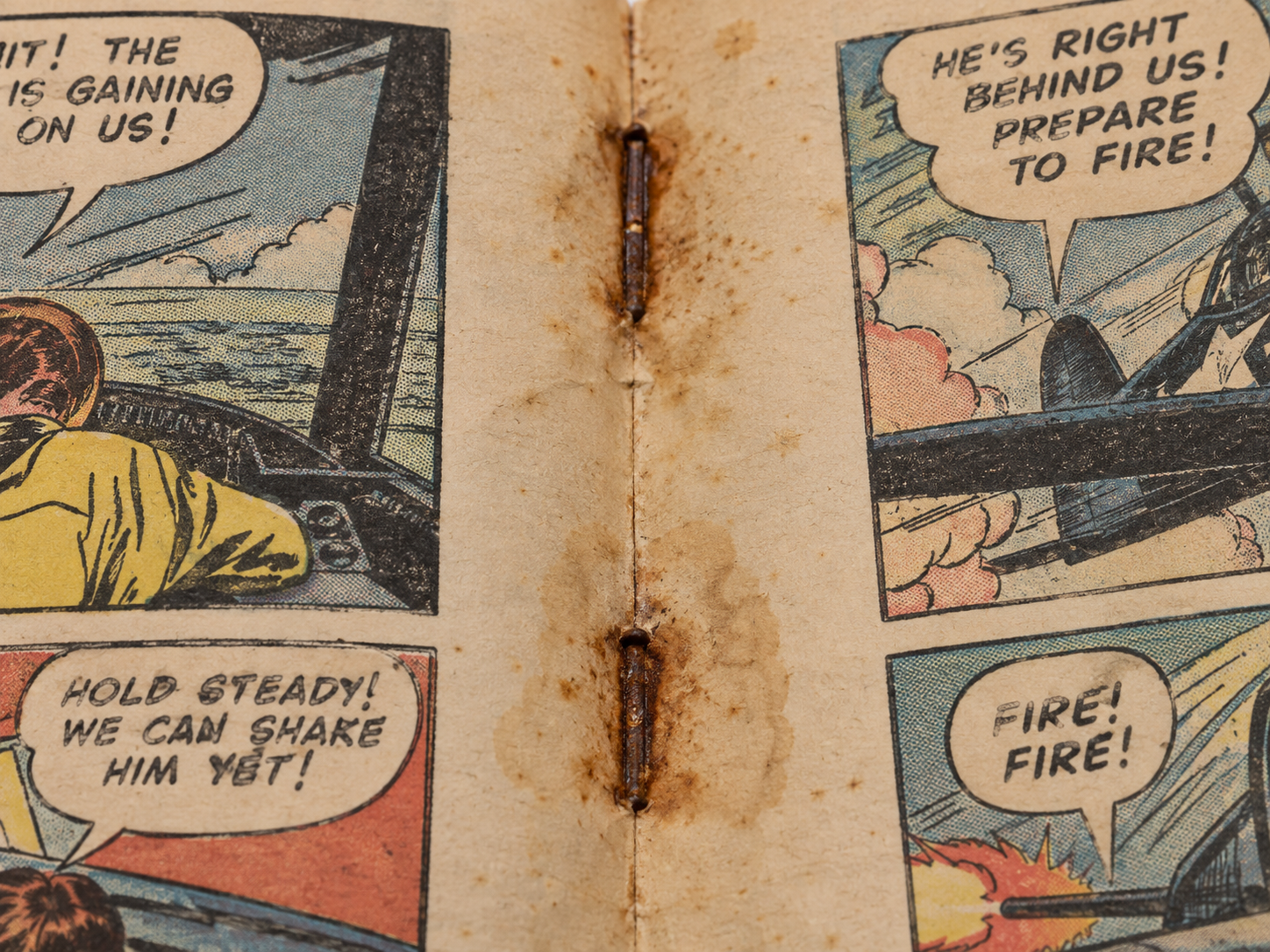
A comic can have a beautiful cover, sharp corners, bright color, and a clean spine. Then you open it.
The staples are orange.
Maybe the rust is only on the inside prongs. Maybe there is a faint brown halo on the centerfold. Maybe the metal still looks intact, but the paper around it feels weak.
That is the danger.
Staple rust is one of the worst defects in comic collecting because it hides, migrates, and can permanently damage the book. The title calls it the worst and nastiest defect as a collector’s warning: not as a universal mathematical grading rule. Its effect depends on severity, migration, staining, paper quality, staple attachment, and the condition of the rest of the comic.
But the warning is justified.
A gorgeous raw comic can become a disappointing submission because the part nobody photographed was quietly deteriorating.
Why Staple Rust Is So Dangerous
Staple rust begins when metal is exposed to moisture and oxygen. In a comic, that corrosion may start on the visible outer portion of the staple. It may also begin on the hidden prongs inside the book.
As the corrosion progresses, rust can transfer into nearby paper. Think of it as a stain developing from the binding point outward. The paper around the staple may turn orange, brown, gray, or dark. The exact color depends on the stage of corrosion and the lighting.
Rust does not always remain a surface issue.
It can:
Stain the inside front or back cover.
Create a halo or streak around the staple.
Weaken the paper around staple holes.
Damage the centerfold.
Contribute to staple tears or detachment.
Leave the metal powdering, flaking, or caked with corrosion.
Reduce the book’s eye appeal even when the cover looks nearly perfect.
The CGC Grader Notes Guide identifies staple rust as a recognized defect. CGC also discusses rust stains as a separate grading concern because corrosion can affect the paper, not just the staple itself.
That distinction matters.
A small amount of discoloration is not the same problem as active corrosion with migrated staining and weakened paper.
Why Buyers Miss It
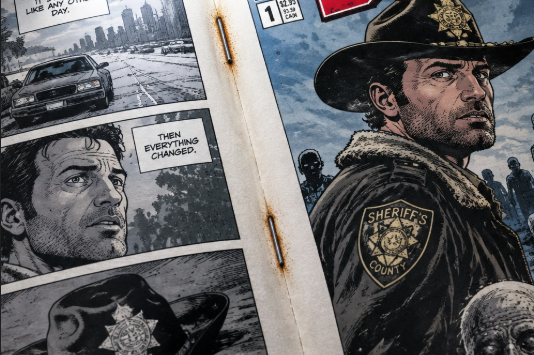
Most online listings show the front cover and back cover. That is not enough.
The buyer may never see:
The inside front cover near the upper staple.
The inside back cover near the lower staple.
The centerfold prongs.
The paper directly surrounding the staple holes.
A faint stain hidden by dark interior colors.
A staple that looks acceptable until the book is opened carefully.
Sellers may miss it too. That does not automatically mean the seller is dishonest. Dealers moving high volumes of inventory cannot realistically open and inspect every book closely at every moment. A quick cover scan is not a full condition assessment.
Photography creates additional problems. Glare can hide discoloration. A tight bag can conceal the spine. Dark cover colors can disguise brown or gray rust. A listing may be sharp enough to show a tiny spine tick while revealing nothing about the interior staple area.
This is why you should ask specific questions before paying serious money.
Do not ask, “Is the book clean?”
Ask:
> “Can you provide clear photos of both staple areas from the inside, including the centerfold prongs? Do you see any rust, migration, staining, moisture damage, odor, or weakened staple holes?”
A precise question gives the seller a precise opportunity to inspect.
What to Inspect
Slow down. Use a clean inspection light or angled light when permitted. You are looking for changes in texture as well as color.
Inspect the comic in this order:
Front and back covers
Look for water exposure, waviness, tide lines, foxing, and edge discoloration.Outer staple areas
Check whether the staples are bright, darkened, orange, brown, gray, flaky, or powdery.Inside front and back covers
Inspect the paper immediately around each staple. Look for halos, streaks, and uneven discoloration.Centerfold
Examine the staple prongs and the paper around them. Hidden centerfold rust is one of the easiest problems to miss.Staple attachment
Is the staple still firmly attached? Does the cover move independently? Are there tears radiating from the holes?Paper quality
Watch for brittleness, softness, rippling, or paper that feels weaker around the binding.Odor and moisture evidence
A musty smell, wavy pages, staining, or tackiness can indicate a storage problem.
Rust may appear orange, brown, gray, or almost black. Color alone is not a complete test. Texture, paper strength, migration, and attachment matter more than a single shade.
Use a Simple Rust-Risk Pile System
When evaluating a raw comic, sort it into one of three piles:
Green Pile: No visible rust
The staples look clean. There is no migration, odor, moisture evidence, or paper weakness.
This does not guarantee a high grade. It means staple rust is not currently the primary risk.
Yellow Pile: Suspicious or limited discoloration
You see slight darkening, isolated discoloration, or a questionable area that photography cannot resolve.
Ask for better photos. Do not price the book as a clean high-grade copy until the uncertainty is resolved.
Red Pile: Active corrosion or migration
You see flaking, powdering, caked rust, rust stains, weakened paper, staple tears, or detached metal.
The cover may still be beautiful. The risk is still real. Price the book as a problem copy: or walk away.
How Staple Rust Affects Comic Book Grading
There is no single grade deduction for staple rust.
Graders consider the entire book. A slight discoloration on one staple is not equivalent to heavy corrosion affecting both staples and the centerfold. A book with clean paper and intact staples will be evaluated differently from one with staining and structural weakness.
As a general framework:
Slight discoloration: May prevent the highest grades while leaving the rest of the book largely intact.
Visible corrosion: Can pull down an otherwise sharp copy.
Rust migration: Adds a stain defect and affects interior eye appeal.
Weakened staple holes: Creates a structural concern.
Detached or disintegrated staples: Can significantly change the grade and completeness assessment.
Use the CGC grading scale as a reference, but do not treat any online chart as a guaranteed outcome. The CGC Grader Notes Guide explains how defects are categorized, including stains, missing parts, tears, and staple rust.
For a graded comic, grader notes may identify rust directly. If you are evaluating a slabbed purchase, check the notes when available. A clean front-cover scan does not override a documented interior defect.
What Can Be Fixed: and What Cannot
Some comic book defects respond well to professional comic book cleaning and comic book pressing. Non-color-breaking bends, light surface dirt, and certain waves may improve with the correct process.
Staple rust is different.
Do not scrape the staple. Do not remove it. Do not use erasers on rust stains. Do not apply household chemicals. Do not experiment on an expensive key.
Professional pressers also do not use the dry-cleaning method involving drafting powder. Loose drafting powder can lodge in paper texture, leave residue, abrade delicate surfaces, and obscure defects rather than safely removing them. It can also create a false sense of cleanliness around a problem that is actually structural.
At Pressing Issues, unfamiliar techniques should be tested only on dollar books: not on expensive keys, rare variants, or books with serious market value.
Dry cleaning and pressing are not magic fixes for active corrosion, migrated rust, weakened paper, or missing metal.
Preservation Comes Before Grade Bumps
Comic book preservation is not only about improving comic book grade. It is about slowing deterioration and protecting the raw book you already own.
Store comics in:
Archival-quality Mylar sleeves with suitable backing boards.
A stable environment with controlled temperature and humidity.
Rigid outer boxes that keep books upright and supported.
A location away from damp basements, garages, attics, and direct moisture.
Storage that avoids direct contact with untreated metal shelving or containers.
Silica gel packets where appropriate, kept separate from the books and used as a supplement: not a replacement for stable conditions.
Remember preservation drift: putting a rusty or damp book into a fresh bag and board does not make the existing problem disappear. If moisture or active corrosion is present, isolate the book from clean books and assess it.
Buying Online: Protect Yourself Before Payment
Before buying a raw comic through eBay, a dealer website, or an online marketplace, ask for:
Front and back cover photos.
Clear images of both interior staple areas.
Centerfold photos showing the staple prongs.
Confirmation about rust, migration, stains, odor, and moisture damage.
Confirmation that the staples are firmly attached.
A written return policy.
Compare the risk to the price. Never pay a premium for a gorgeous cover until the interior has been verified.
Market tools such as GoCollect, CovrPrice, and GPA/GPAnalysis can help you understand market value, but none of them can inspect the physical copy in front of you. A key issue with hidden rust is not equivalent to a clean example simply because both share the same title and issue number.
Conventions, Shops, and Long-Box Hunts
At a convention or local comic shop, open the book carefully. Do not force the spine. Support the comic while you inspect the staple areas.
Use angled light when allowed. Move the book slightly and watch how the paper surface changes. Rust stains may appear flat under direct light but become obvious as the angle shifts.
Inspect before negotiating.
If a seller cannot or will not allow reasonable inspection, price the uncertainty accordingly: or pass. A presser or experienced collector can help identify risk, but no ethical professional should promise to cure staple rust.
What If You Already Own One?
First, do not panic. Not every rusty staple means the comic is ruined.
Do this instead:
Isolate the book if moisture or active corrosion is suspected.
Photograph the outer staples, inner prongs, and surrounding paper.
Avoid scraping, chemicals, erasers, staple removal, or home treatment.
Ask an experienced presser or comic conservator for an assessment.
Decide whether leaving the book untouched, stabilizing it, or pursuing conservation is least harmful.
Disclose any work if you later sell or submit the book.
Professional comic book restoration services and conservation work can affect how a grading company labels a book. Review CGC’s restoration and conservation resources before authorizing invasive work.
Collector Checklist
Before buying or submitting a raw comic, confirm:
Exact issue and printing.
Front and back cover condition.
Clear photos of both staple areas.
Centerfold and staple-prong condition.
Rust, migration, and staining status.
Moisture evidence and odor.
Staple attachment and staple-hole strength.
Page quality and brittleness.
Return policy.
Realistic comic book market value.
Whether you love the book enough to accept the defect.
What I Have Learned
A comic is not just a cover.
It is a paper object held together by metal, stored in an environment, and affected by time. The parts that create the most financial disappointment are often the parts nobody photographed.
Pressing can improve some defects. Cleaning can improve some surfaces. Neither process can turn active corrosion into clean paper.
The best strategy is cautious patience:
Inspect the staple. Inspect the centerfold. Inspect the paper around it. Then make the decision.
Staple rust is a reminder that preservation begins before submission. A clean, flat, dry book can retain its eye appeal for years. A hidden corrosion problem can worsen quietly in storage.
Use the light. Open the book. Ask the uncomfortable question.
And if you love something, buy it, but always use caution.