
The Presser Advantage: How to Collect Smarter
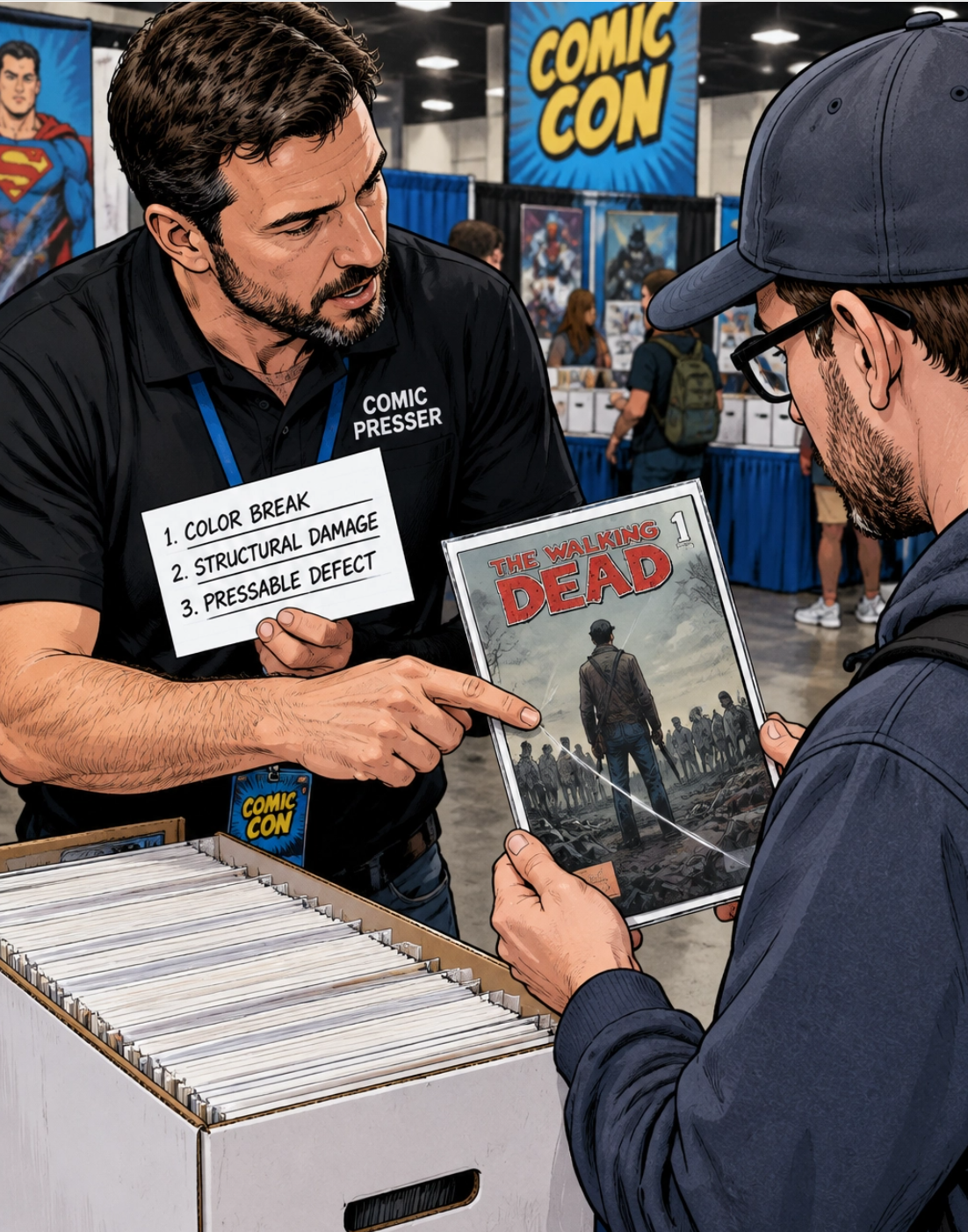
How a Relationship With a Professional Presser Can Change the Way You Collect Comics
A bent comic is not always a bad comic.
A dirty comic is not always a ruined comic.
And a rough-looking book is not automatically a bargain.
The difficult part is learning the difference.
That is where an ongoing relationship with a professional comic book presser can change the way you collect. A good presser does more than perform comic book pressing and comic book cleaning. They teach you how paper, ink, bends, dents, and moisture behave.
Over time, you stop judging a comic by its first impression. You slow down. You inspect closely. You learn to separate honest, manageable defects from permanent damage.
That knowledge can open doors to books you once thought were out of reach.
1. The Expensive Mistake: Calling Every Rough Book Ruined
Many collectors see a wavy cover, a dirty back cover, or several spine ticks and immediately move on.
That can be an expensive mistake.
Other collectors make the opposite mistake. They see every tired-looking comic as a hidden bargain. They assume pressing can fix anything.
That is wishful thinking.
A professional presser helps you find the middle ground. They can explain whether a defect is cosmetic and potentially pressable or whether it is structural and permanent.
The goal is not to buy damaged books blindly. The goal is to understand what you are seeing before you spend your money.
A comic with non-color-breaking bends, light dents, surface dirt, or storage waviness may have much better eye appeal hiding underneath. A comic with a color-breaking crease, missing paper, brittle pages, or water damage has a different story.
The cover may look similar from across a convention table. The physical problems are not similar.
2. What a Presser Teaches You to See Quickly
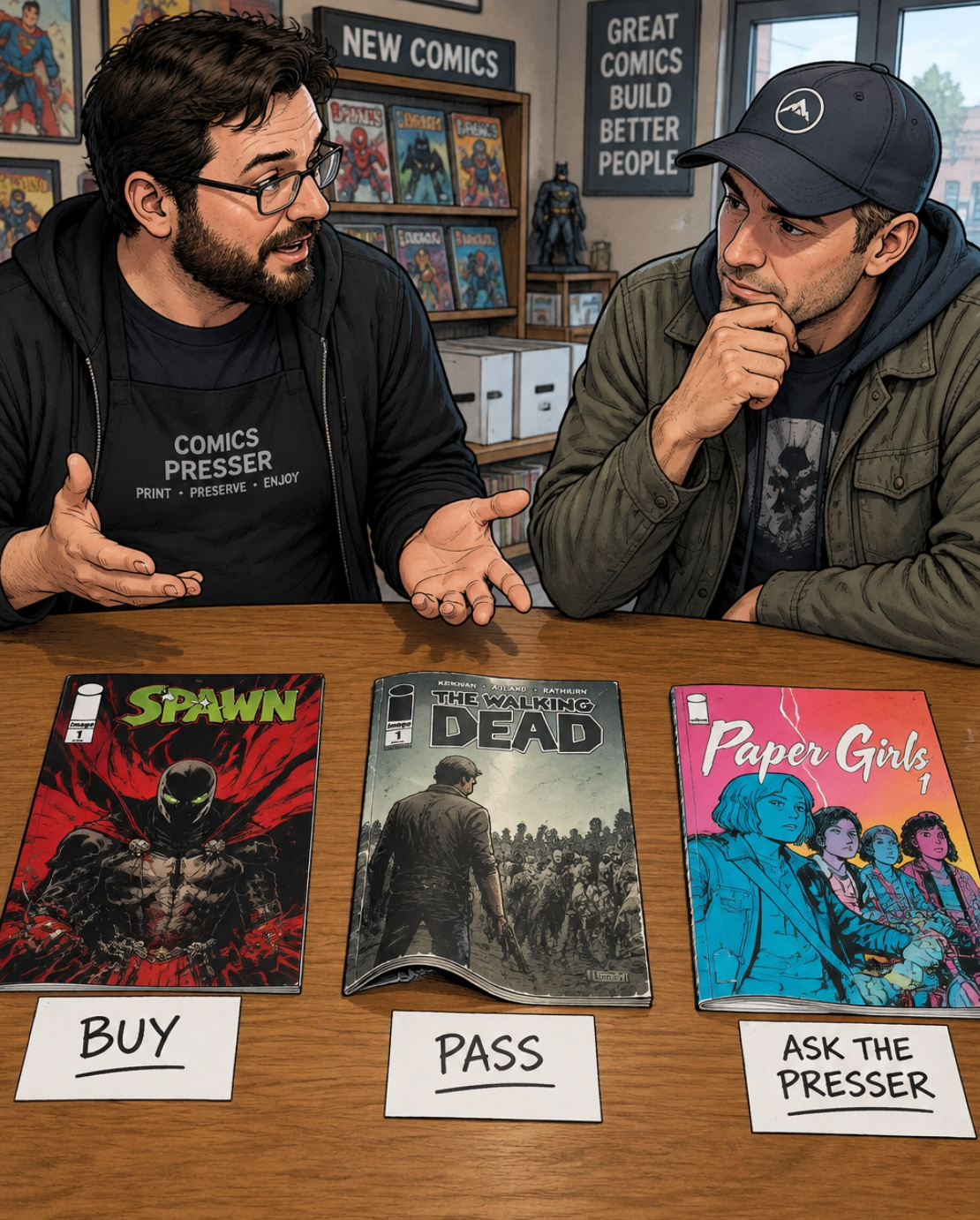
A presser trains your eye to look beyond the overall appearance. You begin searching for the principal defects: the major flaws that determine whether the comic is a realistic pressing candidate and what its condition can reasonably become.
You learn to ask five questions:
Where is the defect?
How deep is it?
Does the ink break?
What is the paper quality?
How far does the problem extend?
Defects that may respond well
Depending on severity and paper condition, professional work may improve:
Non-color-breaking bends
Light dents and handling impressions
Cover ripples and storage waves
Mild waviness from humidity
Some non-color-breaking spine ticks
Cover curl or a mild spine roll
Surface dirt, fingerprints, and light grime through appropriate comic book dry cleaning
A book does not need to be perfect to be enjoyable. It needs to be honestly understood.
Defects pressing cannot repair
Pressing cannot:
Replace missing paper
Repair tears
Restore missing color
Erase a color-breaking crease
Reverse brittle pages
Remove deep stains or water damage
Correct severe spine splits
Undo major staple or structural damage
Location matters. A shallow bend across an open area is not the same as a hard crease through a character’s face. A soft spine stress is not the same as a split with missing material.
This is why you should inspect comics under angled light. Flat overhead lighting can hide a shallow impression. Raking light reveals the way the surface rises and falls. Tilt the book slowly. Watch how the light travels across the cover. Color breaks often appear as sharp white lines or exposed paper fibers. Soft defects change the reflection without breaking the printed surface.
A simple candidate diagram
The presser does not remove judgment from the process. They help you develop better judgment.
3. The Long-Box Advantage
This knowledge becomes especially useful in local comic shops, dollar bins, estate-sale stacks, bargain boxes, and convention long boxes.
A comic may look poor under bright, flat lighting. The corners may be soft. The cover may have a wave. The spine may show several ticks.
Slow down.
Pull the book from the box. Check the front and back. Look at the spine. Open it carefully and confirm that the interior is complete. Use angled light if the seller allows it.
You may discover that the book’s problems are mostly surface-level. The cover is tired, but not torn. The bends are visible, but they do not break color. The pages are supple. The staples are secure.
That does not make the comic high grade. It may make it a much more attractive collecting copy than the first impression suggested.
This is where a relationship with a presser becomes educational. You can send photographs or describe what you saw, but eventually you begin making the first decision yourself.
You learn when to ask, “Is this worth considering?”
You also learn when to say, “This is not a pressing problem. This is a paper problem.”
4. The Affordable-Key Strategy
Suppose a key issue is outside your budget in clean condition.
Do not assume your only choices are to overspend or forget the book exists.
Look one rung down.
You may not be able to afford a clean, high-grade copy. You may be able to afford a lower-grade copy with pressable defects.
Here is a hypothetical example:
Tired-looking key issue: $40
Professional pressing and cleaning: $15–$20
Total before shipping or other costs: $55–$60
If the book has appropriate defects, professional treatment may create substantially more eye appeal. The cover may look flatter, cleaner, and less tired. The comic may become a much more satisfying copy to own.
But there is no guarantee. Pressing does not promise a specific grade, value increase, or market outcome. The result depends on the book’s paper, defects, handling history, and previous treatment.
The point is access.
A $40 copy that becomes more attractive after careful preservation may let you own a key you could not otherwise justify. You are collecting the comic, not chasing a number.
5. Why the Relationship Matters
A reliable presser who understands your goals and budget can give you useful answers:
“Buy this.”
“Pass on this.”
“Pay less for this.”
“This one has a pressable cover.”
“That crease breaks color and will remain.”
“The back cover is the real problem.”
“You should still buy it if you love the issue, but do not pay as though it will become a high-grade copy.”
That honesty protects you from wasting money.
Over time, the presser learns whether you care most about affordability, appearance, preservation, reading copies, key issues, or complete runs. The collector learns how the presser evaluates paper and defects.
It becomes a shared language.
You no longer need to ask whether a professional can “fix” a comic. You start asking better questions about what the book is, what it can realistically become, and whether the price is fair today.
6. Pressing as Collecting Knowledge
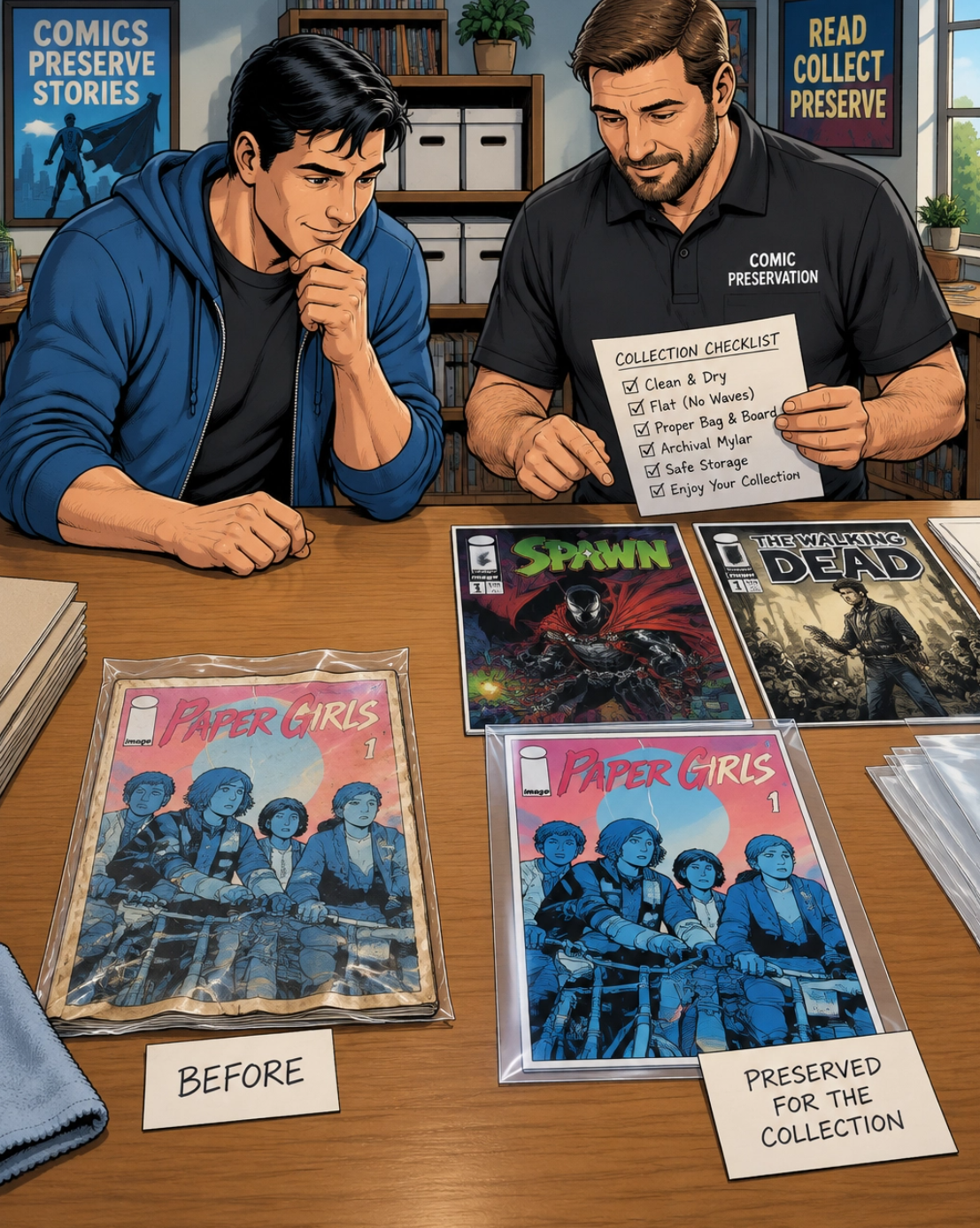
Professional pressing should not be treated only as a step before encapsulation. It can be part of your comic book preservation education even if you never submit a book to CGC or any other grading company.
Before-and-after observations teach you how:
Paper reacts to pressure
Surface dirt changes visual contrast
Bends settle over time
Storage conditions affect flatness
Raw comics drift when left dirty, bent, or overpacked
Color-breaking damage remains visible because the printed surface is already broken
A flat, clean comic is easier to store and enjoy than a dirty, distorted comic left to age in a crowded long box.
This is also where caution matters. Professional pressers do not use loose drafting powder as a casual dry-cleaning shortcut. Drafting powder can be abrasive, leave residue, disturb surface ink, and damage paper fibers when used carelessly. Do not experiment with unfamiliar cleaning methods on an expensive key. If you want to test a technique, use dollar books first.
A professional comic book restoration service should also be clear about the difference between preservation work and restoration. At Pressing Issues, our goal is to maintain an unrestored standard while providing a complimentary value analysis that helps you understand the book before work begins.
7. What to Inspect Before Buying
Use this checklist in a shop or at a convention:
Confirm the issue, printing, and cover.
Make sure the book is complete.
Inspect the front and back under angled light.
Look for color-breaking lines.
Check the spine, corners, and staple areas.
Examine page quality, stains, tears, odor, and brittleness.
Watch for moisture damage or waviness.
Ask whether the book has been pressed before.
Consider whether there may be undisclosed restoration.
Add the purchase price and professional treatment cost.
Ask whether you would still enjoy owning the comic if its market value did not change.
You can use Key Collector Comics to confirm why an issue matters. For broad market context, tools such as GoCollect, CovrPrice, and GPA/GPAnalysis may be useful. Heritage Auctions and eBay can provide additional sales context.
Use those resources as background, not as permission to overpay.
ComicBook.com can help you understand entertainment news that may affect collector attention, but your first question should remain simple: do you want to own this comic?
8. A Healthier Collecting Mindset
This approach lets you buy books you love rather than only books already priced for perfection.
You become more patient. You inspect more carefully. You stop treating every flaw as a disaster and every flaw as an opportunity.
That balance matters.
A professional presser becomes part of your collecting and preservation team, not merely someone you contact before a CGC pressing submission. Their knowledge can help you avoid structural damage, recognize manageable defects, and make better purchases before you ever ask for help.
The best relationship may expand your buying eye and your budget at the same time.
You are not hunting for damaged books. You are learning to recognize books whose problems are honest, understandable, and potentially manageable.
And if you love something, buy it, but always use caution.