
The Results Speak: Professional Pressing vs. The YouTube Rabbit Hole
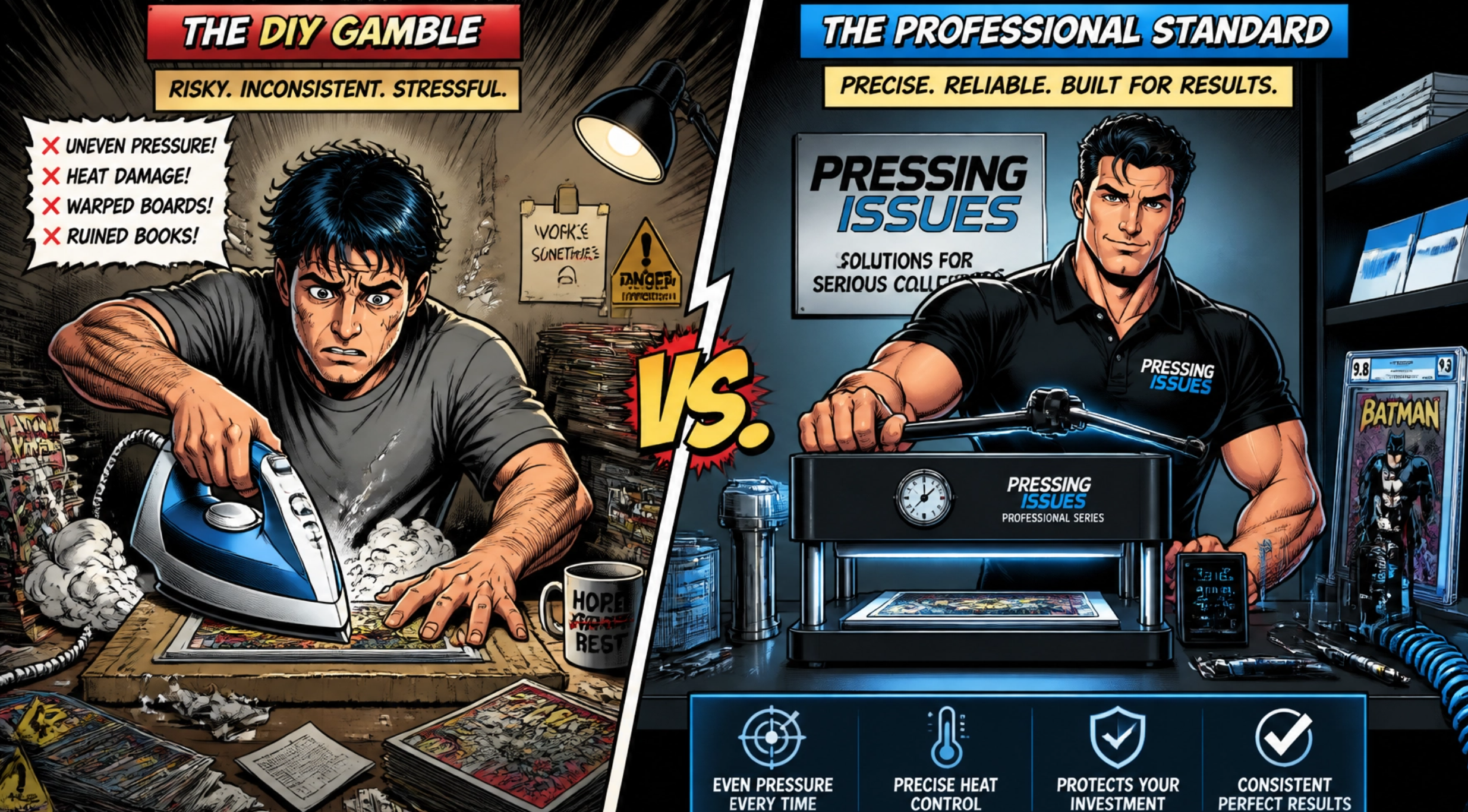
Open up video-sharing platforms today, and you will find an entire subculture dedicated to the mechanics of comic book pressing and dry cleaning. Scores of self-proclaimed experts beam into your living room, each swearing they hold the master key to unlocking a CGC 9.8 grade from your raw back issues. They brandish specialized heat presses and talk about "settings" as if the machine does the work for them.
The internet loves the myth of the "One True Way." But in the reality of archival preservation, the equipment is just a tool. The real magic isn't in the press; it’s in the hands of the person using it.
As a collector, you have likely stared at a stack of comic books, wondering whether to invest in a home setup or trust your treasures to professionals. Let’s cut through the noise, examine the technical divide between hobby tinkering and professional restoration, and look at why the only metric that truly matters is the final grade.
The Wild West of DIY Comic Pressing
In the DIY corner of the hobby, enthusiasm is high and the barrier to entry seems manageable. You buy a hobby press for a few hundred dollars, pick up some chemical sponges, and watch hours of tutorials.
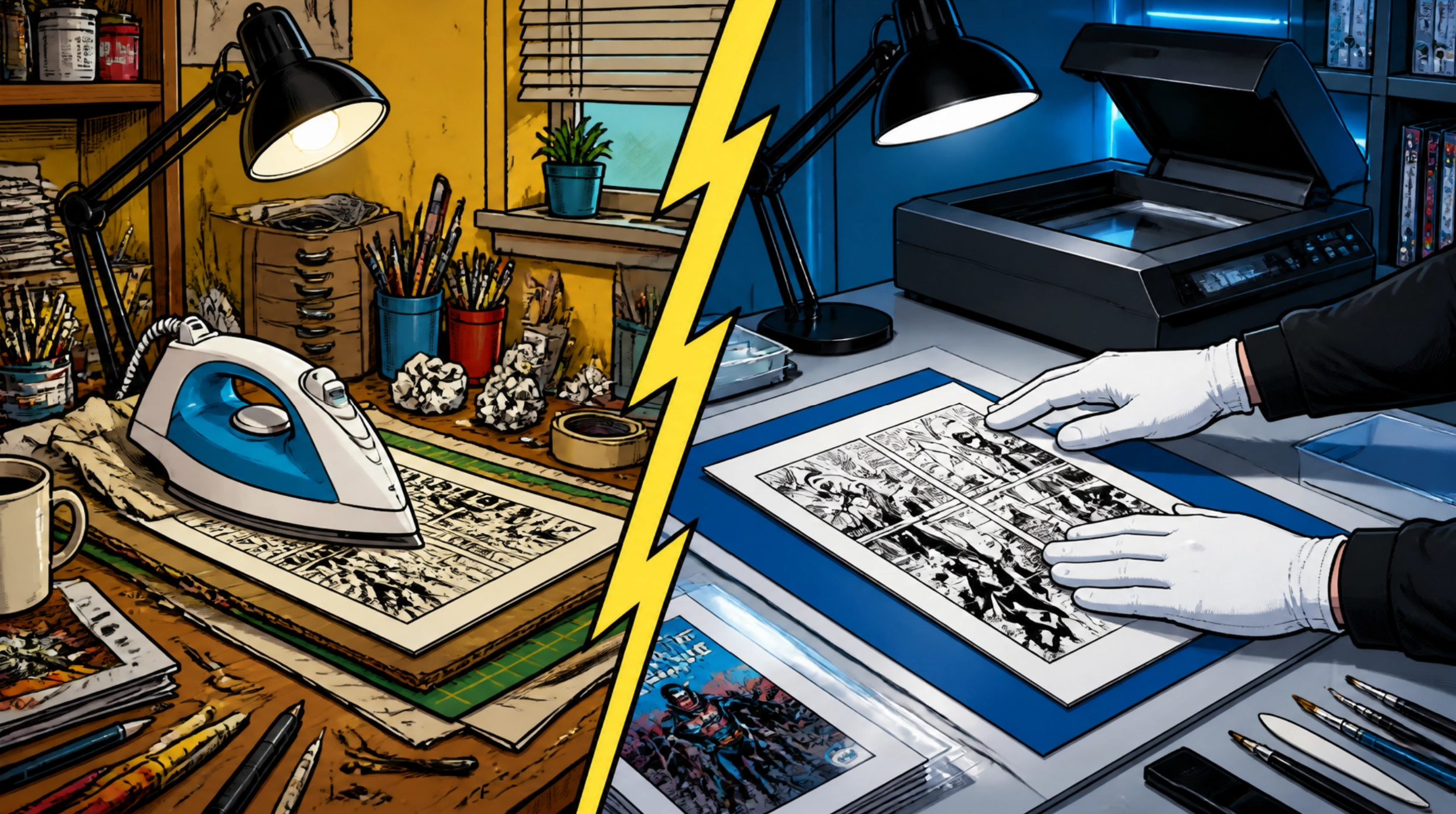
The appeal is obvious: you maintain absolute control over every book in your collection, and you pay pennies per title in consumables. For modern, low-value books worth $15 or $20, practicing your technique in your spare time is a harmless and fun extension of the hobby.
However, the line between a fun weekend experiment and a financial disaster is razor-thin.
When you watch a video demonstration, you are seeing the highlight reel. You aren't seeing the books where heat was miscalculated by five degrees, resulting in permanent gloss loss. You aren't seeing the pages where excessive moisture activation caused paper fibers to swell, creating wavy distortions that can never be undone.
Possessing equipment does not equate to mastering a medium. Paper has memory, ink has chemistry, and every single publishing era: from Golden Age newsprint to modern cardstock covers: reacts differently to thermal manipulation.
The Professional Reality: Intuition Earned Through Repetition
You can buy the most expensive press on the market, but it won't teach you the "feel" of 1960s newsprint vs. 1990s gloss. At Pressing Issues, our expertise isn't born from a manual—it’s earned through the thousands of books that have crossed our plates.
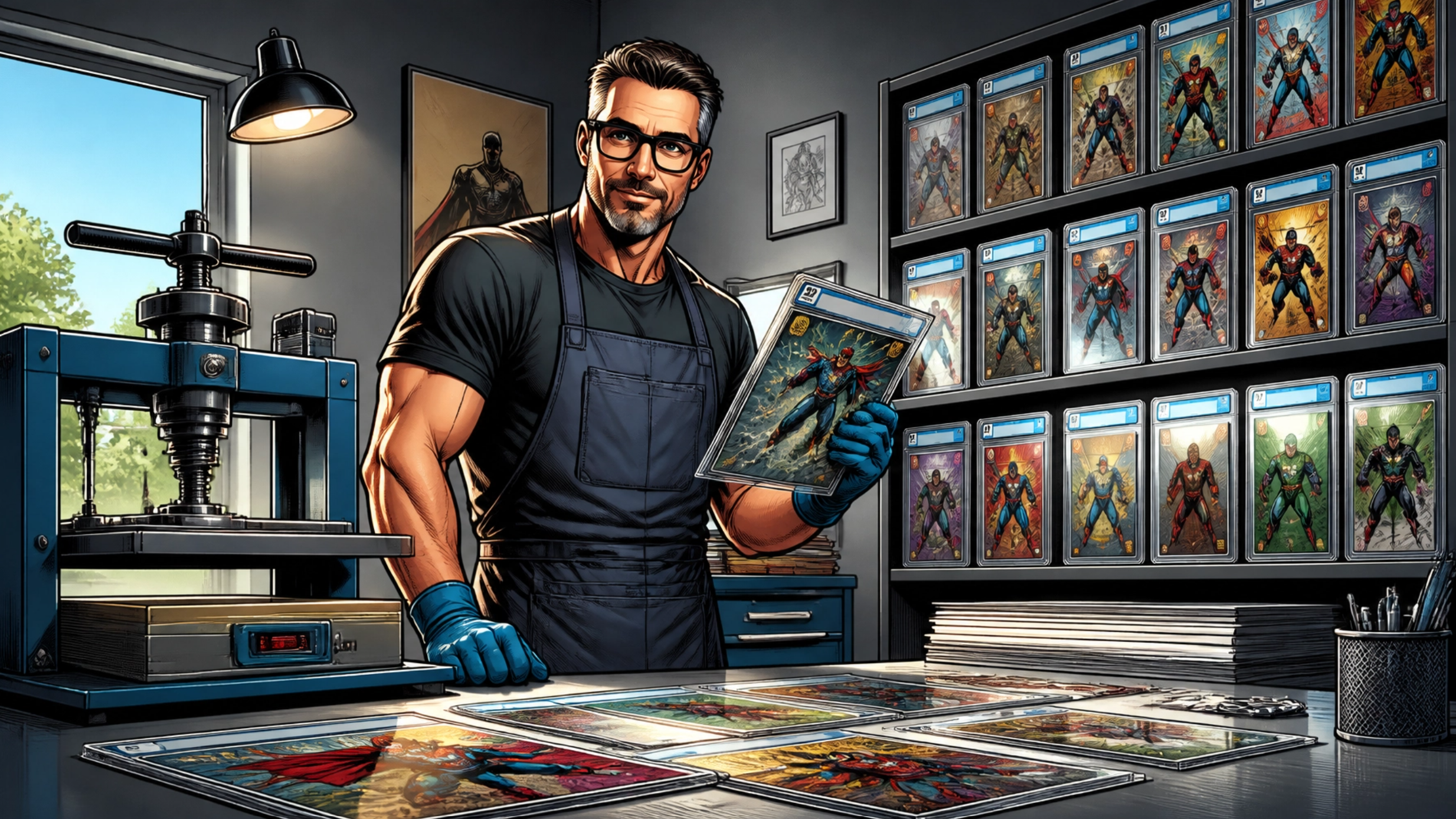
The true differentiator in professional comic book pressing is repetition. Over years of handling fragile paper stocks, a master presser develops an intuitive understanding of how paper reacts to pressure and heat. It’s about knowing when a book "wants" to be pressed and when the paper is telling you to stop.
Consider what happens when a key Silver Age book crosses our desk. You are not just paying for a machine to clamp down on paper. You are paying for:
Comprehensive Condition Assessment: Identifying non-color-breaking creases, spine rolls, and pressable dents before any heat touches the book.
Meticulous Dry Cleaning: Removing surface dirt, foxing precursors, and handling grime using specialized archival tools that protect the delicate ink surface.
Controlled Stabilization: Relaxing paper fibers safely in a regulated environment to prevent tearing or over-flattening.
If you want to dive deeper into our methodology, explore our complete our process guide to see how we handle every book with museum-grade care.
Hobby Stakes vs. High-Value Reality
Let’s be brutally honest about financial math.
If you make a mistake while pressing a $15 modern variant, the tuition fee is minimal. But what happens when you decide to try your hand at a key issue worth $1,500? A single slip of the wrist, an uneven heating plate, or incorrect moisture levels can instantly wipe out hundreds: or thousands: of dollars in market value.
When a collector's grail is on the line, "I saw this work on YouTube" is not an acceptable safety net.
Professional comic cleaning and comic book pressing services exist to protect your capital. We absorb the technical risks so you don't have to. Through careful comic cleaning and precision flattening, we maximize eye appeal while strictly preserving your book in an unrestored state that satisfies grading standards.
The Results-First Philosophy
In the end, arguing over whose machine has more digital bells and whistles is a distraction. A press doesn't think; a technician does. At Pressing Issues, we don't engage in internet debates about gear. We let our results do the talking.
Before we touch a single book, every collection goes through our Complimentary Value Analysis. We evaluate your books honestly, estimating the potential increase in market value so you know precisely what return on investment to expect.
When your books return from third-party grading with higher numbers, sharper edges, and pristine eye appeal, the debate ends. The slab speaks for itself.
Frequently Asked Questions
Does pressing make a comic book "restored"?
No. Professional pressing and dry cleaning are recognized by major grading companies like CGC as non-restorative preservation techniques. They do not add foreign material or alter original colors.
Can all comic book defects be pressed out?
No. Any defect that breaks the color of the ink: such as heavy scuffs, tears, or deep spine ticks: cannot be removed by pressing. Pressing targets non-color-breaking defects like bends, ripples, waves, and spine rolls.
Why shouldn't I try pressing my own high-value books?
High-value books carry significant financial risk. Without professional experience in thermal regulation and paper response across different eras, mistakes can lead to permanent gloss loss, paper scorching, or structural damage.