
The 9.8 Gambit: How to Use the CGC Prescreen to Optimize Your Collection
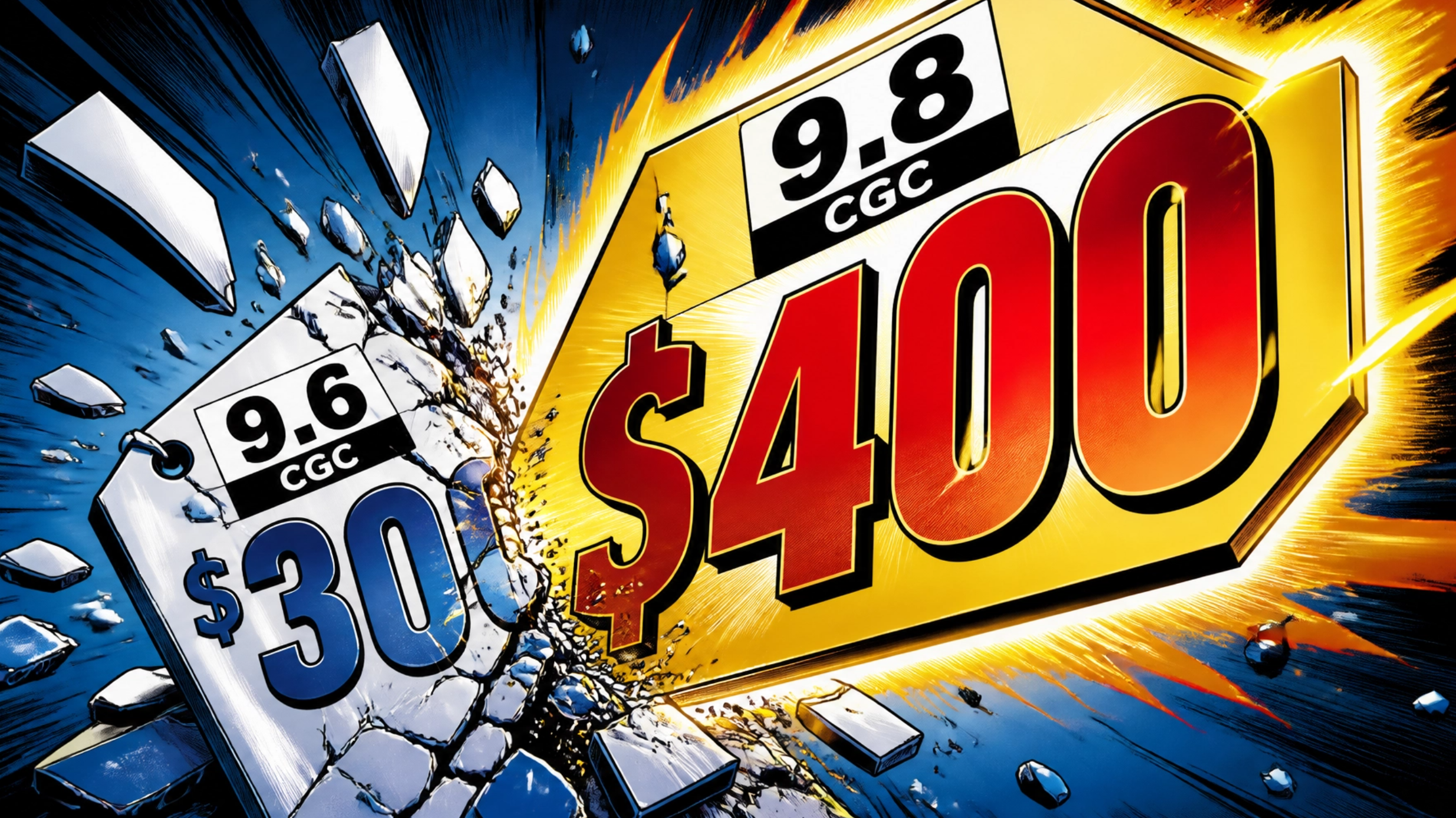
The CGC Prescreen tool has changed the game for comic book investment.
In the high-stakes arena of modern comic book collecting and flipping, hope is not a strategy. Every veteran collector has felt the sting of opening a freshly returned grading box, only to find that a book they pinned their financial hopes on landed at a 9.6 instead of the coveted 9.8. That two-tenth difference on the scale can translate to hundreds: sometimes thousands: of dollars in lost value.
If you want to stop gambling with your collection and start operating with institutional discipline, you need to master the ultimate filtering mechanism in the hobby: the CGC 9.8 prescreen.
When wielded correctly, the prescreen turns casual hunting into a calculated investment system. It allows you to scour local comic book shops, comb through dollar bins and back-issue boxes, and evaluate your own long-held inventory with absolute financial protection.
Understanding the Mechanics: The Ultimate Filter
Before you send off your next submission batch, you must understand how the CGC prescreen functions under the hood.
When you select a minimum grade threshold of 9.8 on your submission form, third-party authenticators evaluate your book against that strict standard. If the book meets or exceeds a 9.8, it gets graded, encapsulated, and you pay the full submission fee. If the book fails to hit that threshold: landing at a 9.6, 9.4, or lower: it is rejected from encapsulation and returned raw, with only a nominal reject fee (typically around $9 for standard tiers or $5 for bulk).
Think of this as a built-in safety valve for your capital. Without a prescreen, you pay full freight for every slab, regardless of whether the final grade makes economic sense. With a prescreen, you eliminate the dead weight before it drains your wallet.
To ensure your books are in prime condition before they ever touch a submission form, exploring professional services like CGC Submission Handling can streamline the entire process from intake to return.
The Hunt: Scouting for "9.8 or Bust" Candidates
The thrill of the hunt is universal, but successful flippers operate differently than weekend hobbyists. They do not buy books hoping they will look nice in a slab; they buy books with a specific profit margin locked in their crosshairs.
When you walk into a local comic book shop or sort through unpressed inventory at a convention, your eyes should instantly scan for books that qualify as "9.8 or Bust." These are issues where the fair market value (FMV) at a 9.8 commands a massive premium, while the value at a 9.6 barely covers your all-in costs.
The Era Batching Rule: Do Not Mix Eras
One of the most common and costly mistakes collectors make is dumping a random assortment of books into a single submission box. You might toss a 1970s Bronze Age book in alongside a 1990s Modern book, assuming graders evaluate each comic in a vacuum.
They do not. Graders are human, and they naturally judge Near Mint books in each batch against one another.
Moderns with Moderns: Modern era books have sharper paper stock, crisper gloss, and different production tolerances than older books.
Bronze with Bronze: Bronze Age books exhibit different ink absorption, paper aging, and binding characteristics.
If you mix a Bronze Age book into a batch dominated by pristine Modern books, the older book's natural paper characteristics will immediately stand out in contrast, potentially costing you that precious threshold. Always batch similar eras together to keep the visual baseline consistent for the grading team.
The 9.6 vs. 9.8 Chasm: Where the Money is Made
To understand why the prescreen is so powerful, you must look at the math. In many modern and key issues, the gap between a 9.6 and a 9.8 is the steepest cliff on the grading ladder.
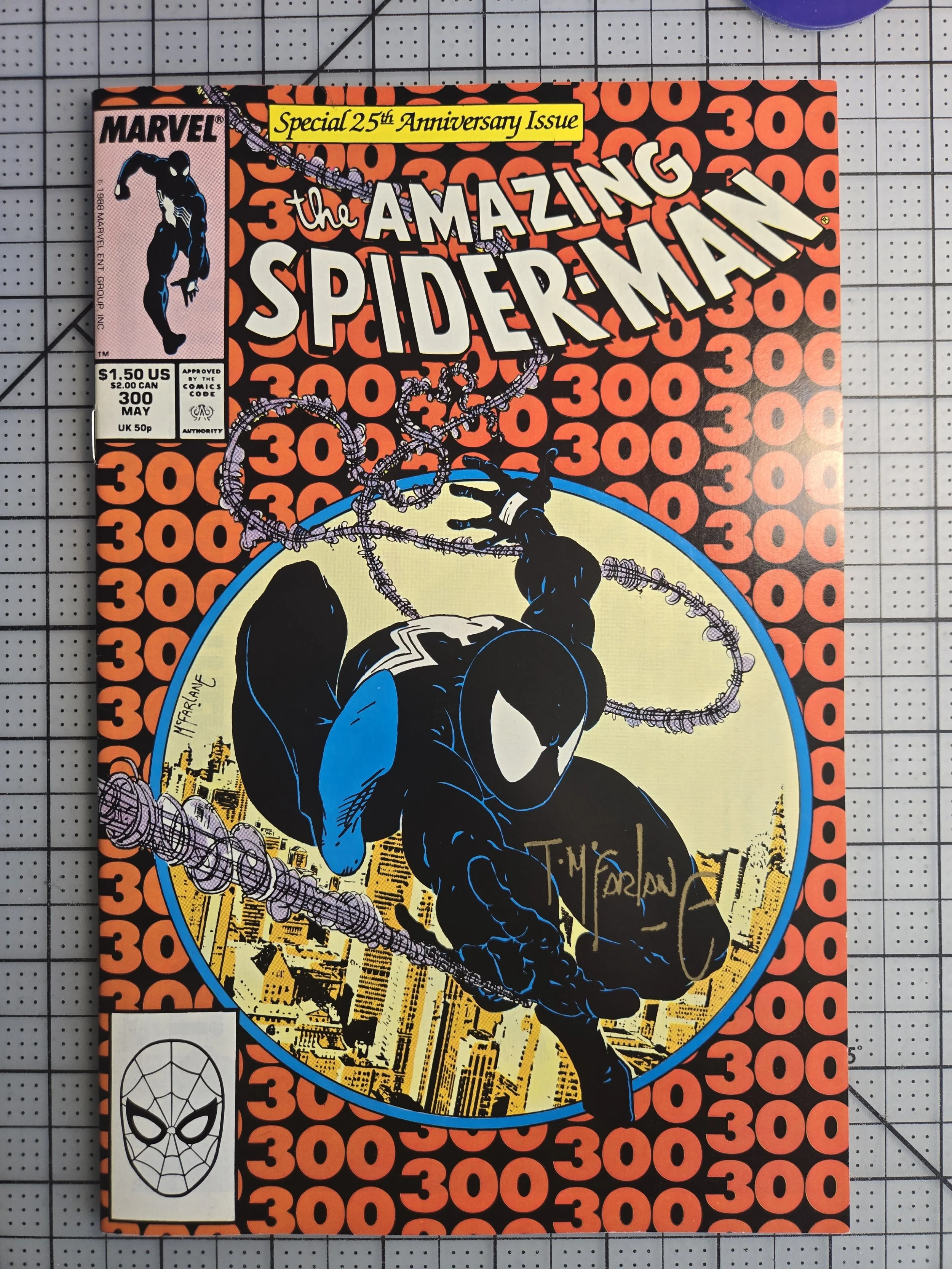
There is a HUGE value difference between 9.6 and 9.8, especially on books like this Amazing Spider Man 300.
For numerous modern keys and scarcer variants, a 9.6 grade commands modest interest: sometimes fetching around $30 to $50, which barely covers case cost, grading fees, and shipping. Yet, that exact same book certified at a 9.8 can skyrocket to $300, $400, or even thousands of dollars simply because the census data shows extreme scarcity at the top grade.
9.6 Value: Often sits around case cost or lower profit margins.
9.8 Value: Represents a low-census trophy commanding 2x to 4x (or more) the price of the tier below it.
If a book cannot clear the 9.8 hurdle, paying to slab it at 9.6 is often a losing proposition. The prescreen ensures you only pay for the winners.
Subjectivity, Resubmission, and the Power of Pressing
The line separating a 9.6 from a 9.8 is remarkably esoteric. It often comes down to a micro-scuff on the back cover, a tiny non-color-breaking indent caught under strong magnification, or a grader's subjective interpretation on a given Tuesday morning.
If your candidate misses the 9.8 mark and returns raw, do not despair: and do not immediately accept defeat. One of the most effective insider strategies is to crack the book (if it was slabbed previously) or re-batch it for a future submission. A different primary reviewer examining the book under a different light may make a completely different judgment call.
However, none of this works without foundational preparation. You cannot expect an untreated, raw book pulled straight from a long box to hit a 9.8. Pressing is the great equalizer. Professional restoration and pressing remove non-color-breaking defects like spine ticks, bends, and surface ripples without triggering "restored" designations by grading standards.
To ensure your books possess the structural integrity required to survive the prescreen gauntlet, professional Comic Book Pressing is an absolute prerequisite.
What I Have Learned: Mastering the System
Over years of handling thousands of books, evaluating collections, and refining submission pipelines, I have learned one immutable truth: discipline beats optimism every single time.
Collectors lose money because they fall in love with a book's potential rather than its physical reality. They see a minor dent and tell themselves, "CGC will let that slide for a 9.8." They won't.
By treating the CGC 9.8 prescreen as your primary filter, you force yourself to inspect inventory with clinical detachment. You clean it, you press it, you batch it by era, and you let the graders do their job. If it hits, you hold a high-census asset. If it misses, you adjust, re-batch, and try again.
Key Takeaways
Weaponize the Prescreen: Use the 9.8 minimum threshold to filter out marginal books and protect your capital from high slab fees on low-return grades.
Batch by Era: Always submit Moderns with Moderns and Bronze with Bronze. Graders evaluate batch-mates against one another; mixing eras hurts your odds.
Understand the Chasm: Recognize that many books are worth little more than case cost at 9.6, but soar to $400+ at 9.8 due to low census counts.
Embrace Resubmission: Because the 9.6-to-9.8 boundary is subjective, a missed book can often be resubmitted in a new batch for a fresh set of eyes.
Press Before You Submit: Professional pressing is non-negotiable for eliminating surface defects and achieving that flawless 9.8 eye appeal.
Frequently Asked Questions
What happens if my comic book fails the CGC 9.8 prescreen?
If the book does not meet the 9.8 minimum grade you selected, CGC will reject encapsulation and return the raw book to you. You will only pay a small reject fee (typically $9 for standard tiers or $5 for bulk) rather than the full grading fee.
Why is era batching so important for submissions?
Graders review books within batches under similar conditions. If you mix Modern age books with Bronze age paper stock, the older paper characteristics stand out starkly against the batch-mates, which can negatively impact grading consistency.
Is professional pressing considered "restoration" by CGC?
No. Expert comic book pressing and dry cleaning remove non-color-breaking defects like spine ticks, light bends, and surface dirt without adding foreign materials or altering the original paper. When performed correctly, it is fully accepted by professional grading standards without receiving a "restored" label.