
Why Comics Turn Yellow: What Collectors Need to Know

Comics turn yellow because lignin and residual acids in wood-pulp paper oxidize and break down over time. Light, heat, humidity, and acidic storage materials all accelerate that process. The good news: you can slow it significantly with the right storage setup, starting today.
Immediate first steps if you have a yellowing book:
Move it away from direct light and any heat source right now
Replace any PVC or non-archival bag with a polypropylene, polyethylene, or Mylar sleeve
Add an acid-free, lignin-buffered backing board
Store the book in a cool (ideally below 70°F), dark location with stable humidity around 40–50% RH
Log the book's current condition with photos before doing anything else
Even under decent storage conditions, older groundwood paper is chemically unstable from the start. Conservation is about slowing the clock, not stopping it. That reality shapes every decision a serious collector makes, from storage materials to grading submissions.
Table of Contents
Can you fix yellowed comics? What restoration can and cannot do
How to stop comics from yellowing: storage and handling that works
What professional pressing and cleaning can realistically do
Pressing Issues: professional care for comics worth protecting
Why do comics turn yellow? The chemistry behind it
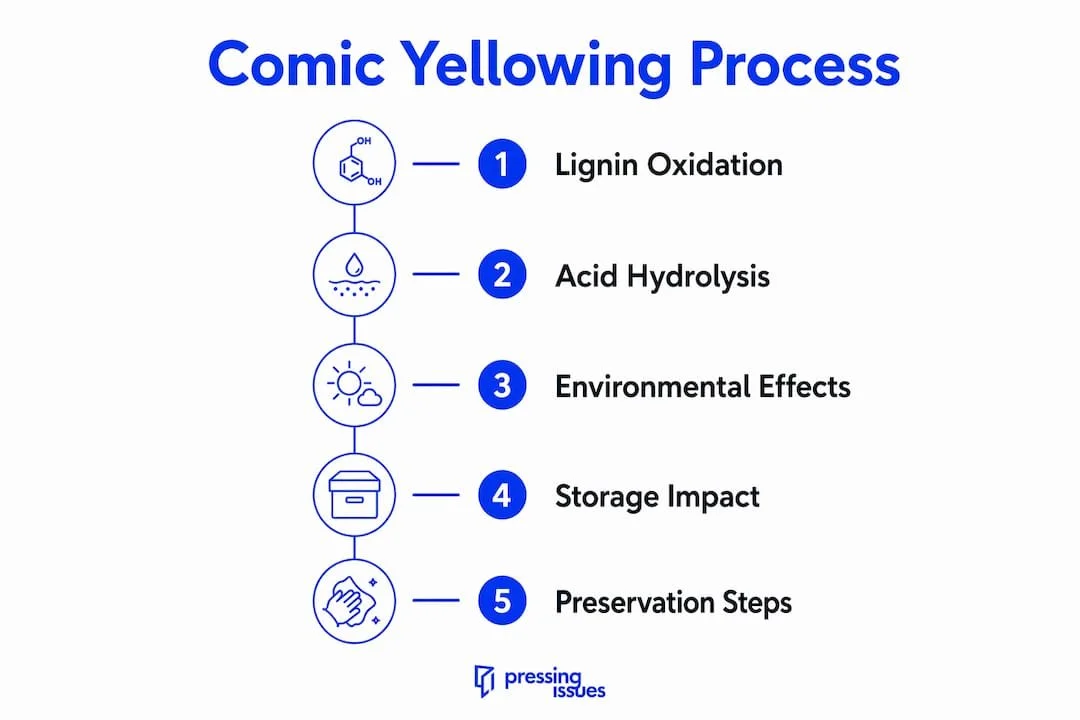
The short answer: three overlapping chemical processes are destroying your paper simultaneously. Understanding each one helps you identify which factors you can actually control.
Lignin oxidation: the primary culprit
Lignin is a complex organic polymer that holds wood fibers together. Wood-pulp paper, especially the cheap groundwood newsprint used in Golden Age and early Silver Age comics, contains high concentrations of it. When lignin is exposed to oxygen and ultraviolet light, it breaks down into colored compounds called chromophores. Those chromophores are what you see as yellowing or browning. High-lignin groundwood newsprint can begin yellowing within days under direct sunlight, while lignin-reduced papers remain stable far longer.
Acid hydrolysis: brittleness and browning from within
Acids in the paper itself cut cellulose chains through a process called acid hydrolysis. The result is paper that becomes brittle and discolored over time, even without any environmental exposure. Manufacturing chemicals are a big part of this. Alum-rosin sizing, widely used to prepare paper surfaces for printing ink, eventually releases sulfuric acid inside the paper. That acid then attacks the cellulose structure from within, a phenomenon conservators call "inherent vice."
Why small pH changes matter more than you think
The pH scale is logarithmic, so small drops in acidity have enormous consequences. A pH of 4.5 is roughly 200 times more acidic than a pH of 6.5. Fresh newsprint typically carries a pH of 4.5 or lower. Older, deteriorated paper on the verge of crumbling can drop to pH 3.0. That's why "acid-free" claims on cheap backing boards deserve skepticism. Many products are only surface-coated with an alkaline substance, making them acid-free for a short window before the underlying wood-pulp core begins migrating acidity into your comic.
Pro Tip:True archival backing boards are buffered throughout with calcium carbonate to a minimum pH of 8.5, not just sprayed on the surface. Boards labeled "acid-free at time of manufacture" often don't meet that standard.
The visual pattern of tanning follows the chemistry. Tanning typically begins at the edges where oxygen exposure is greatest, creating a darker margin that slowly works inward. Interior pages often look better than covers precisely because they receive less direct oxygen contact.
Why Golden Age and newsprint comics yellow faster
Not all comics age at the same rate. The era and paper stock matter as much as storage conditions, and knowing which books are most vulnerable helps you prioritize your collection.
Paper type by era and expected yellowing behavior:
Golden Age (1938–1956): High-lignin groundwood newsprint with significant manufacturing acids. These books are the most chemically unstable and will tan even under good storage. Golden and Silver Age books are far more susceptible to yellowing due to their paper types.
Silver Age (1956–1970): Still largely newsprint-based, though some publishers began experimenting with better stock. Yellowing is common but variable by publisher and print run.
Bronze Age (1970–1985): Paper quality improved modestly. Tanning is less severe but still present, especially in books stored poorly.
Modern Age (1985–present): Most publishers shifted to lower-lignin or alkaline papers. CGC notes that tanning is nearly absent in newer comics due to changes in paper composition.
Manufacturing choices compounded the problem in earlier decades. Cost pressures pushed publishers toward the cheapest available stock, which meant high recycled-pulp content, inconsistent sizing chemicals, and minimal quality control. Dell Comics from the 1950s and 1960s, for example, are graded less harshly for inside cover tanning because their paper type made it nearly universal.
Foxing vs. tanning: they are not the same problem
Collectors sometimes confuse foxing with general yellowing, but they require different responses. Foxing appears as discrete brown spots and relates to mold growth or metal salt impurities in the paper. Tanning, by contrast, is an overall browning or yellowing caused by lignin oxidation and acid hydrolysis. Foxing is localized and often responds to surface treatment; tanning is a systemic chemical change throughout the paper. Treating one as the other can cause additional damage, so identifying which you're dealing with is the first step before any intervention.
Can you fix yellowed comics? What restoration can and cannot do
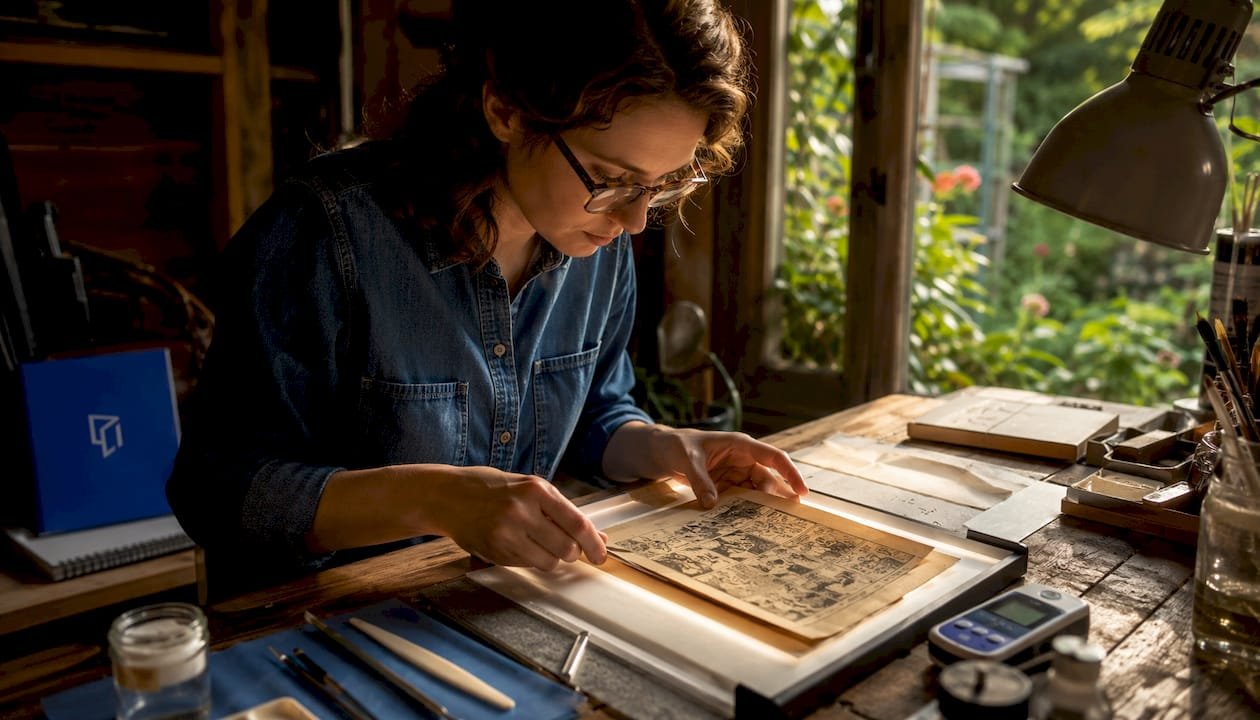
The honest answer is that deep chemical yellowing from inherent paper acids is largely irreversible. The chromophores created by lignin oxidation are embedded in the paper structure itself. You can address surface issues and slow further degradation, but you cannot chemically restore a Golden Age book to white pages through any safe DIY method.
"Inherent vice can't be fully stopped. Good storage slows it but cannot remove acids already embedded in the paper." — The Henry Ford, Comic Book Preservation Tips from Our Conservators
What surface cleaning can actually achieve
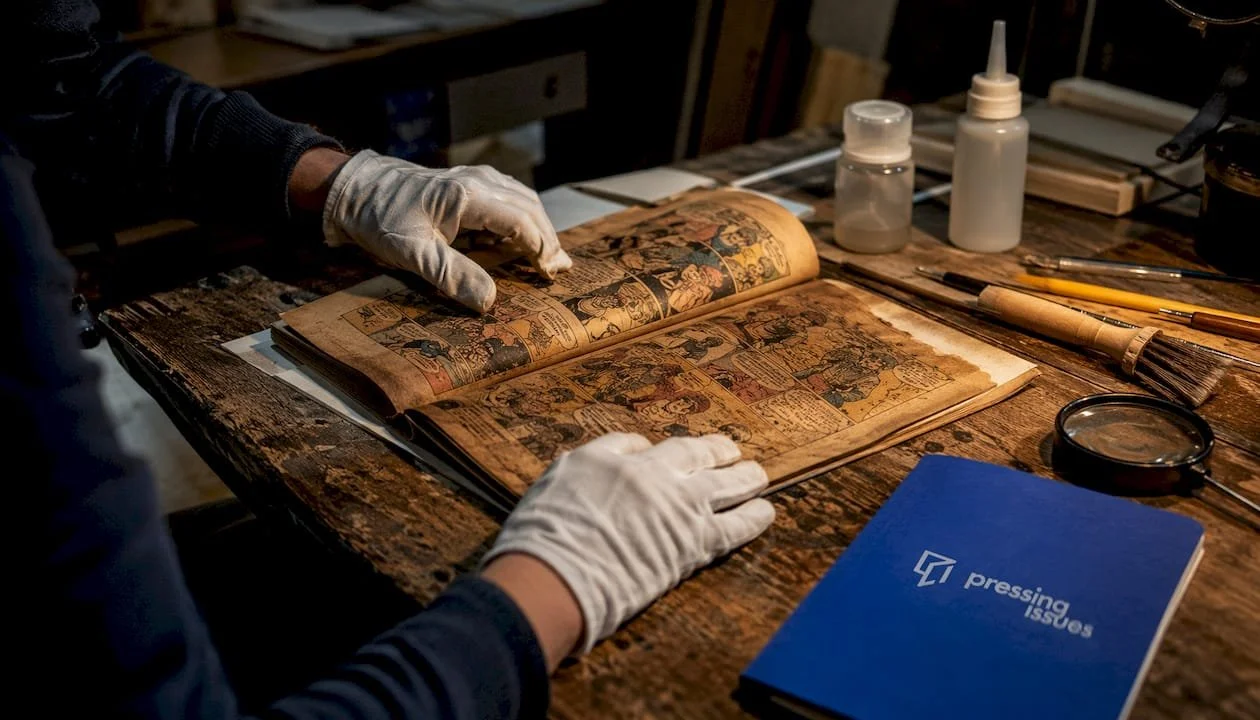
Professional surface cleaning removes dirt, grime, and some foxing from the cover and pages. It can improve the visual appearance of a book without altering its paper chemistry. Pressing addresses structural defects: spine rolls, creases, and staple stress. Neither process reverses tanning. What they can do is remove the surface-level issues that compound a tanning grade, sometimes allowing a book to present better within its tanning category.
The risks of DIY chemical treatments
Bleaching, over-wetting, and unqualified chemical deacidification carry serious risks. Bleaching can create uneven color, weaken paper fibers, and leave residue that accelerates future degradation. Over-wetting causes warping and can activate latent mold. Adhesive and tape repairs are particularly destructive because the adhesive migrates into the paper over time, creating permanent staining that is far harder to address than the original defect. For types of comic book damage that involve structural compromise, a conservator or professional pressing service is the appropriate call.
How tanning affects your CGC grade
Tanning is a recognized grading defect with real market consequences. According to CGC's grader notes on tanning:
Very light tanning may be acceptable in high-grade books
Moderate tanning typically limits a book to a grade in the 8.0–9.0 range
Heavy tanning can reduce a book to a 6.0 grade or lower
Extreme cases can bring it down to a 4.0–5.0
For a key issue where the difference between a 9.0 and a 6.0 represents hundreds or thousands of dollars, understanding tanning's grading impact is not academic. It directly affects what a book is worth and whether professional intervention makes financial sense. Collectors tracking graded comic resale value should factor tanning category into every submission decision.
How to stop comics from yellowing: storage and handling that works
Prevention is where collectors have the most control. The right environment and materials can extend a comic's stable life by decades. Here's how to set it up correctly.
Priority checklist for immediate action
Move all comics away from windows, attics, and basements
Target a storage environment below 70°F and 40–50% relative humidity
Replace any PVC or vinyl bags with polypropylene, polyethylene, or Mylar sleeves
Replace non-archival backing boards with acid-free, lignin-buffered boards (pH 8.5 or higher, buffered throughout)
Add silica gel packets to sealed storage boxes if humidity control is a concern
Store boxes in interior closets, away from exterior walls and plumbing
Recommended archival materials
Sleeves: Polypropylene, polyethylene, and Mylar (biaxially oriented polyester) are all safe long-term options. Conservators at The Henry Ford recommend avoiding PVC/vinyl bags entirely, as they off-gas chemicals that accelerate paper degradation.
Backing boards: Only boards buffered throughout with calcium carbonate meet the minimum standard for long-term storage. Boards labeled "acid-free at time of manufacture" are often only surface-treated and will begin migrating acidity within a few years.
Boxes: Avoid wooden boxes and standard cardboard. Acid-free corrugated storage boxes are the baseline; plastic bins offer additional protection against moisture.
Humidity control: Silica gel packets work well in sealed boxes. A simple digital hygrometer lets you monitor conditions without opening boxes repeatedly.
The same principles that apply to storing art prints apply directly to comics: stable temperature, controlled humidity, and UV-filtered or minimal light exposure are the three non-negotiables for any paper artifact.
Common mistakes that accelerate yellowing
Bagging without an acid-free backing board (the bag alone provides no chemical protection)
Storing in attics or basements where temperature and humidity fluctuate widely
Using tape or non-archival adhesives for any repair
Stacking heavy long boxes without support, which causes spine stress and edge compression
Storing comics in safes, where fireproofing chemicals can migrate through even Mylar sleeves
Display and monitoring
If you display comics, LEDs on timers are the safest option. LEDs emit minimal UV and heat compared to incandescent or fluorescent lighting. Avoid any direct sunlight, even brief exposure. Check stored books at least annually for color bleeding onto boards, early tanning, and any mildew odor. If you detect mildew, remove the affected books immediately, air them out, and re-evaluate in three days before re-bagging.
Pro Tip:Interior closets on interior walls are usually the best storage spots in a typical home. They maintain more stable temperature and humidity than rooms with exterior walls, attics, or basements.
For collectors considering comic book encapsulation, CGC and CBCS slabs provide a sealed, archival environment that removes ongoing storage decisions from the equation entirely for key books.
What professional pressing and cleaning can realistically do
Professional services occupy a specific, well-defined lane. They are not a cure for chemical yellowing, but they can meaningfully improve a book's presentation and grade when the right conditions are met.
What pressing and cleaning actually addresses
Pressing: Removes spine rolls, reading creases, corner bends, and staple stress. A well-pressed book presents structurally cleaner and often grades higher as a result.
Surface cleaning: Removes dirt, fingerprints, and some foxing from covers and pages. This is mechanical and chemical cleaning of surface-level contamination, not paper chemistry alteration.
Staple treatment: Rust and oxidation on staples can be addressed to prevent further staining migration into adjacent pages.
Documentation: A professional service should photograph the book before and after work, giving you a clear record of condition changes.
What pressing and cleaning cannot do: re-whiten acid-damaged pages, reverse tanning that is embedded in the paper structure, or restore brittleness caused by cellulose chain breakdown.
Questions to ask before sending a book
Before committing a valuable comic to any service, ask these directly:
What cleaning methods do you use, and are they wet or dry?
Do you offer deacidification, or only mechanical pressing and surface cleaning?
What are the risks for a book in this condition, and what grade improvement is realistic?
Will you provide before-and-after photos and a written condition report?
What is your turnaround time and how is the book shipped?
Pro Tip:For books where tanning is the primary concern, ask the service provider specifically whether cleaning can reduce the appearance of light surface tanning. The answer tells you a lot about their honesty and expertise.
Professional pressing typically ranges from a few dollars per book for standard titles to higher rates for high-value keys requiring careful handling. Get a written estimate before authorizing any work, and never send a book without declaring all known defects upfront.
Key Takeaways
Comics yellow primarily because of lignin oxidation and acid hydrolysis in wood-pulp paper, processes that archival storage materials and controlled environments can slow but never fully stop.
PointDetailsLignin is the root causeWood-pulp paper contains lignin that oxidizes under light and oxygen, producing the colored compounds that cause yellowing.pH drops are exponentialA pH drop from 6.5 to 4.5 makes paper roughly 200 times more acidic, dramatically accelerating degradation.Tanning affects CGC gradesModerate tanning typically limits a book to a grade in the 8.0–9.0 range; heavy tanning can reduce a book to a 6.0 grade or lower, and extreme cases can bring it down to a 4.0–5.0.Archival materials are non-negotiableUse polypropylene or Mylar sleeves and boards buffered throughout to pH 8.5; surface-coated "acid-free" boards are not sufficient.Pressing Issues can helpProfessional pressing and cleaning removes surface defects and improves presentation, though it cannot reverse deep chemical yellowing.
When to accept natural patina and when to act
Here's a perspective that most preservation guides skip: not every yellowed comic needs intervention, and chasing a perfect white page on a common book is often a losing proposition.
The calculus changes completely based on what the book is. A reading copy of a mid-grade Bronze Age run title with light tanning? Accept the patina. The paper is doing what it was always going to do, and the cost of professional treatment will never be recovered in resale value. But a Golden Age key with heavy edge tanning sitting at a 5.0 when it could present as a 7.0 with professional cleaning and pressing? That's a different conversation entirely.
Rarity and grading sensitivity are the two variables that matter most. A book where the difference between a 6.0 and an 8.0 represents a four-figure value gap justifies professional intervention and the associated cost. A book where that same grade jump adds $15 to the value does not. Structural integrity is the other factor worth weighing: a brittle book that is actively losing pages needs stabilization regardless of value, because further degradation is guaranteed without it.
Provenance complicates the picture in a different way. Some collectors deliberately preserve patina on books with documented ownership history because the aging itself is part of the story. A first printing with original owner notes and light tanning can be more interesting, and sometimes more valuable, than a pressed and cleaned copy that looks generic. Restoration that removes character without adding grade isn't always the right call.
The honest framework: evaluate rarity first, then grading sensitivity, then structural condition, then cost of treatment versus realistic value improvement. If three of those four factors point toward intervention, call a professional. If they don't, store the book correctly and let it be.
Pressing Issues: professional care for comics worth protecting
When a comic is rare, structurally compromised, or headed for a grading submission, professional pressing and cleaning is the logical next step. Pressing Issues, based in Seattle and Portland, offers comic book pressing and cleaning services for collectors who want documented, careful work on books that matter.
The process covers pressing for structural defects, surface cleaning for covers and pages, staple treatment, and before-and-after documentation so you know exactly what changed. Pressing Issues works with collectors at every level, from single key issues to larger collection submissions. Services are not a guarantee of grade improvement, but they give a book the best possible presentation before it goes to CGC or CBCS.
To get started, visit the services and rates page for current pricing and turnaround times, or reach out directly with photos of your book and a description of its known defects. The more information you provide upfront, the better the outcome.
Further reading and sources for collectors and conservators
The sources below represent the strongest primary material available on comic paper chemistry, conservation practice, and grading standards. Use them as starting points for deeper research or professional consultation.
CGC Comics Grader Notes: Tanning — The authoritative grading reference for tanning categories, grade ranges, and how tanning severity maps to specific CGC scores. Essential for any collector making submission decisions.
Comic Book Preservation Tips from Our Conservators — The Henry Ford — Practical conservator guidance on light, humidity, archival materials, and display. One of the few sources written by trained conservators specifically for comic collectors.
Comic Book Paper — Comic Preservation — Detailed breakdown of paper chemistry, lignin, acid hydrolysis, and why different paper types age differently. Best source for the science behind yellowing.
Preservation and Storage of Comic Books — Egerber — Covers pH context and the logarithmic acidity scale in accessible terms; useful for understanding why small pH changes have large consequences.
Talking Pages and Paper — CBSI Comics — Practical collector-focused discussion of foxing vs. tanning, paper types, and the visual differences between surface stains and chemical yellowing.
Storing Comics — The Phantom Fan — Comprehensive storage guidelines covering materials, environment, and era-specific paper behavior. Particularly useful for Golden and Silver Age collectors.
These sources synthesize academic paper chemistry, conservator practice, and grading standards. For books of significant value or structural concern, use them as background before consulting a professional conservator or a qualified pressing service.