
How to Choose a Comic Book Pressing Service (And Why Process Transparency Matters)
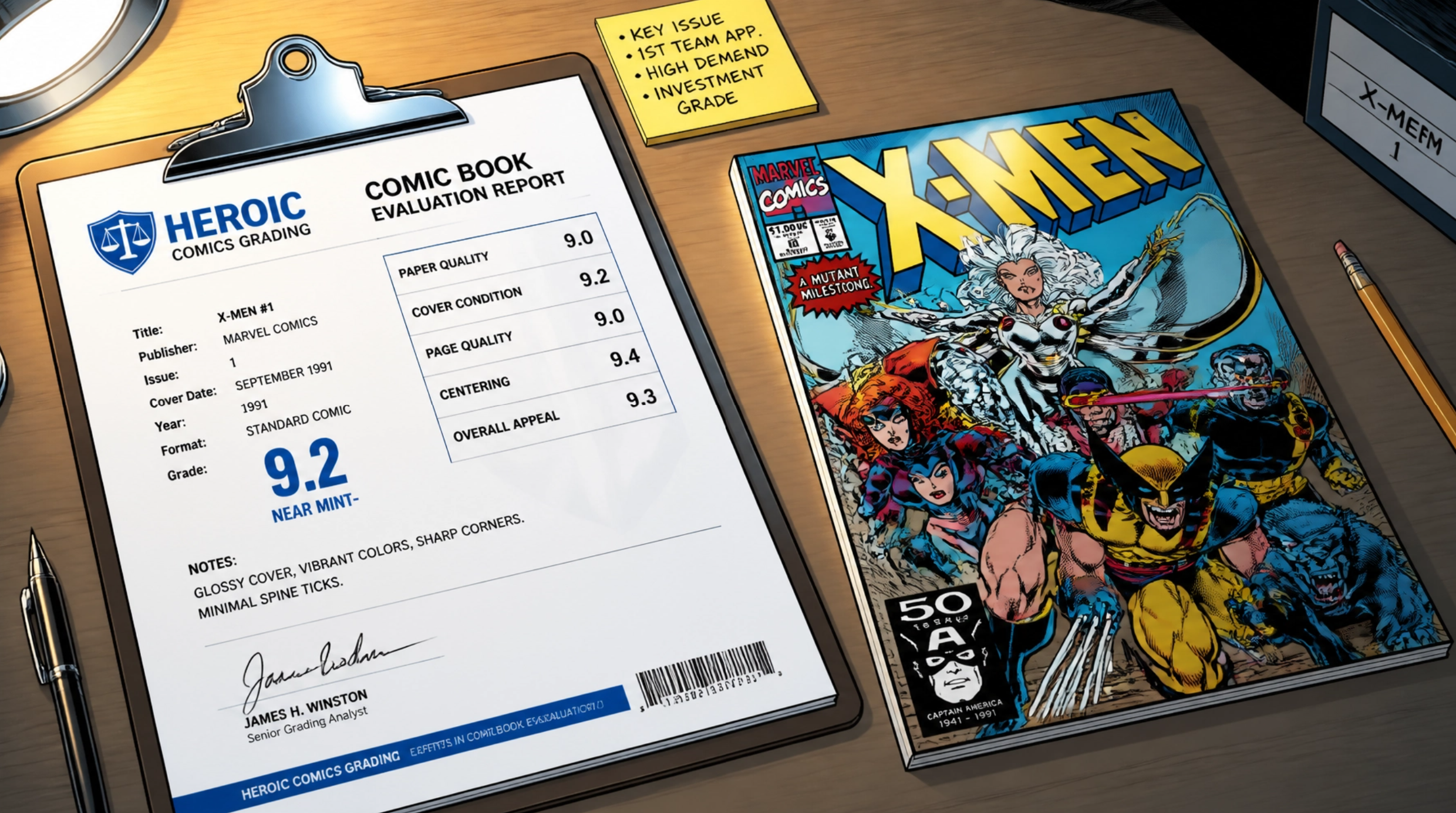
Comic Book Pressers should be data driven, organized and responsible.
When you pull a prized key issue from your collection, the stakes are immediately high. Whether you just secured a mid-grade copper classic or an iconic Bronze Age grail, you know that the difference between a 9.2 and a 9.8 on a CGC census report isn't just a number: it is a massive financial threshold.
That is why you consider comic pressing. You want to smooth out non-color-breaking spine ticks, eliminate distracting surface waves, and give your book the pristine eye appeal it deserves before third-party grading.
Yet, stepping into the world of comic restoration services can feel like walking through a fog. How do you know who to trust with your most valuable paper assets? Why do some collectors send books off with blind faith, only to receive disappointing slabs months later?
In this guide, we will break down the three primary pressing service models in the hobby, examine why process transparency is your greatest shield against wasted money, and show you why knowing the math before spending a dime changes everything.
The Three Models of Comic Pressing
To make an informed decision, you first need to understand how the current landscape operates. Across the hobby, pressing services generally fall into three distinct categories:
1. The Blind Submission Model (In-House Service / CCS)
The most common corporate option is the in-house pressing service provided directly by grading companies (such as the Collector's Club Service).
How it works: You submit your raw books and pay your grading and pressing fees upfront. The books go straight into their internal pipeline. They press the book blindly: often without a dedicated pre-assessment or value consultation: and it goes straight to the grader.
The catch: You are locked in before anyone evaluates whether the book can actually benefit from pressing. If the paper is too brittle, or if the defects are color-breaking creases that heat cannot fix, you still pay for the service, and the final grade rests entirely on the grader's discretion with zero prior dialogue.
2. The Casual Hobbyist / "Friend with an Iron" Model
On the opposite end of the spectrum is the informal market: the local dealer who "presses on the side," the hobbyist friend offering a flat-rate discount, or the online gig worker.
How it works: You hand over your book for a flat, low fee. There is usually no contract, no formal intake documentation, and no liability insurance.
The catch: While the upfront cost is low, the risk is devastating. Without professional thermal controls, accurate humidity chambers, and decades of paper-science experience, household irons and improvised setups can scorch gloss, flatten original cover texture permanently, or leave warp lines that ruin a book forever.
3. The Transparent Evaluation Model (The Pressing Issues Standard)
This is where professional consulting meets meticulous craftsmanship.
How it works: Before any heat or pressure touches your book, every single comic undergoes a rigorous physical diagnostic. You receive a complimentary pre-assessment detailing the current grade, visible defects, realistic grade potential, and a transparent value analysis. You approve the work only if the math makes sense.
The advantage: You retain absolute control. You never spend money on a lost cause.
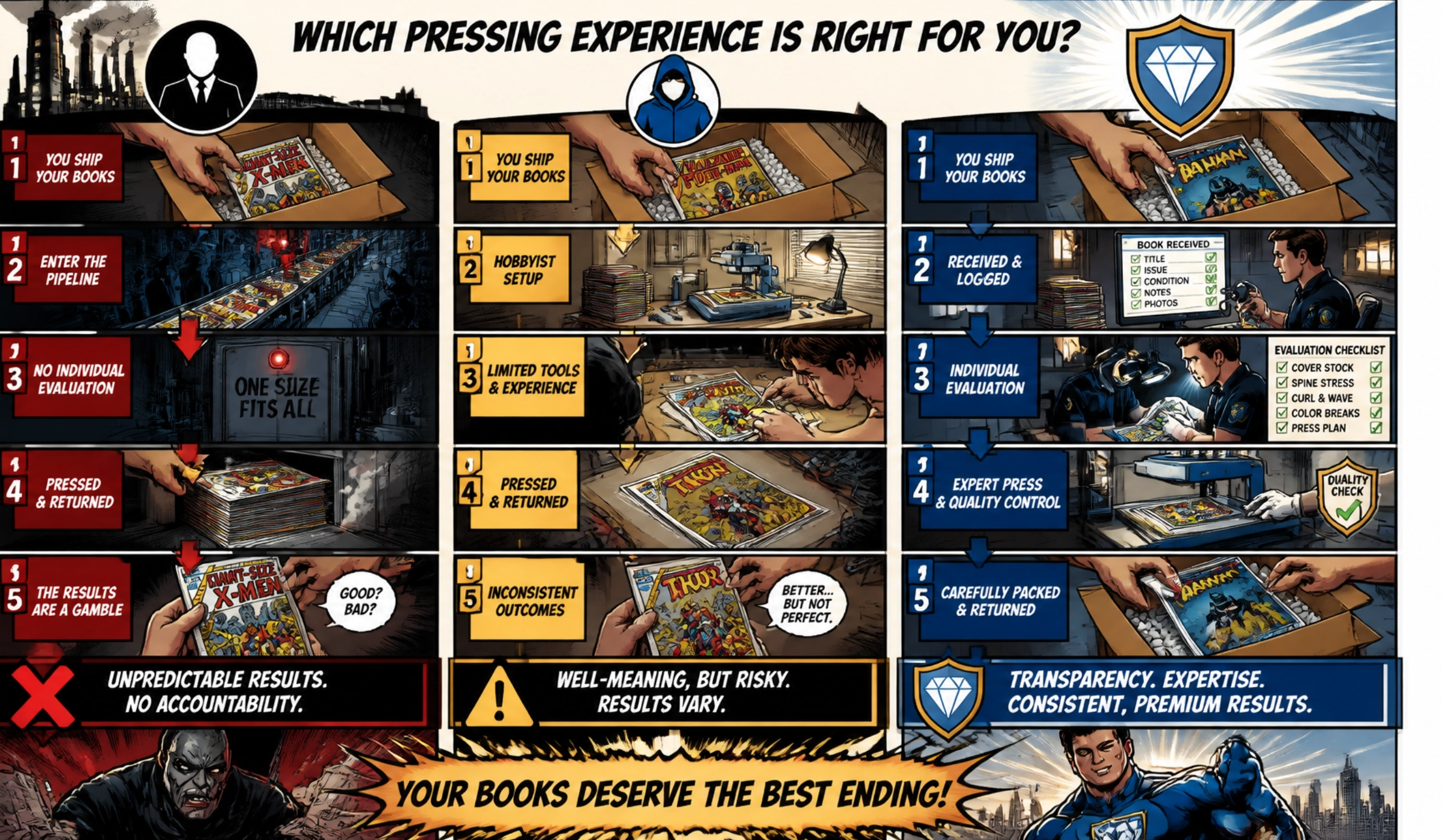
Skip CCS, and your friend who presses comics on the side. Go with organized, data driven professional pressing.
The Value Analysis Difference: Why Guesswork is Costly
Possibility is a dangerous thing in collecting. When we look at our own books, our emotions often inflate what we hope the final grade will be. We see a wavy cover and convince ourselves it will magically pop straight to a 9.8.
An objective, professional presser acts as a protective barrier against that wishful thinking.
This is where our core philosophy at Pressing Issues changes the equation. Before a single press is heated, we run a Complimentary Value Analysis on your book:
Defect Audit: We map out every non-color-breaking flaw: light bends, thumb dints, rolling spines, and surface dust.
Ceiling Determination: We realistically establish what grade the book can achieve after pressing and cleaning. If a book has a 1/8-inch tear or a heavy color-breaking crease on a corner, pressing won't make those vanish. We tell you that upfront.
The Financial Math Check: We compare the cost of pressing and grading against the projected market value jump between your current raw grade and your post-press target grade.
If the financial math doesn't work: meaning the cost outweighs the expected bump: we advise you to keep your money in your pocket. That is what true process transparency looks like.
Process Comparison: At a Glance
To visualize how these models compare when you entrust your collection to a service, look at how intake, evaluation, and accountability break down:
If you want to dive deeper into how different eras react to restoration, check out our guides on pressing modern vs. vintage comics and how to choose which comics to send for pressing.

When you send your valuable comics to a presser, it should be as stress free as possible. Communication and Transparency are key.
The "Know Before You Go" Philosophy
When you hand over a key issue: whether it's a Bronze Age masterpiece or a modern variant: you shouldn't feel like you are dropping it into a black box. You deserve to understand:
Exactly what mechanical and thermal steps are being applied to your paper stock.
Why certain defects can be corrected while others cannot.
How the CGC submission process ties into your pressing schedule to minimize logistics overhead.
When service providers hide their process behind vague descriptions or rigid corporate queues, collectors are forced to guess. When you work with a specialist who prioritizes high-touch communication, photo updates, and honest appraisals, every decision becomes calculated, disciplined, and profitable.
What I Have Learned After Handling Thousands of Keys
Over years of pressing, cleaning, and evaluating countless comic collections, I have learned one undeniable truth: Collectors don't just want their books to look better; they want peace of mind.
When Jimmy B., a collector of over 45 years, sent his first batch to us, he noted: “Communication is key when I have surrendered my prized possession to a stranger... Within a few days, I had an intelligently presented estimate, with reasonable pricing.”
That trust isn't built by accident. It is built by refusing to touch a book until the collector understands the roadmap, sees the potential, and gives an informed green light.
Key Takeaways for Collectors
Never press blind: Always get a professional assessment of visible defects before committing to pressing and grading fees.
Run the math: Ensure the expected market value increase significantly outweighs the combined cost of pressing and third-party slabbing.
Demand transparency: Insist on working with professionals who communicate clearly, provide photo updates, and respect the unrestored integrity of your books.
Protect your investment: Avoid the temptation of cheap DIY or casual hobbyist presses that can permanently damage irreplaceable paper stock.
Ready to find out what your collection is truly capable of? Explore our professional services and see how our complimentary value analysis can bring clarity to your next submission.