
The Garage Presser Trap: Why Your Friend with an Iron is Costing You Thousands
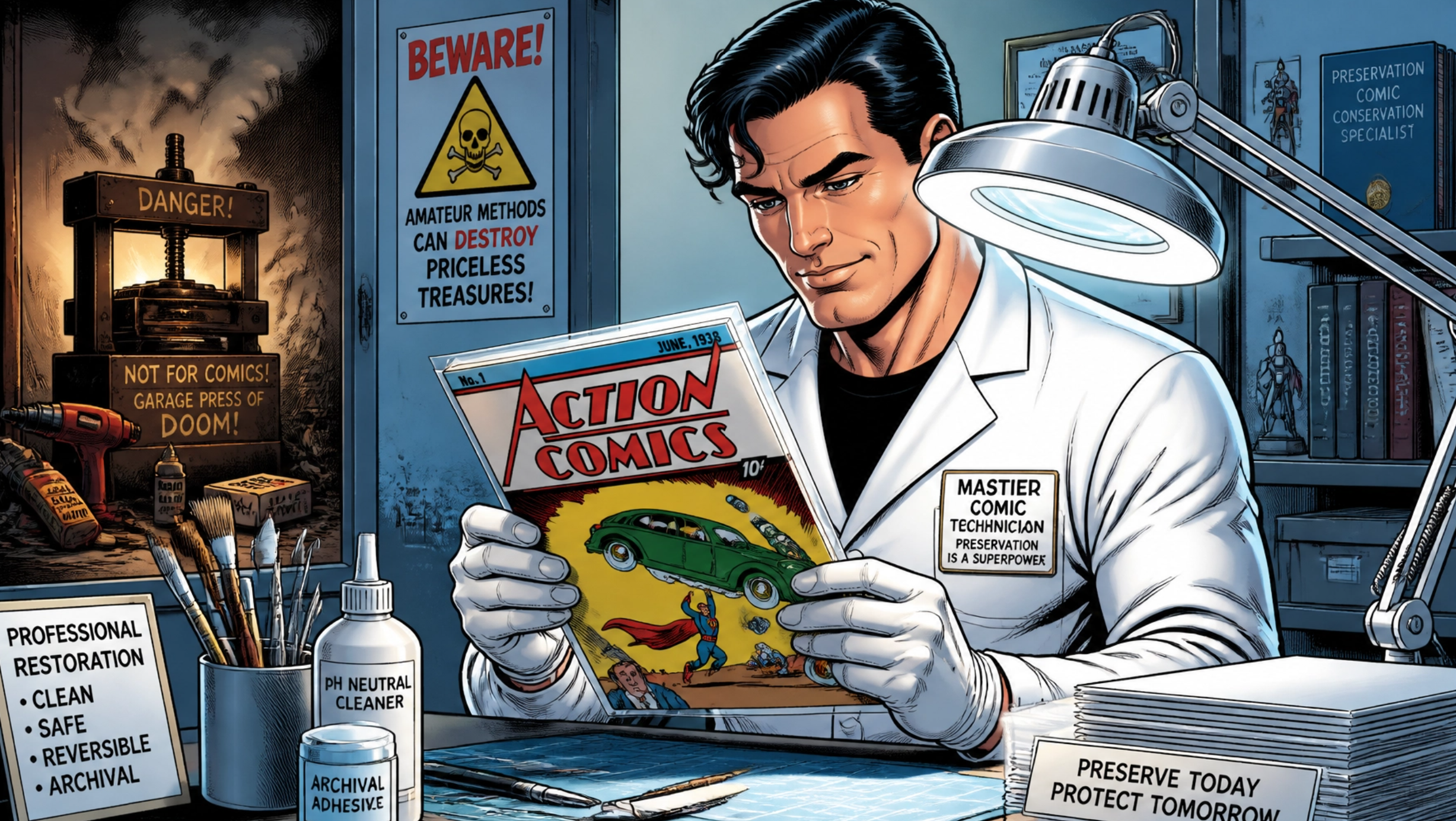
You found the grail. Maybe it’s a crisp, raw copy of Amazing Spider-Man #129, or a mid-grade Silver Age key that has been sitting in a long box since the Carter administration. You pull it out, look under the kitchen light, and see them: spine ticks, a stubborn non-color-breaking bend on the bottom corner, and waves across the cover.
Then comes the temptation.
Your buddy Bob bought a heat press on the internet last month. Or maybe your local comic book store owner, who mostly sells back issues and trades, tells you, "Sure, bring it in, I press books on the side for twenty bucks."
It sounds cheap. It sounds fast. It feels like an insider hookup.
It is actually a financial disaster waiting to happen.
Handing a four-figure key book to an amateur with a hobbyist setup is the single fastest way to turn a valuable collectible into expensive kindling. Let’s talk about why the "garage presser" is a trap, how paper science exposes amateur shortcuts, and why professional accountability is the only shield between your investment and total ruin.
The Siren Song of Convenience and Cheap Rates
Every collector loves a deal. When you are looking at grading fees, shipping insurance, and turnaround times, saving fifty dollars on pressing fees feels like smart collecting.
Your friend tells you all the right things:
"I watched three hours of YouTube tutorials."
"It’s just heat and pressure, man. How hard can it be?"
"I use a silicone release sheet; it’s totally safe."
Possibility can make us see what we want to see. We want to believe that a $30 gadget from an online marketplace functions with the same precision as a multi-thousand-dollar thermal restoration deck. We want to believe that someone who runs a comic shop on weekends understands molecular paper relaxation.
They don't. And when things go wrong, there is no customer service hotline. There is only a ruined book and an awkward text message.
The Anatomy of a Horror Story: What Happens in the Garage
Professional restorers see the aftermath of amateur presses every single week. The horror stories share a common vocabulary of destruction:
1. Scorched Gloss and Melted Ink
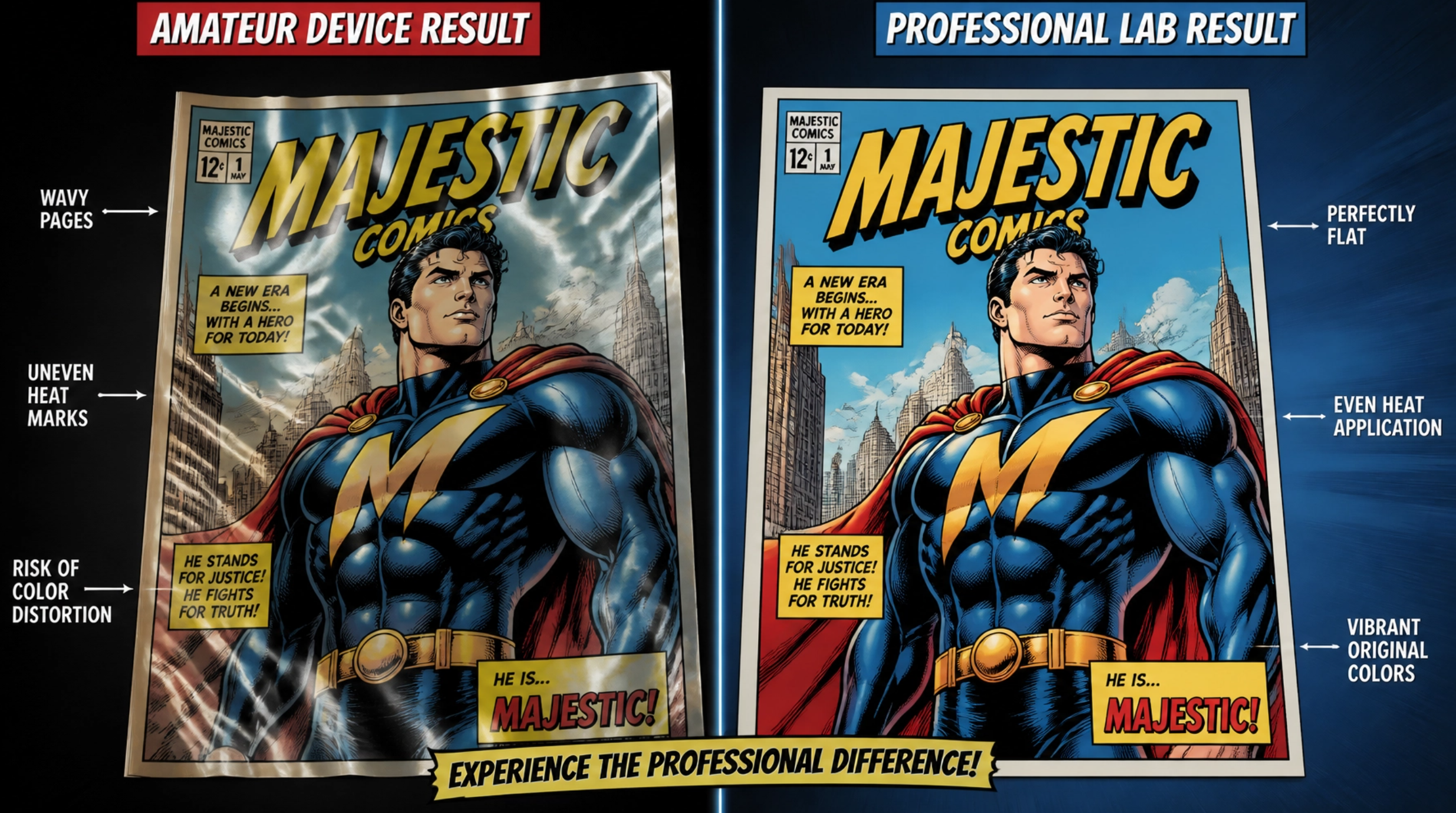
Cheap heat presses and household irons have notoriously unreliable thermostats. They suffer from massive temperature spikes. If your press surges past safe operating thresholds, which should never exceed 130–160°F for sensitive paper stocks, the ink on modern cardstock or vintage glossies begins to fuse. You open the press to find your cover has literally welded itself to the buffering paper, or the gloss has bubbled into a permanent orange-peel texture.
2. Pressed-in Dirt and Pitting
Amateurs skip the meticulous dry-cleaning phase. They take a dusty, attic-stored book straight to the press. Trapped microscopic grit, hair, or dust particles are forcefully hammered into the paper fibers under high tonnage. The result? Permanent pitting across the cover art, defects far uglier than the original spine ticks you were trying to fix.
3. Warped Paper Memory
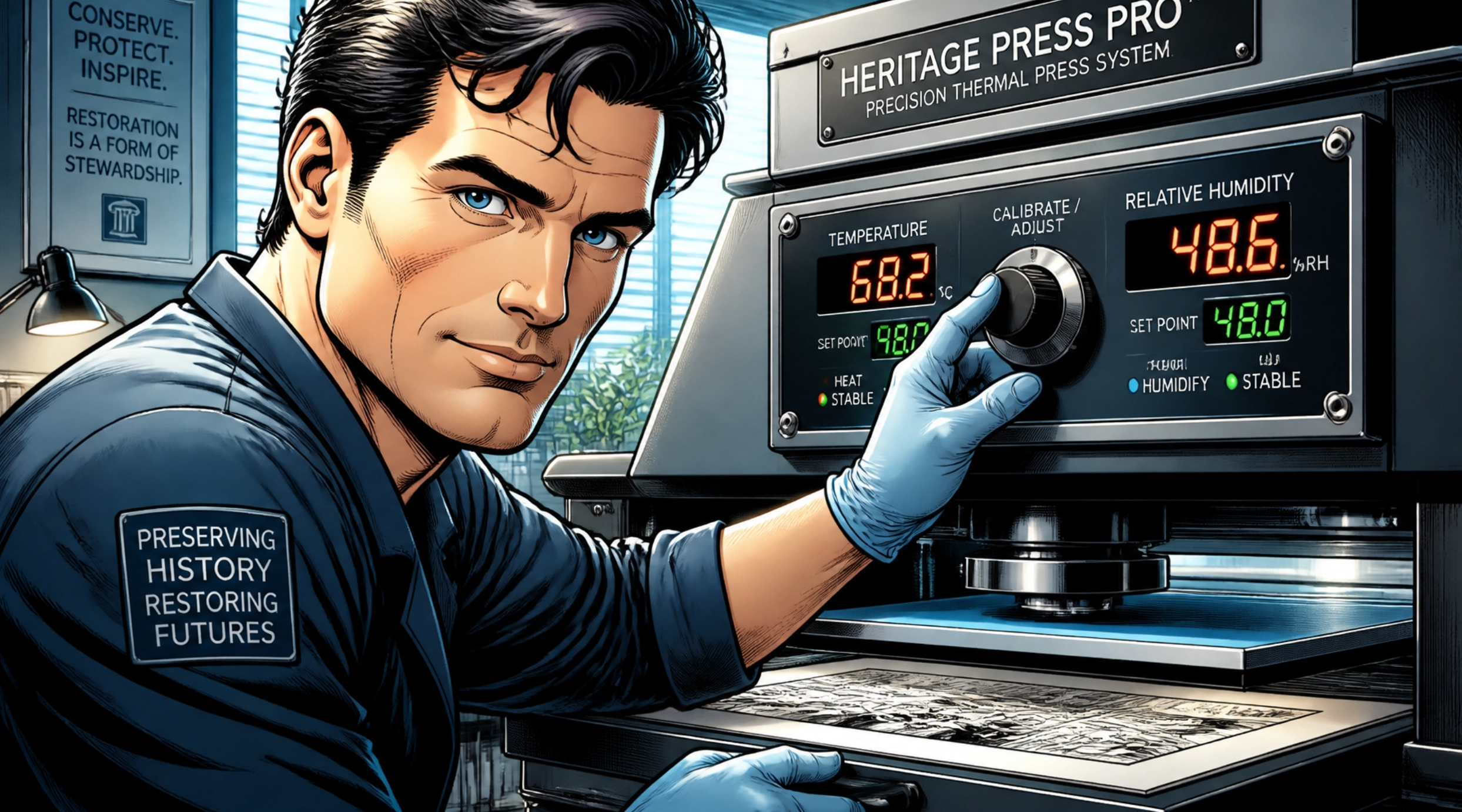
Paper has a memory. If temperature, humidity, and, crucially, cooldown periods are not scientifically regulated, the paper warps. Books pulled out of a press while still warm experience rapid thermal shock when exposed to room air, resulting in edge curl, rippling, and spine roll that no grading company can overlook.
To understand how different books react to environmental stress, take a look at our guide on types of comic book damage and how they form.
The Science of Paper: One Size Never Fits All
Amateurs treat every book the same way. They turn on the dial, drop the plate, and hope for the best.
A professional restorer treats every single comic book as an individual, delicate historical artifact.
The Eras Require Different Rules
Golden Age (1938–1955): These pages are often printed on high-pulp, acidic paper stock that becomes brittle over decades. Apply too much heat without correct humidity conditioning, and the pages will literally crack and chip along the edges like dry autumn leaves.
Silver & Bronze Age (1956–1985): These books feature classic inks and paper blends that require precise moisture balancing. Rushing the process causes ink flaking or color loss.
Moderns & Cardstock Covers (1990s–Present): Glossy foils, chromium accents, and thick cardstock covers react violently to uncalibrated heat. A garage press will turn a modern variant cover into a warped wave in seconds.
For a deeper dive into chronological preservation differences, read our breakdown on pressing modern vs. vintage comics.
Accountability and Insurance: The Ultimate Cost
Let’s play out a realistic scenario.
You hand your raw, high-grade X-Men #94 or Giant-Size X-Men #1 to your local dealer or hobbyist friend. Two days later, you get a call: "Hey... so the press got a little too hot. The cover is warped and the staples popped. But hey, I won't charge you for the pressing!"
Now what?
You just lost a $1,500 to $3,000 asset. Your friendship is fractured beyond repair, and the local dealer shrugs and says, "ables get broken, man, it's raw risk." There is no insurance policy. There is no recourse. You absorbed 100% of the financial loss for saving twenty dollars.
When you work with a dedicated professional service, accountability is built into the foundation. Professional labs maintain secure handling protocols, climate-controlled cleanrooms, and strict workflow tracking. Your books are treated as financial investments, protected by professional standards from intake to CGC submission.
Side-by-Side: The Amateur vs. The Expert

To make your decision crystal clear, look at the divergence in approach:
As we explore in our guide on comic book pressing secrets experts want you to know, shortcuts in the workflow always leave permanent evidence under grading magnification.
Key Takeaways: Protect Your Collection
The Garage Trap is Real: Saving a few dollars on pressing fees puts your most valuable keys at risk of scorched gloss, melted ink, and permanent fiber damage.
Paper Has a Memory: Different eras (Golden, Silver, Modern) demand specialized temperature, pressure, and humidity protocols that household irons simply cannot provide.
Inspect the Process: True preservation requires meticulous dry cleaning, controlled dwell times, and extended cooldown cycles.
Demand Accountability: Never hand a grail to anyone who cannot offer secure handling, transparent workflows, and professional expertise.
When you are ready to prepare your collection for professional third-party grading, don't leave your investment to chance. Learn more about our meticulous approach at Pressing Issues, and review our essential CGC submission dos and don'ts before sending your next batch in.