
How to Collect Your Favorite Artist's Comics
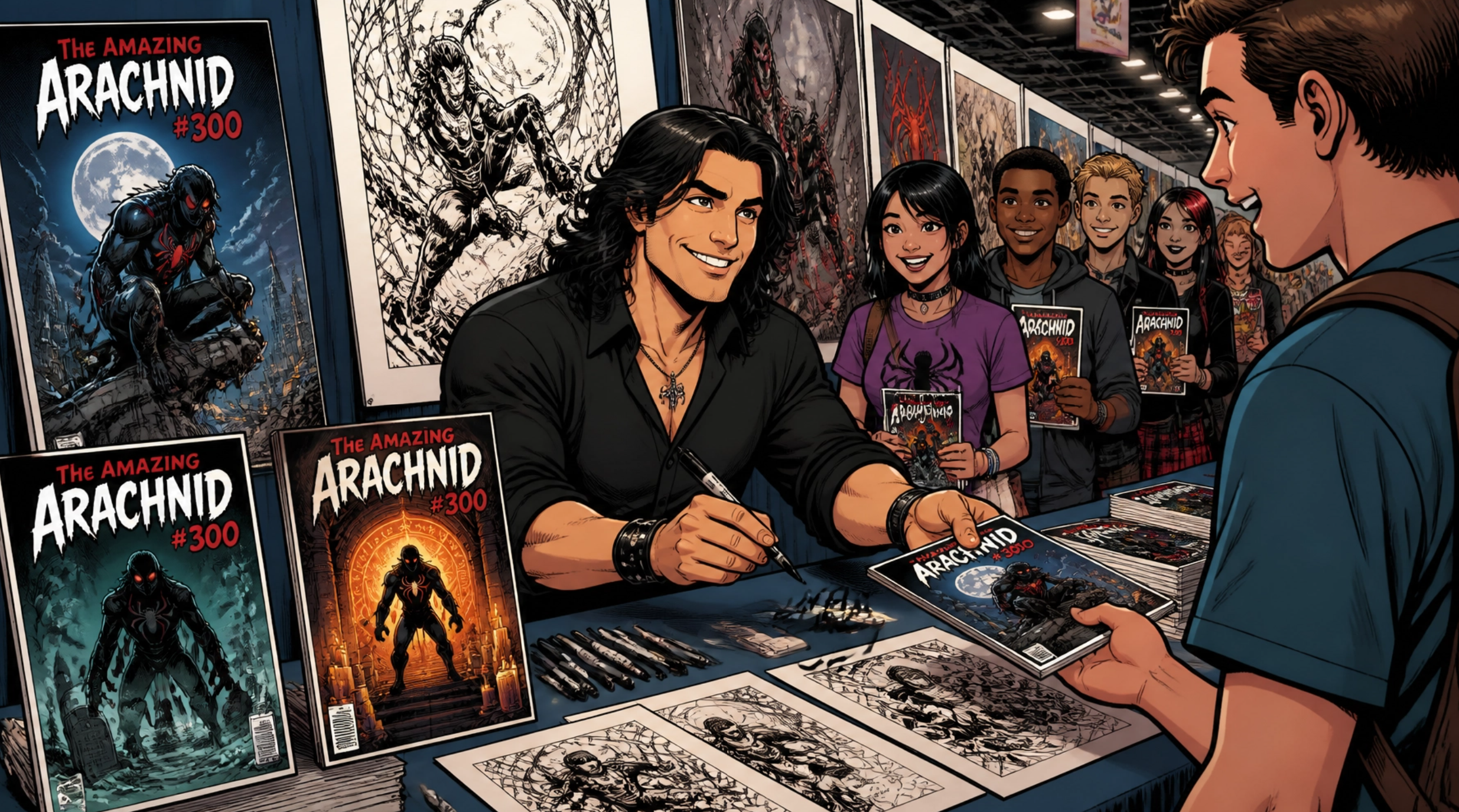
Collecting by artist gives your comic book collection a personal spine.
You are not simply buying the most expensive key comic books. You are following a creative voice across publishers, characters, eras, and formats. One artist may lead you from an early independent comic to an iconic superhero run, then to a quiet fill-in issue or an unforgettable modern variant.
That is the appeal.
Character keys can become expensive quickly. An artist-driven collection gives you more room to explore. You can own the major books, but you can also enjoy affordable back issues, unusual covers, and under-the-radar X-Men appearances that other collectors overlook.
The process is simple: research deeply, define your scope, buy patiently, and preserve what you love.
1. Start With a Bibliography
Before you buy, build a working bibliography.
Do not rely on memory. Artists often worked under different publishers, used changing credit formats, or contributed to books where their role is easy to miss. A complete list should include:
Early independent or small-press work
First mainstream assignments
Major interior runs
Fill-in issues
Annuals and specials
Cover-only contributions
Variant covers
Sketch covers and retailer exclusives
Signed books
Original art connected to important issues
Begin with several research paths rather than trusting one database. Search creator credits in comic databases. Review publisher solicitations and issue indicia. Check auction listings. Look through the artist’s official website, convention history, interviews, and published bibliographies.
Price and collection tools can help, but they are not always complete. A database may identify a cover credit while missing a brief interior contribution. Your own checklist is still important.
Create a spreadsheet with columns for:
The goal is not busywork. The goal is to see the collection clearly.
2. Decide How Deep You Want to Go
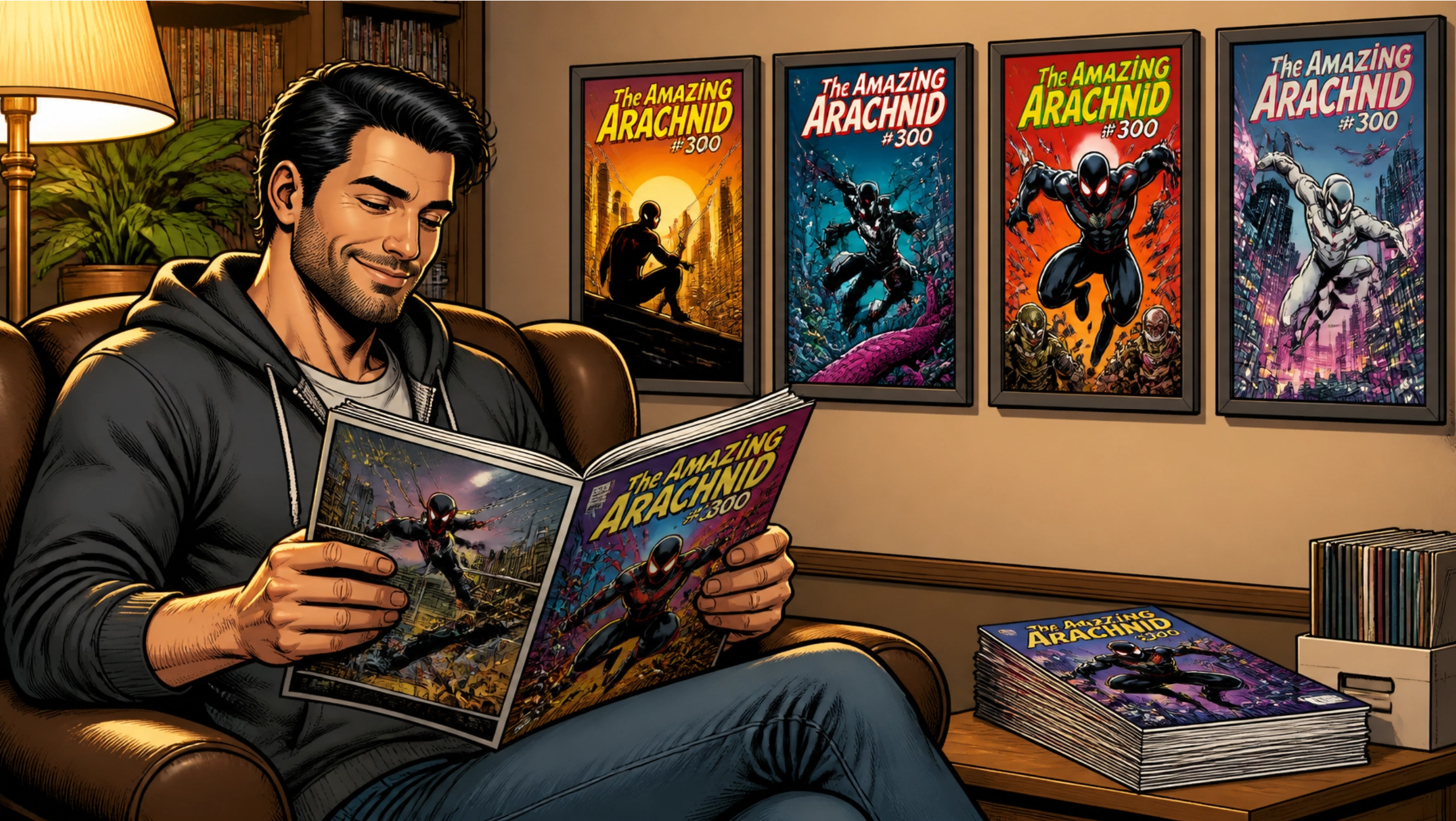
There is no correct level of completion. There is only the level that keeps the hobby enjoyable and financially sensible.
Keys-Only Collecting
This approach focuses on the artist’s most important books:
First mainstream work
First work on a major character
Defining issues from an iconic run
Recognized cover appearances
Important first appearances or story milestones
Keys are easier to explain and often easier to resell. They are also the most expensive part of the market. You may end up with a short collection concentrated in a few high-dollar books.
Run-Building
Run-building means collecting every issue from a period when the artist made a meaningful interior contribution.
This is often the most satisfying route. You see the artist develop from issue to issue. You notice changes in line weight, anatomy, panel design, and storytelling.
A complete or nearly complete run can include books that are not considered key comic books. That does not make them unimportant. The joy is in the sequence.
Deep-Dive Era Collecting
This is the broadest approach. You collect the artist across one era, publisher, character family, or creative partnership.
For example, you might focus on an artist’s 1980s Marvel work, their entire X-Men-related output, or every cover they produced during a particular period. This can reveal overlooked books, including annuals, fill-ins, backup stories, and appearances tied to lesser-known characters.
Under-the-radar X-Men issues are especially useful here. A supporting-character first appearance, an unusual annual, or a short fill-in can be more affordable than a famous flagship key while still representing the artist’s work beautifully.
Key takeaway: Choose a target before the market chooses one for you.
3. Understand the Artist’s Role
“By” an artist can mean several different things.
A penciler creates the primary drawing structure. A inker defines and reinforces the finished linework. A cover artist creates the cover image but may not contribute to the interior story. An interior artist may draw a complete issue, several pages, a backup feature, or only a portion of the book.
These distinctions matter.
An artist may be legendary for interiors but have very few covers. Those covers can be unusually desirable because they are scarce. Another artist may produce hundreds of popular variants while doing relatively little interior work. In that case, the collection may be visually impressive but much broader and more expensive.
Always verify the credit. A character on the cover does not prove your favorite artist drew it.
4. Separate Keys From Affordable Back Issues
You do not need every book to be a key.
A key may have a first appearance, origin, major plot event, or historically important creative contribution. An affordable back issue may simply contain excellent art. Both can belong in a serious collection.
This is where artist collecting becomes more personal than character-key collecting. You may value an overlooked X-Men fill-in because it contains the artist’s first version of a character’s costume. You may prefer a quiet issue with a great splash page over a more expensive book with greater market recognition.
Market value measures demand. It does not measure your connection to the work.
Still, be honest about the math. Before buying a supposedly rare book, compare actual sales for the same issue, condition, edition, and variant. A high asking price is not proof of value.
Useful research and tracking resources include:
GoCollect for market history, sales data, and collection tools
CovrPrice for raw and graded sales data, key information, and variant tracking
GPA/GPAnalysis for graded comic sales analysis
Heritage Auctions for auction records and original art
eBay Comics for current listings and completed-sale research
Key Collector Comics for key issue references
The CGC Census for population information
ComicBook.com for news, creator announcements, and modern release information
Use these as reference points, not as permission to chase every price spike.
5. Build a Modern Artist Collection Early
Modern collecting gives you access to rising artists before their best-known work becomes expensive.
Watch for:
Regular covers
1:25 incentive variants
1:50 incentive variants
Virgin covers
Foil and cardstock editions
Artist sketch covers
Retailer exclusives
Convention editions
A 1:25 variant generally means a retailer must order 25 copies of the regular issue to qualify to purchase one incentive copy. A 1:50 requires 50 regular copies. Scarcity matters, but it does not guarantee lasting demand.
Buy the art first. Speculation comes second.
Modern variants can multiply rapidly. Set a monthly variant budget. Decide whether you want one favorite cover, every cover by that artist, or only variants tied to characters and stories you already collect.
Do not confuse completion with satisfaction.
6. Handle Signatures and Sketches Carefully
A signed comic is a record of a moment with the artist. That personal connection may matter more to you than resale value.
You can have books signed at conventions, store events, and private signings. Decide beforehand where you want the signature and what color or type of marker fits the cover. A signature on a dark area may disappear. A paint pen on a glossy or foil surface may be vulnerable to scratching or flaking.
For books you may eventually sell, consider CGC Signature Series or another appropriate signature verification path. Understand the difference between a witnessed signature and an authentication service. Fees and label options can change, so verify current requirements directly with the grading company.
Pressing and cleaning before slabbing requires extra caution. The ink, marker, paint, paper, and cover finish all matter. A professional should inspect the signature before any work begins.
After a signed book is properly assessed and prepared, encapsulation can reduce future handling and protect the book and signature from ordinary contact. There is no guaranteed grade outcome. The purpose is disciplined preservation, not wishful thinking.
7. Treat Original Art as a Separate Budget
Original art is a different animal.
A comic book is a published object. Original art is a unique piece created during production or afterward. A page, cover, commission, preliminary sketch, and print all have different markets.
Do not compare the price of an original cover with the price of the comic it produced. They are related, but they are not interchangeable.
Keep separate budgets:
Comic books
Graded comic books
Signatures and sketches
Original art
That separation prevents one exciting art purchase from consuming the money intended for your comic collection.
8. Preserve the Books You Love
Start with the basics:
Use properly sized bags and backing boards
Consider archival Mylar for important books
Store comics upright in dedicated boxes
Avoid overfilling
Keep books cool, dry, and away from direct sunlight
Handle books with clean, dry hands
Support the entire comic when removing it from a bag
Never force a book flat or open it wider than its paper allows
Light reveals what casual handling hides. Tilt a cover under a strong, angled light. Watch for surface dirt, bends, spine stress, color-breaking creases, and texture changes. Feel the cover gently. A non-color-breaking bend may respond to professional comic book pressing. A missing piece, tear, stain, or broken color line cannot simply be pressed away.
Here is a practical pressing decision diagram:
Professional comic book cleaning and pressing can improve the visual presentation of suitable books while keeping them in an unrestored state under grading standards. Results depend on the book. No one should promise a grade increase.
At Pressing Issues, a complimentary value analysis helps you determine whether the physical defects, realistic outcome, and comic book market value justify the cost of service and grading. Sometimes the correct advice is to leave the book alone.
That is preservation, too.
What I Have Learned
I have learned that collecting by artist becomes more rewarding when you stop treating every purchase as a race.
Possibility can make us see what we want to see. A seller says “rare,” and suddenly an ordinary variant feels urgent. A raw book looks flat in one photograph, and you imagine a perfect graded copy.
Slow down.
Inspect the cover under angled light. Check the back cover. Confirm the artist credit. Compare real sales. Ask whether you would still want the book if the market ignored it tomorrow.
If the answer is yes, you may have found the right book.
Final Checklist
Before buying, ask:
Do I love the artist’s work on this specific book?
What role did the artist perform?
Is this a key, a back issue, a variant, or a personal favorite?
Have I confirmed the edition and condition?
Does the price match real sales?
Am I buying the comic or chasing speculation?
Can I store and preserve it properly?
Would a signature, pressing, cleaning, or grading decision add real value for me?
Collecting by artist is about love of the work first. The bibliography, budget, market research, and preservation system help you protect that enjoyment.
If you love something, buy it, but always use caution.