
Why we would recommend someone else
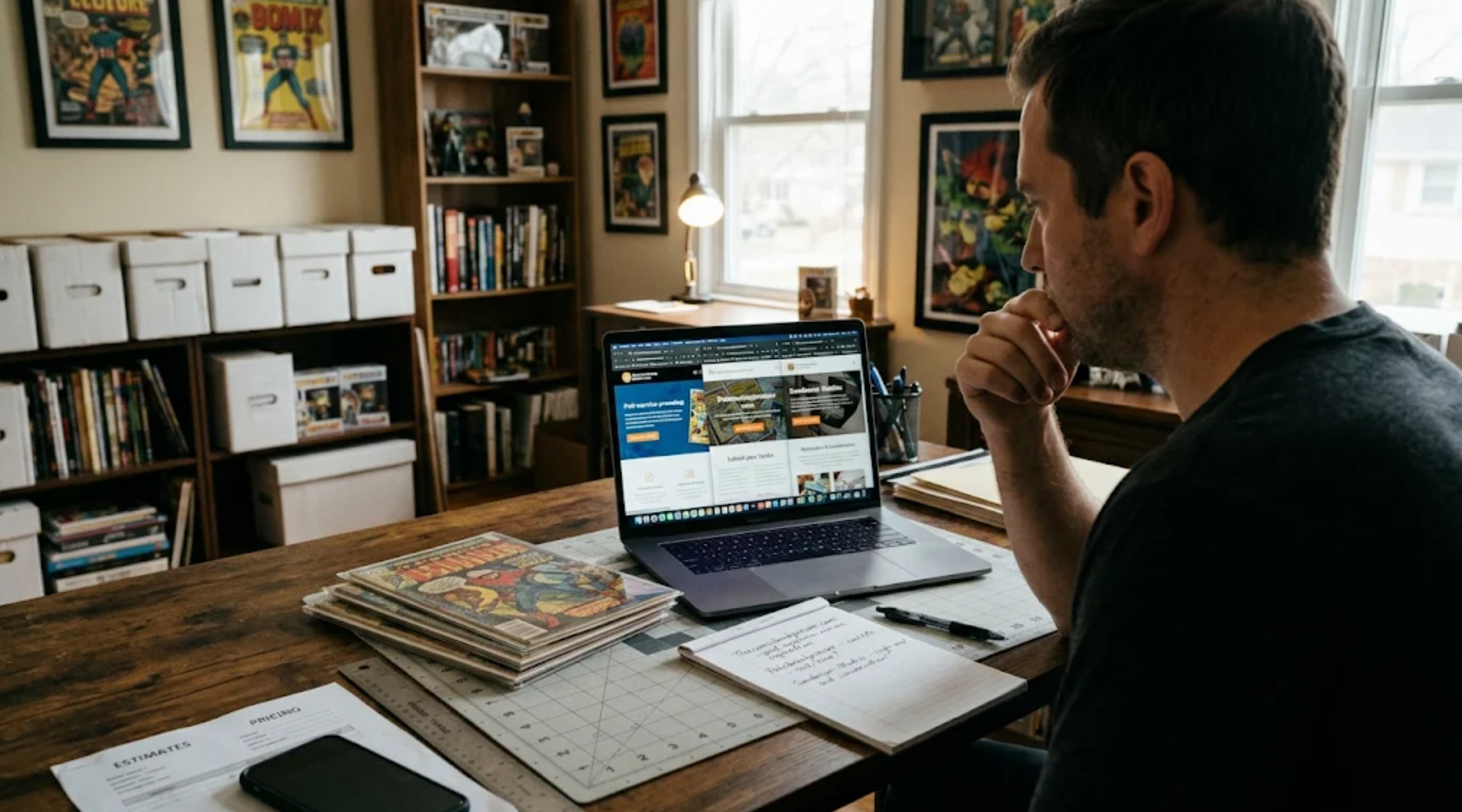
A shop that only ever recommends itself is not giving you the full picture.
At Pressing Issues, our process starts with analysis: a complimentary value analysis, a real, comprehensive defect audit, and honest math and conversation before any work is authorized. We focus on customer service, realistic grade estimates, and helping you make an informed decision about which books are worth investing in.
That process is deliberate. Sometimes it means slowing down. Sometimes it means telling you the book does not need pressing, the numbers do not work, or the defect is permanent. That approach is not for every collector. Some collectors want a presser with deep experience on ultra-high-value keys. Others may prioritize a high-volume workflow serving comic shops. And some books need complex restoration rather than pressing.
Those are all legitimate needs. Here are three shops we respect. The right choice depends on the book in front of you, not on a ranking. These recommendations are made in good faith; we receive nothing for them.
What Pressing Issues is, briefly
We are a data-based, analysis-first comic book presser. Before work begins, we offer a complimentary value analysis and assess the book’s defects, potential, and limitations. We focus on clear communication, realistic grade estimation, and informed decisions, while keeping our pressing and cleaning within an unrestored standard.
Three shops worth talking to
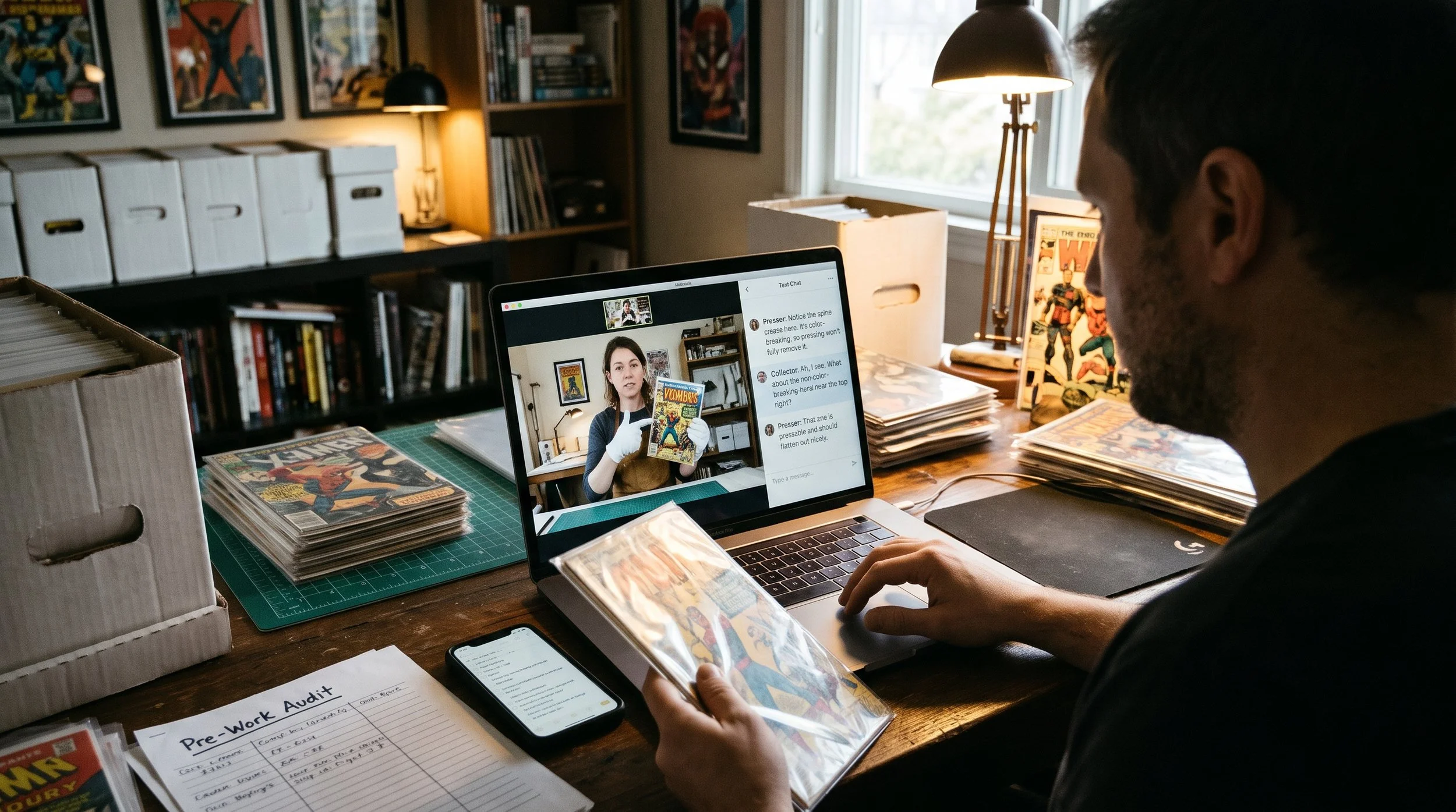
A North Carolina shop with experience on high-value keys
The Comic Book Presser, based in North Carolina, is one of the best in the business. It handles a very high volume of work, with particular depth of experience on ultra-high-value issues. It is well liked and trusted in the community.
This could be a good fit if you have a high-value key and want a shop with substantial experience at that end of the market, or if you value a long-established operation. That may matter when you are deciding what to do with a valuable, under-the-radar first appearance or another book where careful judgment is essential. He attends conventions and is highly engaged with the community.
A Florida shop with strong ties to comic shops
Palm Beach Presser, based in Florida, is another highly trusted and well-liked name in the community. He does a significant amount of work for comic book shops and collectors alike. You’ll find him chatting with collectors on Reddit all the time.
This may suit dealers and shop owners, collectors who value a high-volume commercial workflow, or anyone looking for a well-known name with a long track record. If your collection includes several books and you are coordinating work alongside other shop or dealer needs, that experience may be relevant.
A specialist in complex restoration
Sanderson Studios specializes in complex restoration on very fragile, high-risk books. It is one of the best in the business at that work.
This is a different kind of help from standard comic book pressing or cleaning. Restoration may be appropriate for a book with brittle paper, missing pieces, structural damage, or another issue that pressing cannot address.
Restoration changes the book itself by adding or removing material. That can affect how the book is graded and labeled. It is a separate decision from pressing and cleaning, and you should understand what work is proposed before authorizing it. For background on where that line sits, see our companion piece on comic book restoration services versus pressing and cleaning.
How to choose
Start with the problem your book has, not the service name you recognize.
High-value key, and you want deep experience at that end of the market? Talk with the North Carolina shop.
Dealer or shop workflow, or looking for a well-known presser with a long community track record? Talk with Palm Beach Presser.
Fragile book with missing material or structural damage that pressing cannot address? Ask the restoration specialist whether restoration is appropriate.
A book may need more than one kind of help. It may also need no work at all. Before shipping, ask each shop what they think the book needs. That conversation is free, and it can prevent an expensive decision made on hope alone.
Use this simple guide to sort out what you are seeing:
Cleaning and pressing can be part of comic book preservation, not just a way to pursue an improving comic book grade. But preservation does not mean every raw book needs intervention. The right process starts by inspecting closely and doing only what the book needs.
Questions to ask any presser
Keep the conversation practical. Ask:
What defects do you think can improve, and what will remain?
What is your realistic grade estimate, and what are its limits?
How do you document the book and communicate during the work?
What cleaning method do you use, and what are its risks?
Will anything be added to or removed from my book?
Will it remain eligible for a Universal label?
That last pair matters. Pressing and cleaning are different from restoration. Ask for a clear description of any proposed work that adds or removes material and how it may affect grading. CGC remains the industry leader and our submission partner; CGC’s pressing information explains its service and grading context.
A note on dry cleaning: professional pressers do not use drafting powder as a shortcut for cleaning comics. Powder can leave residue, work into porous paper, or cause surface abrasion during handling. The risk is hard to justify on a collectible book. Do not experiment with unfamiliar techniques on an expensive comic. If you are learning a technique, keep experimentation to dollar books, and recognize that even a low-value book can be permanently damaged.
The same restraint applies to every part of the job. These are our five golden rules:
Do no harm.
Do not perform an action on a comic book that it does not need.
Handle each comic with care to avoid causing new damage during any movement.
Document your work with photos to show what changed and avoid repeating ineffective actions.
Treat every action as having inherent risk. Act strategically, not on a whim.
For a fuller checklist, read Choosing a Comic Book Presser.
Key takeaways
The right presser depends on the book and the kind of help it needs.
Pressing, cleaning, and restoration are different decisions.
Ask about defects, risks, grade expectations, documentation, and any material that may be added or removed.
A professional should be willing to explain what cannot be fixed, and when doing nothing makes sense.
These are shops we respect, not a ranking. We receive nothing for these recommendations.
The goal is not that every collector uses us. It is that every collector ends up with the right shop for their book.