
Avengers: Doomsday arrives in theaters on December 18, 2026. Anthony and Joe Russo, who also directed Infinity War and Endgame, are back behind the camera. Robert Downey Jr. plays Victor Von Doom, and the final trailer arrived in late November.
That is plenty to get collectors talking about Doctor Doom. It is also an incomplete way to think about the comic-book market.
The cast reaches across the Avengers, Fantastic Four, X-Men, Wakanda, and more. The potential catalyst is spread among many characters and many first appearances. Some of these books have been quiet for years. That wider field, not a prediction about any one comic, is the story.
The Doom reflex
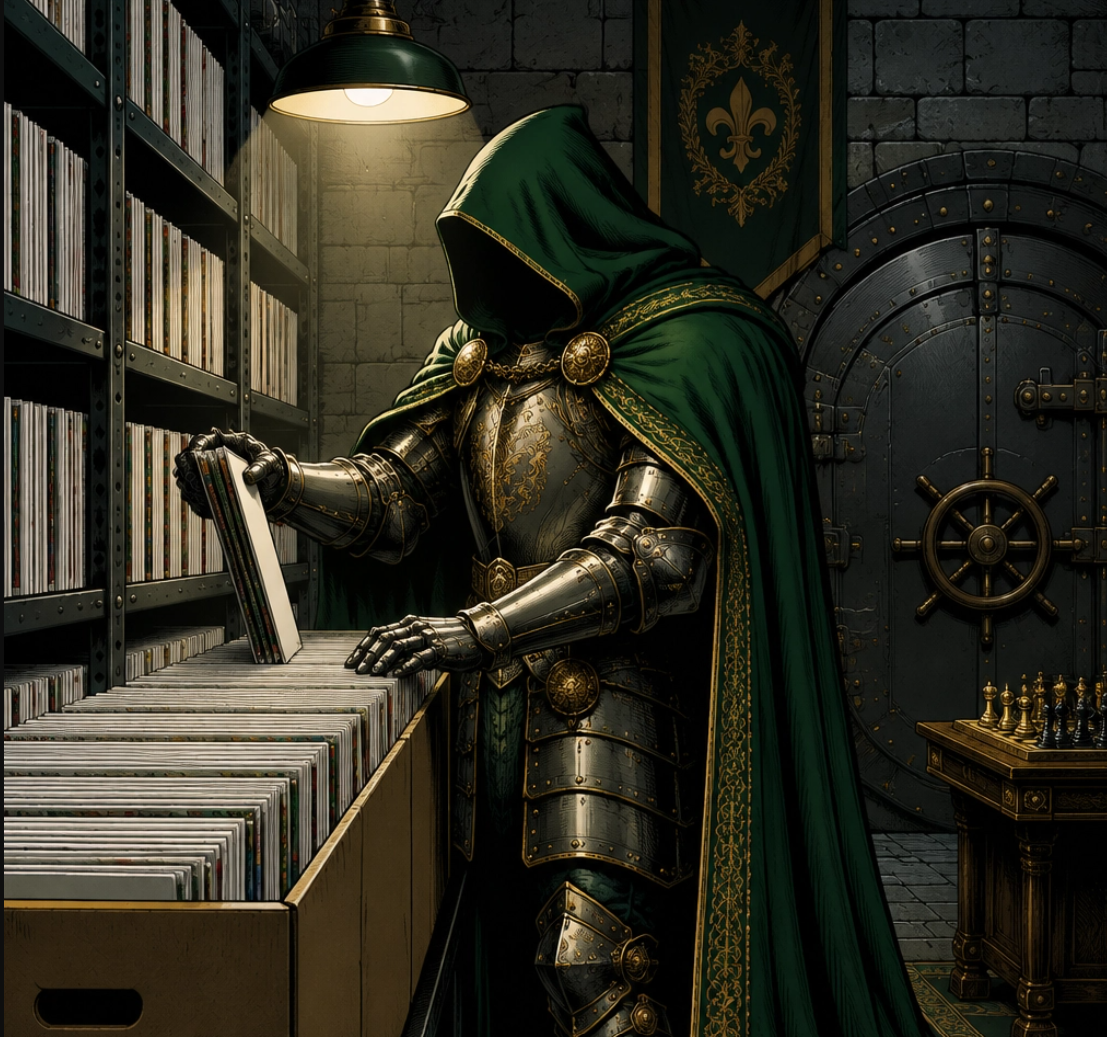
When a film features Doctor Doom, many collectors naturally look first to Fantastic Four #5, his first appearance. That book is one of the most famous keys in comics and has had decades of collector attention. Downey’s casting gives the reflex fresh context, but it also puts buyers in a crowded lane.
Crowded does not mean wrong. It means you should slow down and ask what you are buying: a significant comic, a fresh film catalyst, or both?
A movie can renew attention. It cannot erase a book’s existing market history. And a trailer is not a reason to skip condition checks or buy before you understand what a copy is worth to you.
The cast is the catalyst, not just the villain
A film centered on one new hero or villain may focus collector attention on one or two key books. Doomsday has a much broader confirmed cast. It includes the Fantastic Four (Reed Richards, Sue Storm, Johnny Storm, and Ben Grimm) as well as Professor X, Magneto, Cyclops, Beast, Nightcrawler, Mystique, and Gambit. It also brings together characters including Shang-Chi, Loki, Sam Wilson, Kate Bishop, Sentry, Namor, and members of the Wakandan cast.
The practical consequence is simple: attention may be divided across far more books. That can mean a smaller effect on any single title than a film focused on one character. It also means that books without a recent movie moment may find new readers and renewed collector interest.
Here are some relevant keys, using only first-appearance details that are established:
Mystique is a good reminder to inspect the details, not just the headline. Collectors debate whether her cameo in Ms. Marvel #16 or her full appearance in #18 is the more important book to chase. Gambit has a similar split: buyers debate Uncanny X-Men Annual #14 and Uncanny X-Men #266. The debate itself affects what collectors look for. It is not settled here.
The X-Men angle is the biggest unlock

The X-Men offer the widest line-wide catalyst. X-Men #1 has long been treated as a marquee Silver Age key after the big three. Now Professor X, Magneto, Cyclops, Beast, Nightcrawler, Mystique, and Gambit are confirmed for the same film.
For collectors, that puts a familiar line back in front of a broad audience. X-Men #1 is the obvious group key. Giant-Size X-Men #1 is another natural point of focus now that Nightcrawler is confirmed.
There is an important caveat. Several of these characters have appeared in earlier X-Men films. This is not a true screen debut for them. It is a new moment in the current franchise, which may be a weaker catalyst than a character’s first appearance on screen. Keep that distinction in view.
Thin film history can mean a sharper reaction, and more uncertainty

Some characters in the confirmed cast have had far less film exposure than established headliners. Sentry is one example; his first appearance is in Sentry #1. Kate Bishop is another, and her casting was reported in late November. Her first appearance is Young Avengers #1, a 2005 book that has had a fraction of the screen time that, say, Thor or Wolverine has.
Collectors often see attention arrive before a film, with buying interest sometimes appearing before the general conversation catches up. Books with little film history can move on an announcement or cast news, then settle after release. That is a pattern, not a promise.
A first appearance in a film does not guarantee lasting value. And be careful with sequencing: when a casting report lands days before release, much of the buying may already have happened before you read about it.
The sell-the-news problem
Film attention can pull demand forward. Casting and trailer news may bring buyers in early. Interest may intensify around release, then return to a level supported by the comic’s own significance and ongoing demand.
That is not a forecast for any specific book. It is a useful way to think about the cycle.
If you buy in the final weeks before release, you may be buying after other collectors have already reacted to the news. You are not buying the moment the catalyst began. You are buying into a curve that may have started moving before you arrived.
Marvel's own final trailer announcement and the official film page confirm the release date and cast. Neither can tell you what a particular comic will be worth after the film opens.
What pressing has to do with it
If you own a book that may draw attention, preparation belongs before the rush, not after it. Grading and submission take time, and queues can build ahead of major releases. A book still waiting to be pressed or submitted when attention peaks may miss the window you had in mind.
But do not turn “the window” into an excuse to rush. The defects a professional can address were there before the trailer. The same careful inspection applies now.
For a book you intend to sell, weigh the specific copy. The cost of comic book pressing, CGC grading submission, and shipping must be justified by a realistic outcome, not by the highest sale you happened to see. Pressing can improve a book’s presentation and may support improving comic book grade when the defects are appropriate candidates. It cannot promise a grade or a return.
For books you are keeping, the catalyst is not a reason to change how you care for something you love. Preservation is worthwhile without a sale attached.
That is the logic behind Fresh Off the Press: act before the catalyst becomes urgent, but only when the book and your purpose justify the work. For help choosing a professional, see our guide to choosing a comic book presser. The Assets and Collectibles discussion offers a useful reminder that your strategy depends on why you own the book.
A quick pressing-candidate check
Professional pressers do not use drafting powder as a dry-cleaning shortcut because it can leave material in the paper and create damage that is difficult to reverse. Do not test unfamiliar methods on a valuable key. If you are learning a technique, restrict experiments to dollar books you can afford to damage.
The five golden rules apply whether a book is getting attention or not:
Do no harm.
Do not perform an action a comic does not need.
Handle each book carefully so movement does not create new damage.
Document your work with photos. Use them to confirm that an action had an effect and to avoid repeating ineffective steps.
Treat every action as a risk. Make a strategic decision, not an impulsive one.
What I would actually do
Inventory what you already own. The most common mistake is buying a catalyst book that is already sitting in your box.
Inspect your copies under proper light. Slow down. Look at the front, back, spine, and edges.
Prioritize only books where the work clears the math. A press is not automatic.
Ask how you would feel if attention faded. Consider the realistic downside: the book returning to pre-announcement levels.
Do not buy at a premium because a trailer dropped. Give yourself time to compare the book’s lasting significance with the temporary news cycle.
Key takeaways
Fantastic Four #5 is the obvious Doctor Doom key, but Doomsday has a much wider confirmed cast.
The X-Men line may receive renewed attention, though several characters have appeared in earlier films.
A film appearance can trigger interest without guaranteeing lasting value.
The market often moves before release and may settle afterward. Treat that as a pattern, not a prediction.
Pressing is a decision about a specific copy. Inspect first, calculate the full cost, and act only when the book needs it.
The catalyst is not the value. A film can bring attention to a comic for a season. The book’s own significance is what keeps it. If you love something, buy it, but always use caution.