When you send a comic away for pressing or cleaning, you give up the ability to inspect it yourself. That makes communication part of the service, not a bonus.
But not all updates tell you the same thing. A status tells you where your order is. A photo can show what is happening to your actual book. You need to understand the difference before you choose a service.
1. The two kinds of updates
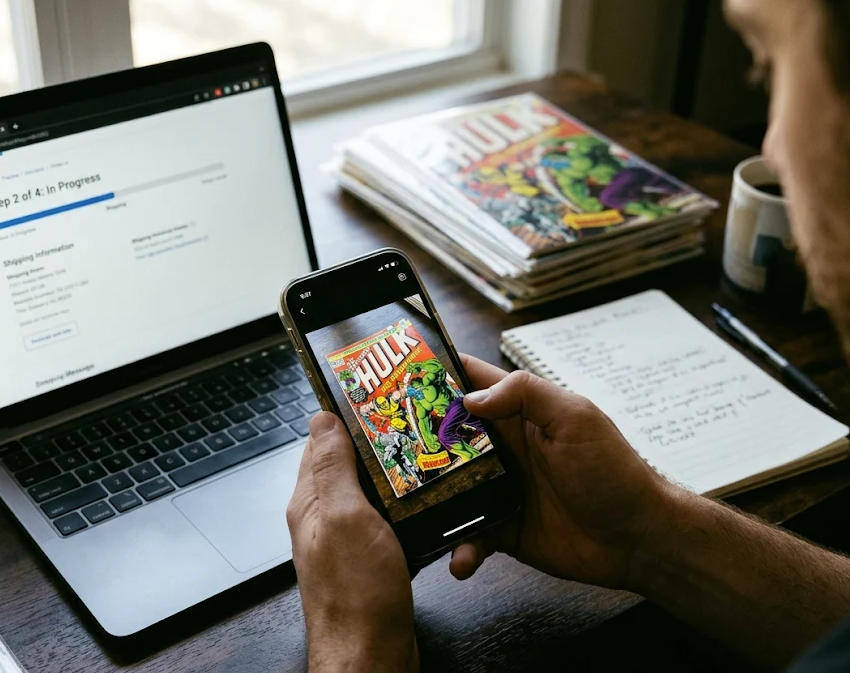
A status update might say: “Step 2 of 4: in progress.”
That tells you the order has reached a particular stage. It can be useful. But it does not show the book, the defect, or the work.
A photo update might say: “Here is your copy. This is the wave on the back cover we discussed. Here it is before work.”
Both are updates. Only one provides visual evidence about your specific comic.
That gap matters because you are not standing over the workbench. You cannot look closely at the spine, feel how the cover sits, or ask a question when a defect looks different than expected. Your communication system is your window into the process.
2. What status updates are good for
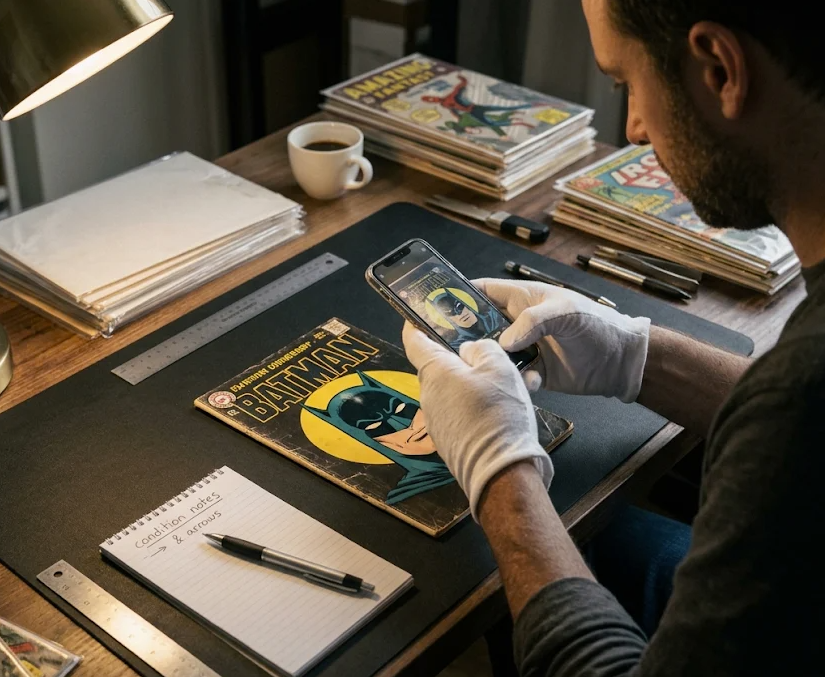
A good status system is real infrastructure. Someone has to set it up and keep it current. It can confirm that your books arrived, show that an order is moving through a workflow, and reduce the uncertainty of wondering, “Where is my book?”
That is valuable. Silence is not a communication plan.
But a status has limits. “In progress” confirms that a step is marked as underway. It does not confirm what condition your copy was in when work began, what action was taken, or whether the result matched the plan.
Think of status updates as project management. Think of photos as a record of the physical work. Ideally, you receive both.
3. What a photo actually proves
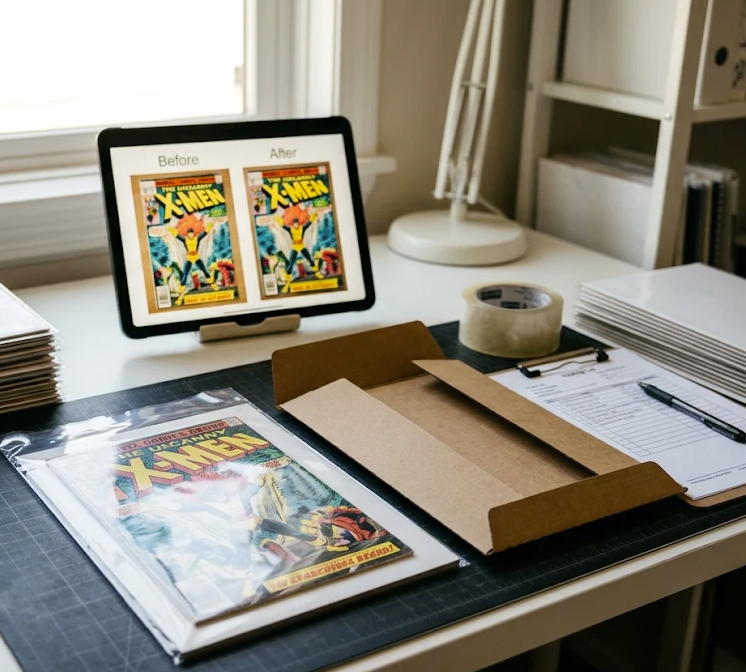
A useful photo connects three things: this copy, this condition, and this point in time.
Before work, look for images that show the book and the specific defect being considered. You should be able to recognize the front cover, back cover, spine, and relevant corner, not just see a vaguely similar comic on a work surface. A unique mark, flaw, or identifying detail helps distinguish your copy from another.
During or after work, a comparison should show the same area again. What changed? What did not? A photo is more informative when it is specific:
Raking light can make a wave or surface ripple easier to see.
A close crop can help you inspect an individual spine tick or corner bend.
Both covers matter. The back cover can have defects that are easy to overlook.
The same copy must be identifiable in each image. For a graded book, a certification number may help; for a raw book, a distinctive flaw or marking can serve as a visual reference.
Photos have limits. Lighting, angle, focus, and compression can make a defect appear weaker or stronger. A picture cannot guarantee a grade, and it cannot prove every detail of a process. It can, however, give you a dated visual record to compare with written condition notes and the book you receive.
4. Why this is hard to verify after the fact
If you first learn what happened when your comic comes back, you have fewer choices. You can inspect the result, but you cannot easily ask the presser to pause before proceeding.
Photos during a job are especially useful when a plan needs another look. Perhaps the defect is different from what was expected, or the paper seems too fragile for the proposed action. A clear image can support a conversation while there is still time to stop and reassess.
That is not a promise that every concern can be solved mid-process. Some decisions are technical, and photos do not replace an experienced assessment. But they help make the conversation concrete. Slow down. Inspect closely. Ask before you assume.
5. The five photographs that matter
A practical photo record does not need to be elaborate. It needs to be clear, consistent, and tied to your book.
Intake overview and condition notes. Show the whole book and identify the main visible defects. Notes add context a photo cannot provide.
Pre-work defect detail. Photograph the specific wave, crease, bend, or other condition the work is intended to address.
Post-work view of the same defect. Use the same angle and lighting where possible. Otherwise, you may be comparing two different presentations rather than two conditions.
The actual finished book packed for return. This helps connect the completed work with the item being prepared for shipment.
A final packing-list record. Confirm what is being returned and the contents of the shipment.
Same-lighting comparisons matter. A dramatic change in angle or brightness can make a defect appear to vanish, or appear worse. A polished “after” photo that cannot be fairly compared with the “before” is less useful than a plain, honest pair.
6. Photos can inform the decision, but they cannot promise a result
Documentation helps you see what is being considered. It does not make every defect a pressing candidate. The physical condition still matters, and not every visible problem can be improved.
Pressing may improve some non-color-breaking bends, waves, or indentations. It cannot restore color that has broken, replace missing paper, or erase every sign of handling. A photo helps you discuss the condition; it does not turn a physical limitation into a fix.
This is one reason comic book pressing and comic book cleaning should be treated as preservation decisions, not automatic grade-boosting steps. The right action may be to proceed, adjust the plan, or leave the book alone.
7. How to ask for photo updates
Before choosing a service, ask direct questions:
Will I receive photos of my actual book, or examples of representative work?
At which points in the process will photos be taken?
Can I see the specific defect before work begins?
What happens if a photo reveals an unexpected condition?
If I am uncomfortable with the proposed work, can the process pause?
You do not need to demand a photo of every movement. You do need to know what record you can expect and what choices you have if the book’s condition changes the plan.
If your comic may be part of a CGC grading submission, ask how the photo record connects to the submission and return process. Keep your own dated images and notes too. A service record and your personal records can complement each other.
For a broader checklist of questions to ask before sending a book, see Choosing a Comic Book Presser.
8. Our practice, plainly
At Pressing Issues, high-touch communication with photo updates is our standard. We use them to help you verify the condition and work on your book, not simply to make a process look impressive. Photos support the conversation; they do not replace careful handling, honest limits, or your decision about what happens next.
Key Takeaways
A status update tells you where your order is. A photo can show what is happening to your specific copy.
Look for identifiable, defect-specific images, not generic examples.
Before-and-after photos are most useful when the angle and lighting are consistent.
Photos support informed decisions, but they cannot guarantee a grade or make an unfixable defect fixable.
Ask when photos are taken and what happens if they change your understanding of the work.
Trust matters. Verification helps you decide what trust is based on. Good comic book preservation means knowing what is planned, what can be improved, and what should be left alone.
If you love something, buy it, but always use caution.