
There is a moment every collector knows. You pull a comic from its bag, remember where you found it, and see the book you fell in love with.
Then you tilt it under the light.
A crease appears. A corner is softer than you remembered. The spine has a tick you somehow stopped noticing.
That does not make you careless or dishonest. It makes you an owner.
I include myself in this. The owner is often the least reliable inspector of their own book, not because collectors lie, but because attachment changes what we see. We see the memory of the comic as much as the comic itself.
The remedy is not cynicism. It is a process: check the real condition, then check the real value.
Prong One: See the book as it is
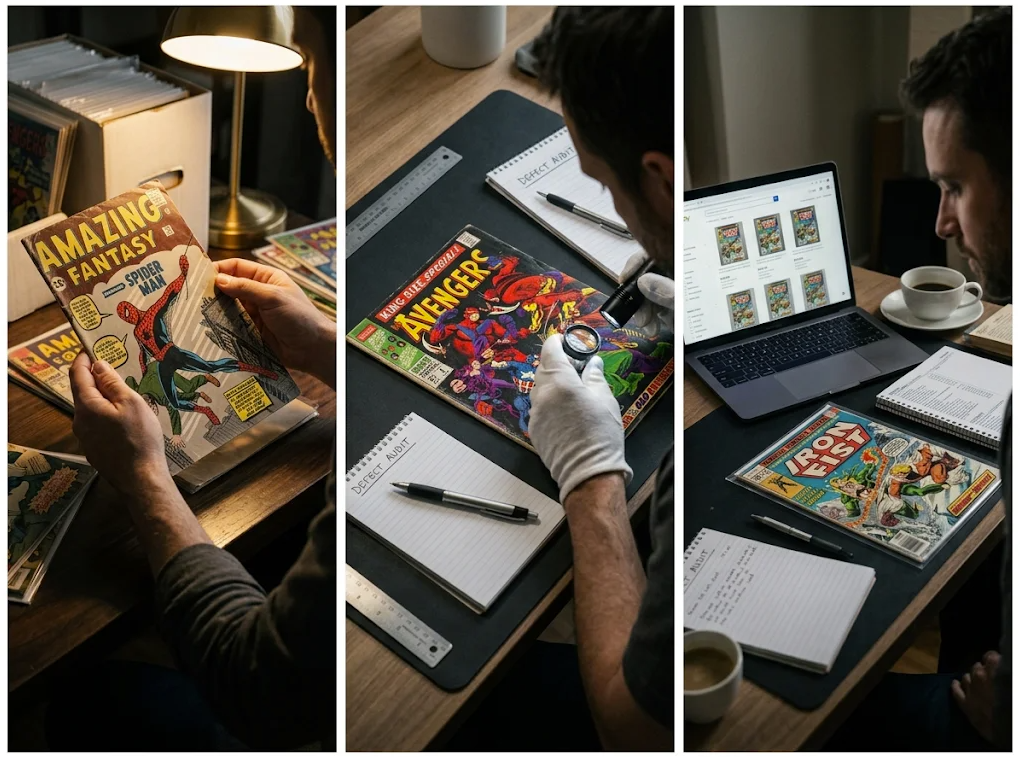
When you have owned a comic for years, familiarity can smooth over its flaws. You remember the day you bought it, the story inside, or the excitement of finding a key issue. You may not remember the small crease near the bottom edge.
The book has not changed just because your memory has. Its surface is the evidence.
This is where a comic book presser you trust can offer something useful: fresh, unbiased eyes. A careful presser can help distinguish structural defects from pressable ones, explain which marks may improve, and identify damage that a press will not change. Sometimes the news is better than you feared. Sometimes pressing will not change the grade at all.
Either way, a clear assessment is more useful than a hopeful guess.
In our process, we document every defect on every comic that arrives at our table. Before work begins, we identify what is present, what may respond to treatment, and what is permanent. That record is not a promise of a grade. It is an honest baseline: one that helps you understand the book and protects you from expectations a particular comic cannot meet.
For a closer look at the differences between defects that may improve and defects that can set a book’s ceiling, see our companion piece on the defects pressing cannot fix.
Prong Two: Separate condition from value
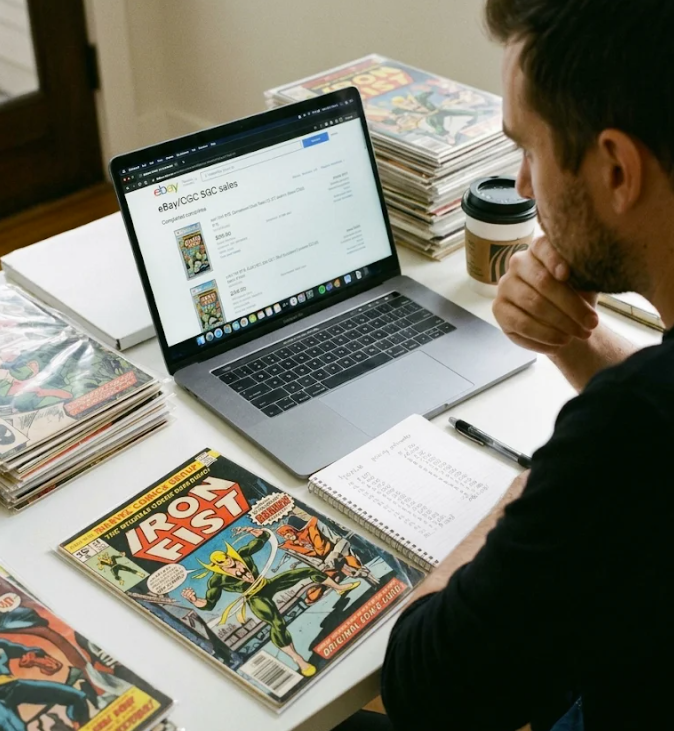
Value follows condition, but owners can overestimate both.
We often anchor to the wrong thing: the price we paid, a high sale we remember, or the book’s reputation. We may have seen a 9.8 sell for a big number and quietly let that number stand in for our own copy’s value.
It does not.
The issue is the issue. The copy is the copy.
An under-the-radar key or first appearance can be important to collectors without every copy being important at the same price. A book’s significance does not erase its spine ticks, missing insert, color-breaking crease, or weak staples. The character’s first appearance belongs to the issue. The condition belongs to your copy.
The owner’s eye can lead you to compare your book with worse copies instead of comparing it with the grading standard. You spot one defect, decide it is “minor,” and stop reassessing. You may even hold onto your purchase price as if it were a condition report.
It isn’t. What you paid tells you about a past transaction, not what the comic is worth today.
When you research value, compare completed sales of the same issue in a similar grade. Don’t build your estimate around the highest price you have ever seen for that title. A disciplined comparison of completed sales can help you keep the estimate grounded.
The owner’s eye: a comparison
A check-yourself protocol
Slow down. Inspect closely. Give your book the kind of attention you would give a stranger’s copy at a show.
Start with the light. Use bright, steady light to inspect the whole comic. Then use raking light at a shallow angle. Watch the reflection travel across the cover. Dents, ripples, and creases often show themselves when the light moves.
Check in a consistent order. Start at the spine. Move to corners and edges. Inspect the front and back covers, staples, centerfold, and page count. Look for missing pages, inserts, or other completeness issues. Don’t let an attractive front cover distract you from the back or interior.
Take photographs. Photograph both covers and any defects under consistent lighting. A photo gives you a record to revisit. It can show what familiarity hides and help you compare the book over time. Avoid bending or flexing a comic to test it.
Ask someone with no stake in your answer. A trusted presser, knowledgeable collector, or experienced grader can offer a second look. Ask for an explanation, not just a number. The goal is to understand the defects, not to hear the grade you hope for.
Separate the price paid from the present condition. Your purchase may have been a great deal, a sentimental choice, or a decision made when the market looked different. None of that changes the paper in your hands.
Compare like with like. Look for completed sales of the same issue and version in a comparable grade. A top sale is not a baseline. A book’s reputation is not a condition assessment.
If you’re considering comic book cleaning or comic book pressing, keep the same discipline. Ask what the book needs, what treatment may improve, and what it cannot fix. Pressing may improve some non-color-breaking bends or surface distortions. It cannot restore missing paper or ink. Searches for how to remove spine ticks from comics often blur that distinction; a color-breaking mark remains a defect even if its surrounding paper is flattened.
Pressing is not only about improving comic book grade or preparing for CGC pressing. Careful comic book preservation also means understanding the condition of a raw book and making informed decisions about its future. Sometimes that means treatment. Sometimes it means leaving the book alone. The Five Golden Rules of Comic Book Pressing and Cleaning are a useful reminder that restraint is part of good care.
Five rules for keeping your judgment honest
Do no harm.
Do not perform an action on a comic book that it does not need.
Handle each comic with care to avoid causing new damage during any movement.
Document your work with photos to confirm what changed and avoid repeating ineffective actions.
Treat every action as carrying risk. Act strategically, not on a whim.
When a presser’s assessment helps
A useful defect audit is specific. It identifies each defect before work begins, separates pressable issues from permanent damage, and explains what a press may improve, and what it will not touch.
That record gives you a baseline for later decisions. It can help you see whether comic book pressing or cleaning makes sense, whether preparing for a CGC submission is worthwhile, or whether no work is the wiser choice. A complimentary value analysis can add context by comparing the book’s likely condition and market position with the potential costs and benefits of treatment. It should inform your decision, not promise a grade or a return.
Choosing who handles your books matters, too. Our guide to choosing a comic book presser covers the questions worth asking before you entrust someone with your collection.
What I have learned
I have learned that the first estimate in my head is not always the most reliable one. I can remember the excitement of finding a book and overlook the defect that was there all along. That is the owner’s eye at work.
The same bias can follow you when you sell. If you overgrade a comic in a listing, the buyer may see a different book than the one you described. A conservative, evidence-based assessment is not pessimism. It helps prevent a disappointing sale and an uncomfortable return.
The point is not to be cynical about your collection. It is to know what you own. A book’s real condition is knowable. Its value can be estimated with more discipline than memory allows.
So check yourself against the real condition and the real value. Use fresh eyes. Keep the photos. Do the math. And when the evidence challenges what you hoped to see, take a breath before deciding what comes next.
Key Takeaways
Attachment can make you remember the book more clearly than you see it.
The issue’s significance does not determine the condition or value of your individual copy.
Use steady and raking light, inspect systematically, and take photos.
Compare completed sales of the same issue at comparable grades, not the most exciting sale you remember.
Ask an unbiased person to explain what can improve, what cannot, and whether treatment makes sense.
If you love something, buy it, but always use caution.