
The Biggest Mistake Online Comic Sellers Make: Showing Too Much Inventory
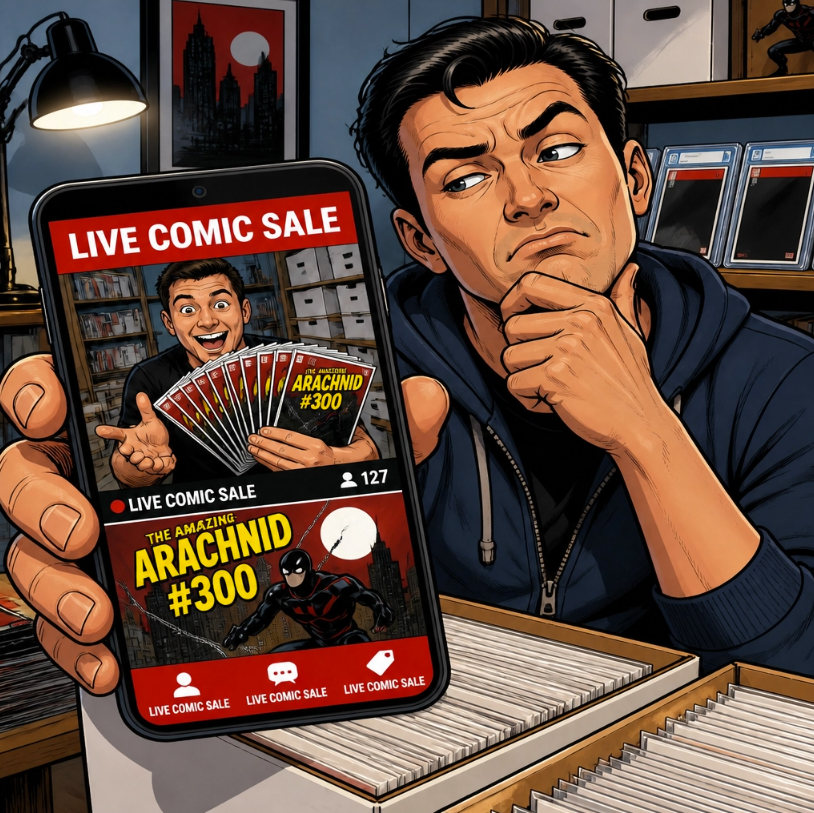
The biggest mistake online comic sellers make is also one of the easiest to solve.
They show too many copies of the same expensive book at the same time.
Six or seven copies of Amazing Spider-Man #300 sitting together in one online storefront may look impressive to the seller. It proves the seller has inventory. It may even suggest confidence in the book.
To the buyer, it can create the opposite feeling.
The book starts to feel common.
It feels less rare. Less urgent. Less special.
That is not because the underlying supply has suddenly changed. It is because the buyer can see too much of it in one place.
The Psychology of Visible Supply
Collectors do not respond only to facts. They respond to signals.
A key issue can have a strong history, a famous character, and healthy demand. But if a buyer sees dozens of copies available from the same seller, the emotional experience changes.
The chase disappears.
Why rush to buy this copy when another one will still be there tomorrow? Why pay a premium when the seller appears to have 50 or 60 more copies in the back room?
This is the difference between true scarcity and visible scarcity.
True scarcity is the actual number of desirable copies available in the market.
Visible scarcity is how much of that supply a buyer sees at one moment.
You cannot permanently create value by hiding inventory. Presentation cannot overcome weak demand. It cannot make an overprinted book genuinely rare.
But presentation does affect how buyers experience a premium book.
That matters.
A collector wants to feel that the book in front of them is worth pursuing. When the listing feels like one unit in a warehouse, the emotional reason to buy becomes weaker.
The result is often predictable:
Buyers wait.
Offers get more aggressive.
The book becomes a commodity.
The seller trains customers to expect a discount.
The best copies lose their sense of importance.
Why Amazing Spider-Man #300 Is a Useful Example
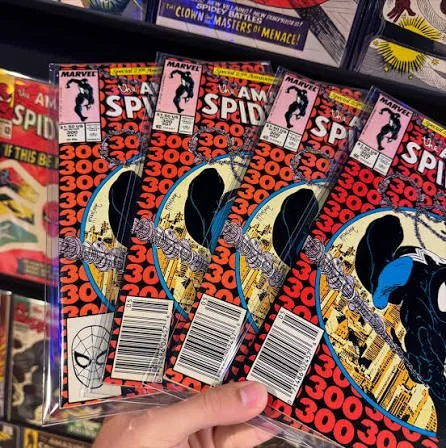
Amazing Spider-Man #300 is a major modern key issue associated with the first full appearance of Venom and Todd McFarlane’s influential Spider-Man artwork.
It is also a useful example because many collectors already know the book. They understand its importance. They know what it looks like. They know what a high-grade copy can sell for.
That familiarity creates a challenge.
When one copy is presented carefully, the buyer may think:
> “This is the copy I have been looking for.”
When seven nearly identical copies are presented together, the buyer may think:
> “This is inventory the seller needs to move.”
Those are very different buying situations.
The CGC Census also reminds us that graded population counts are not the same as the number of copies currently available for sale. A census number can be high while only a small number of attractive copies are actively offered at a given moment.
That distinction is important.
A collector is not buying “the census.” They are buying a specific copy, with a specific grade, page quality, cover appearance, provenance, and price.
Your listing should help that copy feel specific.
Not interchangeable.
The Same Principle Applies to Under-the-Radar X-Men Keys
This is not just an ASM #300 problem.
The same presentation issue affects less obvious X-Men key issues and first appearances. Consider books such as:
X-Men #129, associated with the first appearances of Kitty Pryde and Emma Frost.
X-Men #221, the first appearance of Mister Sinister.
X-Men #244, the first appearance of Jubilee.
X-Men #282, associated with the first appearance of Bishop.
These books may not receive the same constant attention as the biggest blue-chip comics. That makes presentation even more important.
If you list a desirable X-Men key as a single, well-described copy, you give the buyer room to consider its significance. If you place ten copies beside it, the issue may look like ordinary stock.
The goal is not to manufacture importance.
The goal is to avoid accidentally removing it.
Long-Term Collection, Dealer Inventory, and Storefront
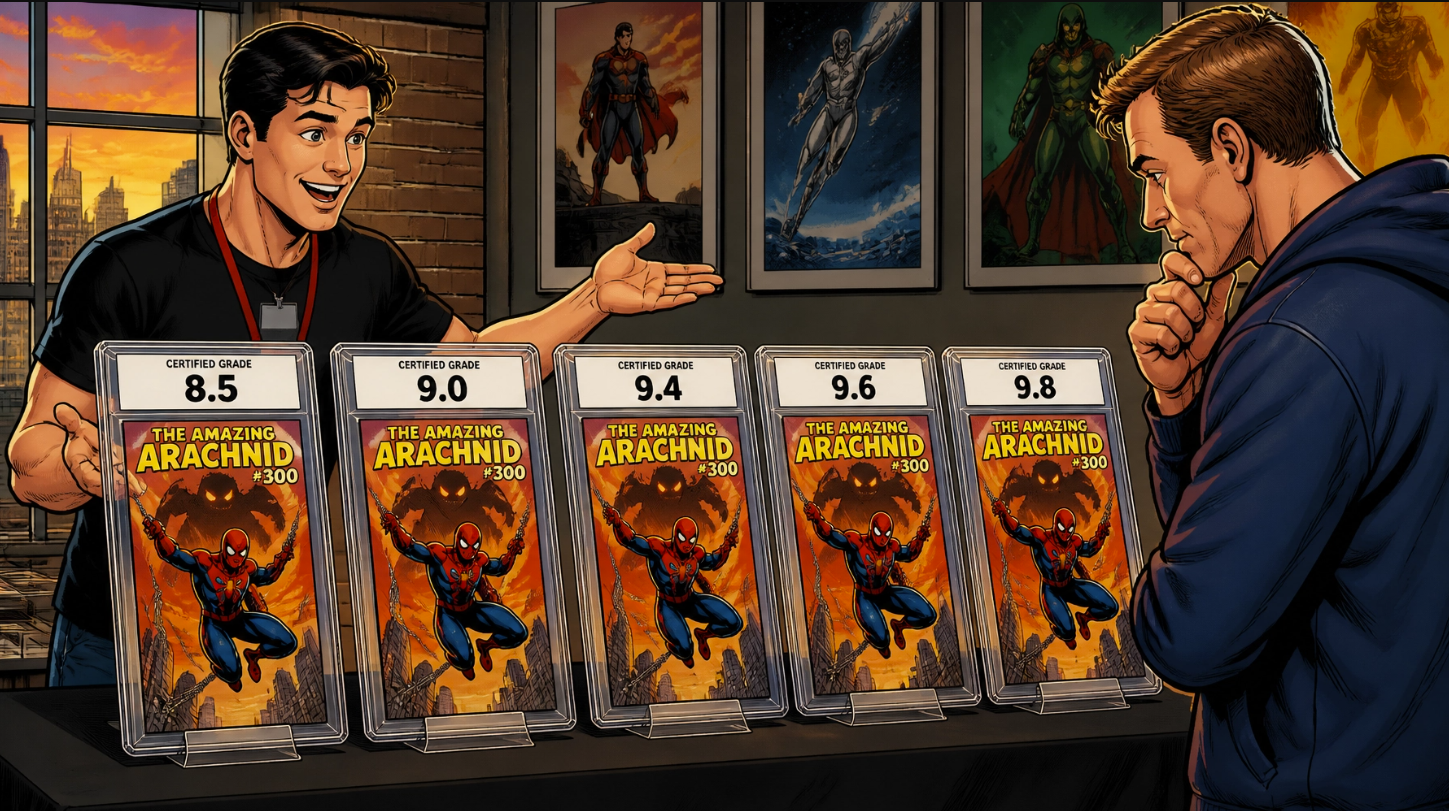
Collectors and sellers often confuse three different things.
1. A long-term collection
A private collection can contain multiple copies of the same book. That is normal. You may have bought duplicates at different grades or prices. You may be building a small group of examples.
Your collection is not a storefront.
You do not need to display every copy at once.
2. Dealer inventory
Dealer inventory exists to be sold. It needs to be organized, tracked, and available.
That does not mean every item needs to be publicly visible at the same time.
A professional dealer can know exactly what is in stock while showing only the most appropriate copy: or a small selection: to customers.
3. An online storefront
Your storefront is a presentation layer.
It is the part of your business the customer experiences first. It should be curated. It should communicate judgment. It should make your best books easier to understand.
Think of a high-end retailer. The store may have additional inventory in a back room, warehouse, or private viewing area. The front display is intentional.
Comic sellers should think the same way.
The back room is inventory. The storefront is an argument for value.
A Simple Formula for Better Inventory Presentation
Use this formula:
> Premium book + clear condition information + controlled release + strong presentation = stronger buying experience
This does not guarantee a higher price. It does not create demand. It does not make a common book rare.
It simply prevents your own storefront from making a good book look ordinary.
A presentation diagram
The same logic applies when preparing books for professional grading. The graded comic book resale workflow should begin with accurate assessment, not wishful thinking. Presentation comes after you understand what you actually have.
Practical Steps for Online Comic Sellers
1. Stagger your listings
Do not release every copy of an expensive book on the same day.
List one or two. Watch the response. Reassess after the first sale or after a defined period.
This gives each copy room to perform.
2. Vary venues and timing
You do not need to place every copy on the same marketplace at once.
You might offer one copy through your online store, another at a convention, and another through a private collector inquiry. Keep accurate records so you know what is available.
This is not about confusing buyers. It is about avoiding a search-results flood.
3. Avoid flooding search results
Search visibility is useful until it becomes repetitive.
If a buyer searches for Amazing Spider-Man #300 and sees the same seller occupying most of the results, the seller’s power may appear weaker: not stronger.
Your goal is to be seen as a source of quality copies, not a source of endless supply.
4. Use want lists and private inquiries
Collectors often know what they want but do not want to watch a public storefront every day.
Maintain a want list. Let serious buyers know when a specific grade or condition becomes available. Private inquiries are especially useful for duplicates, higher-value books, and books with condition-sensitive pricing.
5. Show quality rather than quantity
A better listing includes:
Sharp front and back cover photographs.
Clear spine images.
Accurate grade estimates.
Page-quality information when available.
Notes about color-breaking defects, bends, stains, and restoration concerns.
Any relevant variant or edition details.
A realistic price based on recent sales.
Tools such as eBay, GoCollect, CovrPrice, and GPA can help you compare market information. Key Collector Comics can help identify key issues and first appearances that deserve more careful treatment.
Do not confuse an asking price with market value. Check completed sales where possible.
6. Disclose available copies honestly
If a buyer asks how many copies you have, answer honestly.
There is a difference between pacing your public listings and misleading a customer. Never hide material defects. Never misrepresent scarcity. Never imply that a book is the last available copy if it is not.
This strategy is about pacing and presentation.
Not deception.
7. Track sell-through rates
Record:
How many copies were listed.
How long each copy took to sell.
The final sale price.
The number of views and inquiries.
The number of offers.
Whether buyers returned after the first copy sold.
Your inventory decisions should be based on evidence.
If one copy sells quickly and the next three sit, that tells you something. If every copy requires a discount, the problem may be price, condition, or demand: not simply presentation.
The Collector’s Perspective
As a collector, visible supply can affect your confidence too.
Seeing many copies may reassure you that the book is available. It may also make you question whether the price is justified.
That reaction is not always wrong. Sometimes the market really is oversupplied. Sometimes a book has been heavily submitted to CGC, heavily promoted, or temporarily inflated by speculation.
Presentation cannot permanently defeat those forces.
A rare comic with no interested buyers is still difficult to sell. A common comic with massive demand can still be valuable.
Use the presentation signal as one piece of evidence: not the entire valuation system.
Slow down. Inspect closely. Compare recent sales. Look at the specific copy.
And if you love something, buy it, but always use caution.
The emotional appeal of the chase is real. So are the financial consequences of chasing too quickly.
What I Have Learned
What I have learned is that collectors want more than access.
They want context.
They want to understand why a book matters and whether the copy in front of them deserves their attention. When a seller presents every duplicate at once, that context gets replaced by volume.
The books begin to look interchangeable.
Even a strong key issue can lose energy when it is presented like warehouse stock.
A disciplined seller protects the difference between “available” and “ordinary.”
That is the entire lesson.
Keep most of your inventory organized and accessible. But make the public selection feel intentional. Feature the copy that deserves attention. Release additional copies with a plan.
The back cover matters. The spine matters. The condition matters.
So does the way you place the book in front of the buyer.
Key Takeaways
Showing too many copies of an expensive comic can reduce perceived rarity and urgency.
Amazing Spider-Man #300 feels less special when six or seven copies appear together.
Visible scarcity is not the same as true scarcity, but it still affects buying psychology.
Keep most dealer inventory out of sight while maintaining accurate internal records.
Stagger listings, vary venues, and use private inquiries for additional copies.
Show quality, condition, and expertise rather than raw quantity.
Never use presentation to hide defects or mislead buyers.
Track sell-through rates and let actual market behavior guide your decisions.
If you love something, buy it, but always use caution.