
MCU X-Men Cast Announcement: Under the Radar Keys and 1st Appearances
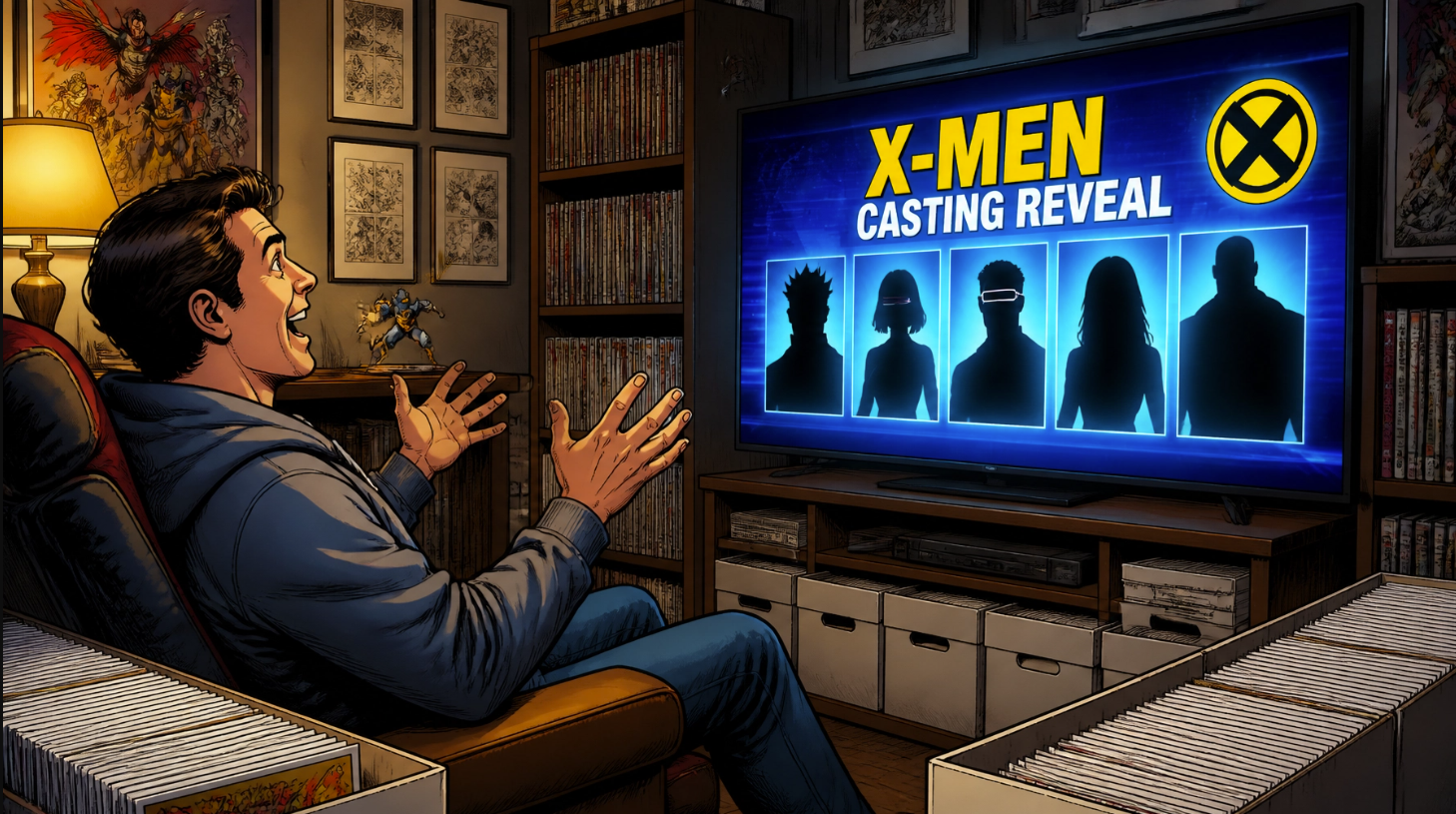
The X-Men market does not need much encouragement.
An official cast announcement is enough to send collectors running toward the same books everyone already knows. Giant-Size X-Men #1. X-Men #1. The obvious stuff. The expensive stuff.
That is usually where mistakes begin.
As of the August 2026 MCU X-Men announcement, the reporting has pointed to Sadie Sink as Jean Grey, Kit Connor as Cyclops, Christopher Abbott as Professor X, Samara Weaving as Emma Frost, Inde Navarrette as Rogue, and Maya Boyd as Storm. Coverage has also been less consistent around Adam Driver, with some reports tying him to Mister Sinister and others to Magneto. That is exactly why you need to separate confirmed news from rumor before you buy.
Start with the source.
Read the announcement coverage from The Hollywood Reporter, compare it with Deadline, check follow-up reporting at ComicBook.com, and look for direct studio context from Marvel. Then slow down.
Possibility can make us see what we want to see.
This article is not about chasing blue-chip copies of Giant-Size X-Men #1 or X-Men #1. It is about building a disciplined buying map around the first appearances, secondary keys, story keys, and character-development issues that may still be accessible if you stay honest about risk.
> If you love something, buy it, but always use caution.
Confirmed casting vs. rumor: start here
Before you buy anything, separate what has been officially announced from what is still being framed inconsistently across entertainment coverage.
Reported as officially announced in August 2026
Sadie Sink as Jean Grey
Kit Connor as Cyclops
Christopher Abbott as Professor X
Samara Weaving as Emma Frost
Inde Navarrette as Rogue
Maya Boyd as Storm
Adam Driver as Mr. Sinister
The buying map starts with terminology
Collectors throw around labels fast. Prices follow. But the labels are not all the same.
Here is the practical difference:
First appearance: the earliest accepted published appearance of a character.
First full appearance: used when a prior cameo exists and the market treats the later issue as the real arrival.
First cover appearance: the character appears on the cover for the first time.
First solo cover: the first cover focused on that character alone, or primarily alone, if that distinction is supportable.
First team membership: the issue where the character officially joins the team, which can matter a lot for X-Men demand.
Story key: an issue valued for a major plot beat, character turn, costume era, power development, rivalry, death, origin beat, or iconic reading experience.
Community consensus and cover appeal often drive value more than technicality.
But consensus does not make every related issue a good investment.
A hot label can still attach to a weak buy.
Quick collector table: blue-chip acknowledgment and under-the-radar targets
Rogue: the easiest character to buy badly
Rogue is a perfect example of why you need a system.
Yes, Avengers Annual #10 is the famous book. That is the acknowledged major first appearance. It is the headline issue. Most collectors know that.
That does not mean it is the best place for every collector to start.
A practical Rogue map
1. Avengers Annual #10
What it is: Rogue's famous first appearance and the book most of the market treats as the primary key.
Buying caution: It already carries broad awareness. That means stronger competition, more grading spread, and less room for error when you overpay during a movie spike.
2. Uncanny X-Men #158
What it is: commonly cited as Rogue's first full appearance in the X-Men title. This matters because many X-Men collectors prefer character keys that live inside the main title run.
Why it matters: Some buyers want title relevance more than strict chronology. That can create demand that is not always obvious from the raw price alone.
Buying caution: Do not describe it as Rogue's first appearance. It is not. Its appeal is title-based consensus.
3. ROM #31
What it is: a tied early Rogue appearance often discussed as a second appearance target.
Why it matters: It sits outside the obvious Avengers/X-Men lane, which can keep it under the radar longer than more famous Rogue books.
Buying caution: Tied-second-appearance talk can create argument fast. Buy it because you understand the sequence and like the issue, not because you want to win a labeling debate.
4. Marvel Super-Heroes #11
What it is: a reprint/access point that sometimes draws budget-minded attention when primary Rogue books run too high.
Why it matters: Some collectors like lower-cost character entry points, especially when they simply want a readable or displayable issue.
Buying caution: A reprint is not a substitute for a first appearance. Treat it as a different category.
5. Uncanny X-Men #171
What it is: Rogue joins the X-Men.
Why it matters: First team membership matters. Sometimes a joining issue becomes the emotionally important issue, even when it is not the first appearance.
Buying caution: Team membership demand is real, but it should not be confused with first-appearance demand.
Rogue takeaway
If you cannot afford the headline book, do not force the headline book.
You can build a Rogue lane around:
first appearance prestige,
first X-Men-title relevance,
early appearance sequencing,
and first team membership.
That is a smarter map than just yelling “buy Rogue.”
Emma Frost: big first, better hunting around it
Uncanny X-Men #129 is the major Emma Frost first appearance. Acknowledge it. Respect it. Then move outward.
For many collectors, the better opportunities sit in the adjacent books.
Emma Frost issues worth investigating
1. Uncanny X-Men #129
What it is: Emma Frost's major first appearance and one of the defining entry points for the Hellfire era.
Buying caution: This is the obvious book. The obvious book gets repriced quickly.
2. Uncanny X-Men #130
What it is: an early Emma/Hellfire development issue.
Why it matters: Adjacent development books can benefit when the market wants more affordable ways into a character's earliest arc.
Buying caution: Call it an early development issue. Do not inflate it into a first it may not be.
3. Uncanny X-Men #131
What it is: another important early Emma Frost and Hellfire Club issue, often drawing interest for first cover significance where collectors support that interpretation.
Why it matters: Cover appeal matters. White Queen imagery matters. Hellfire material matters.
Buying caution: Be careful with hard-label language. If a designation is debated, say it is debated.
4. New Mutants #16
What it is: a Hellions-related key connected to Emma Frost's wider orbit.
Why it matters: Some character demand spreads through associated team books. That does not always happen immediately. But when the market broadens beyond first appearance chasing, these books can get a second look.
Buying caution: It is an adjacent Emma book, not a replacement for Uncanny X-Men #129.
Emma takeaway
With Emma, under-the-radar often means buying the shape of the character's rise, not just the first panel where she exists.
That is a better collector habit.
Mister Sinister: do not let terminology spend your money
Mister Sinister books are where sloppy language gets expensive.
The accepted market answer usually centers on Uncanny X-Men #221 as the early or first full appearance area collectors care about most. But the cameo/full-appearance/cover debate exists. You need to know that before you buy.
The disciplined Sinister approach
Uncanny X-Men #221
What it is: the accepted key most buyers recognize when they want an early or first full Mister Sinister issue.
Why it matters: Market acceptance matters more than winning a technical argument in a vacuum.
Buying caution: Learn the cameo/full/cover conversation before paying top dollar for any Sinister book.
Later affordable Sinister targets
After #221, only chase later issues when the significance is supportable. That usually means:
a clearly recognized story beat,
a notable cover collectors actually chase,
or a strong role in a major X-Men arc.
Do not force relevance where it is weak.
And be careful with adjacent books.
X-Men Annual #14 is not a Mister Sinister key. Its key discussion is tied to Gambit relevance, not Sinister. Keep those lanes separate.
Mister Sinister takeaway
If Adam Driver's role remains inconsistently reported, that is not a green light to buy every dark, creepy late-1980s X-book.
It is a reason to slow down.
Storm: acknowledge the giant, then work the Bronze Age edges
Storm begins with Giant-Size X-Men #1. That is the blue-chip acknowledgment. It is the book. No need to pretend otherwise.
But most collectors are not buying that book in this market without taking real financial risk.
So what do you do instead?
You look for:
affordable early Bronze Age supporting appearances,
important early covers,
character-focused story issues,
and books where Storm is meaningful to the reader even if the label is not “first appearance.”
How to evaluate Storm books
Ask four questions:
Is this an appearance key?
An early appearance inside the classic Claremont run can matter because collectors want continuity with the era that made Storm iconic.Is this a cover key?
A first cover or early strong cover can carry real demand, especially when the cover has visual punch.Is this a story key?
Storm has several important character-development stories. A great story can stay relevant longer than a weak technical designation.Is the designation actually supportable?
Do not invent “first solo cover” or “first major cover” claims because a dealer copy says so.
Storm takeaway
With Storm, the smart move is usually not trying to substitute for Giant-Size X-Men #1.
It is identifying strong Bronze Age books that collectors may want even if movie heat cools off.
Jean Grey and Cyclops: buy identity, not just origin
For both Jean Grey and Cyclops, X-Men #1 is the blue-chip origin point. That is the historic answer. It is also out of reach for many collectors.
That means your edge comes from focusing on story keys, identity keys, and cover/character-focus issues tied to what the MCU is likely to emphasize.
Jean Grey: what to look for
With Jean, the practical lane is:
early Phoenix development,
Dark Phoenix development,
major character-turn issues,
emotionally central story beats,
and cover issues the market actually recognizes.
Label these honestly.
Most Jean books outside X-Men #1 should be treated as story keys or appearance/development keys, not first appearances.
A Phoenix-era book may be more emotionally important to many buyers than a technical early appearance. That can matter in the market.
But again, story relevance is not the same thing as first-appearance status.
Cyclops: what to look for
With Cyclops, focus on:
leadership stories,
team-command moments,
identity-defining arcs,
relationship-centered story keys,
and character-focused covers that people actually remember.
Cyclops is often undervalued because he is treated as “always there.” Sometimes that creates better buying opportunities than the louder characters.
Buy books where Scott Summers matters on the page.
That is a better approach than blindly buying any early X-book with his face on it.
Professor X: clear significance only
Professor X starts with X-Men #1. After that, the best affordable lane is usually early story keys with clear Xavier significance.
That can mean:
foundational school-and-team material,
ideological conflict stories,
major leadership decisions,
or issues where Xavier's role is central rather than incidental.
Avoid unsupported first-appearance language.
Professor X has many important issues. Not all of them are keys. Not all of them need to be slabbed.
A practical buying system for MCU X-Men speculation
Use this system before you spend money.
Step 1: Verify the news
Read The Hollywood Reporter, Deadline, ComicBook.com, and Marvel before treating any casting report as settled.
Step 2: Sort the issue into the right category
Is it:
a first appearance,
a first full appearance,
a first cover appearance,
a first solo cover,
a first team membership issue,
or a story key?
If you do not know what it actually is, you do not know what you are buying.
Step 3: Check consensus
Compare how the issue is described at:
Consensus can support demand.
Consensus can also hide weakness.
If everyone agrees a book is “important,” you still need to ask whether the current price already reflects that belief.
Step 4: Buy the copy, not just the label
Buy lower-grade copies with strong eye appeal.
Use bright light. Tilt the book. Watch the gloss. Watch the spine. Watch the black areas. Watch the back cover. The back cover matters.
A lower-grade copy with:
strong color,
clean staples,
centered wraps,
and fewer distracting defects
can outperform a technically similar copy with ugly eye appeal.
Step 5: Avoid the movie premium if production evidence is thin
Do not pay a huge premium just because a character was named on a stage.
Wait for stronger production evidence:
repeat studio confirmation,
costume reveals,
teaser footage,
first-look images,
trailer response,
or clear plot relevance.
Some announcement spikes fade before cameras even roll.
Step 6: Model the submission math before pressing or grading
Use a conservative formula:
Potential return = realistic post-grade value − current raw cost − pressing − grading − shipping − insurance − selling fees
Then run three scenarios:
Conservative: no grade bump
Realistic: modest presentation improvement or half-grade movement
Optimistic: best-case outcome
If the deal only works in the optimistic case, walk away.
Practical thresholds
These are not promises. They are discipline checks.
If a raw copy only makes sense after a full-grade jump, slow down.
If pressing, grading, shipping, and selling costs eat most of the spread, slow down.
If recent graded sales are thin, slow down.
If you are buying into a debate instead of a consensus, pay less.
If the book already ran hard on announcement week, let the heat settle.
Pressing and grading: what can help, and what cannot
Bronze Age books often present better after professional pressing and dry cleaning when the defects are actually pressable.
That usually means:
non-color-breaking bends,
light waviness,
minor ripples,
some surface dirt,
and certain handling impressions.
That does not mean:
color-breaking creases disappear,
staple tears heal,
tanning reverses,
chips come back,
or detached pieces reappear.
What can be fixed and what cannot be fixed are not the same thing.
That matters a lot with Bronze Age X-Men books because many collector-grade copies have:
edge wear,
spine stress,
light roll,
small corner bends,
and surface grime.
Those are the books where evaluation matters.
At Pressing Issues, we can provide a complimentary value analysis before pressing or CGC submission, especially for Bronze Age books with visible pressable defects. The point is not to promise a grade increase. It is to help you decide whether the math is sensible before you spend more money.
What I have learned
I have learned that collectors get in trouble when they confuse relevance with inevitability.
A cast announcement makes a book feel important.
That does not mean the market has mispriced it.
It also does not mean every adjacent issue will rise together.
Sometimes the better buy is the issue nobody is shouting about:
the first X-Men-title appearance instead of the first appearance,
the team-membership issue instead of the cameo debate,
the early cover issue instead of the expensive centerpiece,
the strong story key instead of the flimsy label.
The trick is to stay patient enough to see the difference.
Slow down. Inspect closely. Verify the news. Verify the book. Verify the sales.
Then decide.
Key Takeaways
The August 2026 MCU X-Men announcement is a useful news hook, but you should still verify announcements before buying.
Separate confirmed casting from inconsistent reporting, especially around Adam Driver.
Blue-chip books like Giant-Size X-Men #1 and X-Men #1 deserve acknowledgment, but they are not the only collecting lane.
Rogue, Emma Frost, Mister Sinister, Storm, Jean Grey, Cyclops, and Professor X all have secondary or story-driven books worth investigating.
First appearance, first full appearance, first cover appearance, first solo cover, first team membership, and story key are different categories.
Community consensus and cover appeal can drive value more than technicality.
Buy lower-grade copies with strong eye appeal when the numbers make sense.
Compare raw and graded sales using GoCollect, CovrPrice, GPA, Heritage, eBay, Key Collector Comics, and the CGC Census.
Model pressing, grading, shipping, and selling costs before you submit.
If you love something, buy it, but always use caution.
What Pressing Issues offers
Pressing Issues provides professional comic book appraisal, dry cleaning, pressing, and CGC submission assistance for collectors and dealers across the United States.
We document books before and after service, communicate throughout the process, and tell you when pressing is not the right decision. Our goal is not to process every book. It is to identify the books where careful work can protect condition, improve presentation, and support a rational grading decision.
For more guidance, read:
If you are considering pressing or CGC submission for a Bronze Age X-Men book, send clear front, back, spine, staple, and interior photos first. We are happy to give you a complimentary value analysis before you commit.