
The CGC Guide That Changed Comic Book Grading Forever
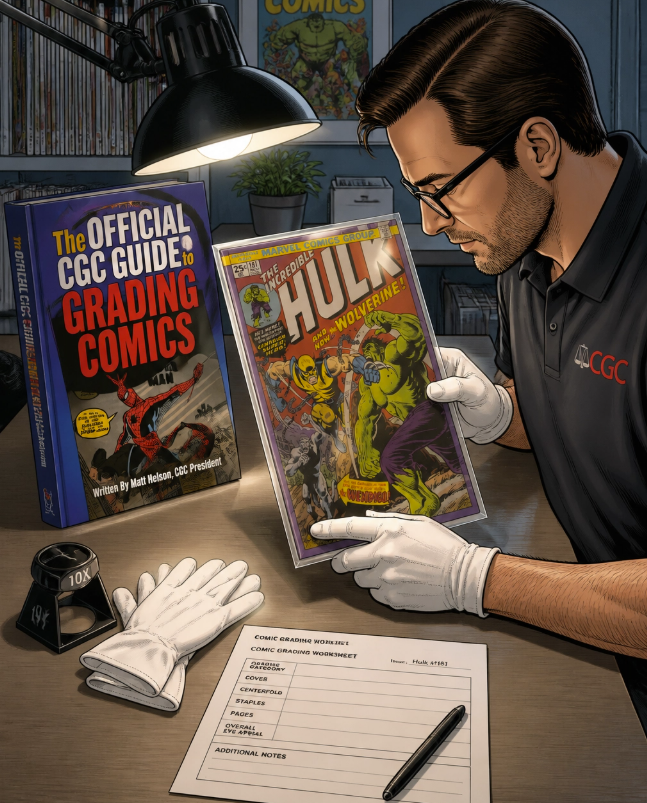
The CGC’s grading guide levelled the playing field for grading like never before.
A few years ago, CGC published a book that gave the comic hobby something it had needed for decades: a shared language.
The Official CGC Guide to Grading Comics is a roughly 400-page hardcover written by Matt Nelson, CGC President. It explains how comic book grading works, documents 109 specific defect types, discusses restoration and pedigrees, and gives collectors a practical way to understand why one book earns a 9.8 while another, apparently similar copy, does not.
The guide did not make grading perfectly objective. No book could do that. Every comic is different. Every defect exists in a different location, with a different level of severity.
But the guide changed the conversation.
Before it, collectors often relied on phrases such as “looks like a 9.8,” a dealer’s personal experience, or a general feeling about a book’s condition. After it, more collectors could inspect a comic, identify specific flaws, and discuss their likely impact with greater precision.
That is a lasting change.
Before and After: From Insider Language to Shared Vocabulary
Comic book grading once felt like an insider language.
Experienced dealers and long-time collectors knew what “light spine stress,” “slight tanning,” or “moderate wear” meant to them. Newer collectors often had to learn through trial and error. Two people could examine the same raw comic and reach completely different conclusions.
That uncertainty affected everything:
Buying raw comics
Selling collections
Estimating value
Choosing a CGC grading submission
Deciding whether comic book pressing made sense
Understanding why a graded comic received its final number
The CGC guide did not remove judgment from grading. It made judgment easier to explain.
A collector could now move from “This looks high grade” to:
> “There is a non-color-breaking bend near the lower-right corner, light spine stress, minor surface dirt, and no obvious missing parts. The page quality and interior condition still need inspection.”
That is a better conversation.
It is more honest. It is more teachable. It gives you a process instead of a guess.
What the Book Actually Contains
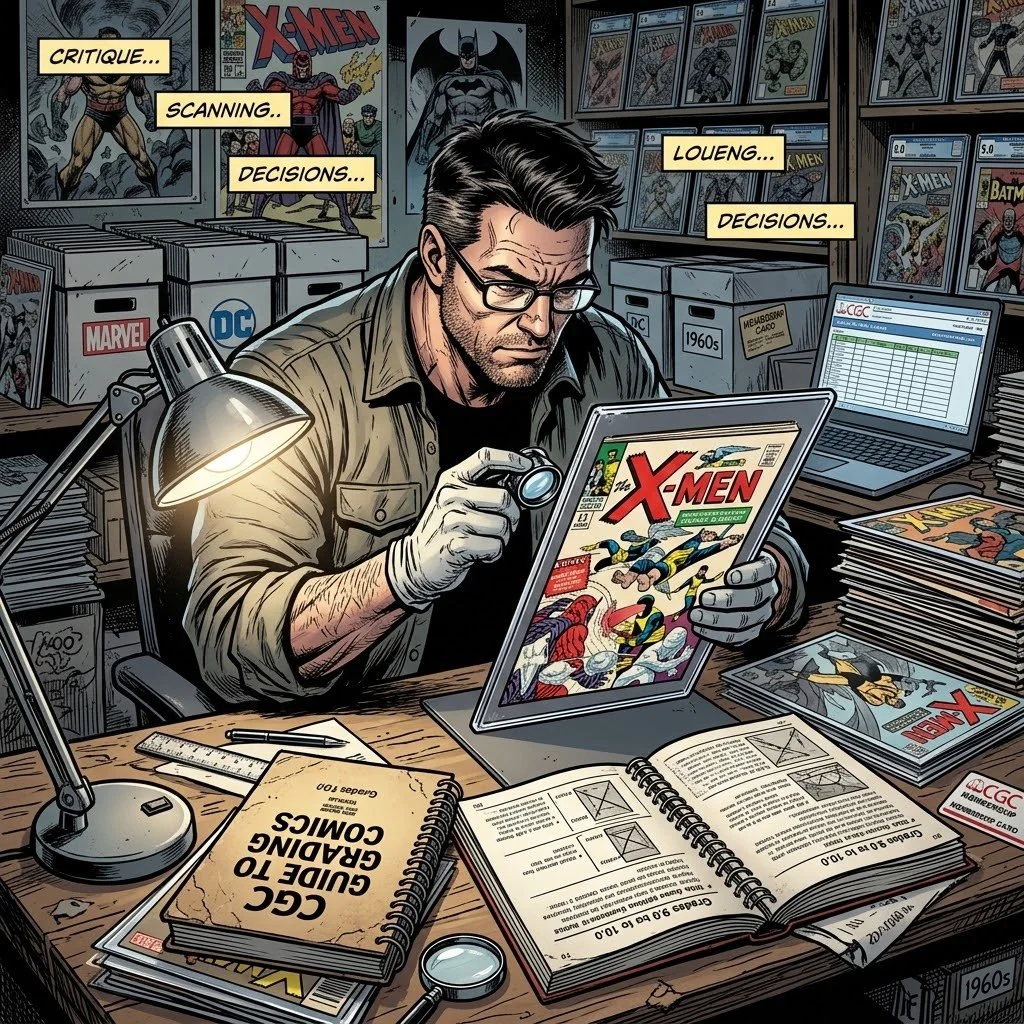
The guide begins with the foundation: CGC’s 10-point grading scale. It explains the difference between grades such as 9.8, 9.6, 9.4, 9.0, and lower condition ranges, along with the types of wear generally associated with each level.
You can compare the book’s discussion with the official CGC grading scale.
The guide also covers:
Comic book history
CGC history and labels
Grading standards
Restoration and enhancement
Reprints and variants
How to handle comics
How to submit books to CGC
Pedigree collections
CGC later released a condensed online Grader Notes Guide, excerpted from Nelson’s book. That resource helps collectors understand terms that may appear in grader notes, such as fingerprints, water damage, rust stains, tanning, and erasure marks.
The hardcover goes further. It provides more detailed explanations and examples of the defects that can affect a comic.
It also gives pedigrees and restoration a place in the same larger conversation. That matters because comic collecting is not only about a number on a label. It is also about history, authenticity, provenance, and the way a book has been handled.
The Defect Vocabulary Collectors Needed
The guide identifies 109 defects grouped into seven broad classifications:
Crease
Distortion
Missing part
Stain
Substance
Tanning
Tear
The category is useful. It is not the grade.
A spine tick, bend, or light crease may fall under crease or distortion depending on the nature of the flaw. A dent may be shallow and non-color-breaking, or it may break the ink and permanently damage the cover. A ripple may be caused by storage, humidity, or another form of distortion.
Missing coupons, clipped panels, missing pieces, and detached inserts fall under missing-part concerns. A comic with a missing coupon is not simply a book with “one small flaw.” The location and significance of that missing material matter.
Water marks, oil marks, fingerprints, tape residue, writing, and surface dirt may involve stain or substance defects. Tanning affects the paper itself. Tears include spine splits, staple tears, cover tears, and detached pages.
The same label can describe very different outcomes.
When you inspect a book, ask:
Where is the defect?
How large is it?
Is it color-breaking?
Does it affect the cover, interior, or both?
Is the paper supple or brittle?
Is the defect isolated or part of a larger pattern?
Does it affect a key image, logo, coupon, or first appearance?
A small non-color-breaking dent in a blank margin is not the same as a color-breaking crease across a character’s face.
Classification gives you a starting point. Severity, location, extent, color breakage, page quality, and the rest of the book determine the larger picture.
Why the Guide Changed Buying and Selling
The guide made buyers better question-askers.
Instead of asking only, “What grade do you think this is?” you can ask:
Are the spine ticks color-breaking?
Is the crease visible from the front, back, or both?
Are there stains or signs of moisture?
Is the coupon intact?
Are the pages brittle?
Is there any restoration or conservation?
Has the book been pressed or cleaned?
Those questions create more consistent comparisons.
They also help explain why two books that look similar in a photograph can receive different CGC grades. One may have a hidden back-cover crease. Another may have a manufacturing miswrap. One may have clean, supple pages. The other may have heavy tanning or brittle edges.
The guide also gave sellers a clearer standard for descriptions. A vague phrase such as “near mint condition” tells you very little by itself. A useful description identifies the actual defects.
This does not mean every vague listing is dishonest. Often, the seller simply uses a different grading standard or has not inspected the book closely enough.
Slow down. Inspect closely. Ask for photographs of the front cover, back cover, spine, corners, interior pages, and any suspected defect.
Why It Changed Comic Pressing and Cleaning
The guide also helped collectors understand the difference between a pressable defect and a structural problem.
Professional comic book pressing may improve appropriate non-color-breaking defects such as:
Light bends
Dents
Ripples
Some spine rolls
Surface indentations
Certain handling impressions
Professional comic book cleaning may address appropriate surface dirt without changing the book’s original state.
But pressing is not magic.
It cannot guarantee a grade. It cannot erase color breaks, replace missing pieces, repair brittle paper, reverse severe water damage, or make a damaged book new. Comic book restoration services that add material, repair tears, apply color, or alter the book’s appearance are separate from ordinary pressing and cleaning.
At Pressing Issues, our standard is preservation first. We aim to keep books unrestored while giving you a realistic assessment of what professional care may accomplish.
One important warning: professional pressers do not use the dry clean method involving drafting powder on valuable books. Powder can abrade paper fibers, leave residue, affect surface texture, and create permanent damage. It may also interact unpredictably with ink, gloss, and aging paper.
If you are experimenting with a new comic book dry cleaning technique, use dollar books. Do not learn on an expensive key.
Why It Changed CGC Submissions
Collectors became better at deciding which books were worth submitting.
The guide supports a more disciplined pre-screening process:
Inspect the book under bright, angled light.
Identify each defect category.
Note its location and severity.
Separate color-breaking from non-color-breaking flaws.
Check page quality and possible restoration.
Estimate the likely grade range.
Compare the value difference between grades.
Decide whether grading and handling costs make financial sense.
That process helps with declared value, tier selection, batching, insurance, paperwork, and tracking.
Professional evaluation can also protect you from spending money on a book with little realistic upside. Pressing may improve presentation and preservation even when it does not produce a profitable grade increase. That is why preservation should not be treated only as a grade-bump strategy.
Pressing Issues offers a complimentary value analysis before work begins. The goal is simple: understand the book, the possible outcome, and the costs before making a decision. CGC submission assistance can also help with paperwork, declared value, tier selection, insurance, and tracking.
There is no promise of a specific grade. There is a clearer process.
Pedigrees: History Beyond the Grade
The book’s discussion of pedigrees broadened the hobby’s focus.
A pedigree is not simply a high-grade comic. It refers to a recognized collection, generally from an original owner, with documented provenance or accepted historical significance. Not every old collection qualifies. Not every group of high-grade books deserves a pedigree designation.
A pedigree can add a second layer of meaning to a comic. You are no longer looking only at condition. You are also considering where the book came from, how the collection was assembled, and whether that history is documented.
CGC’s label information is a useful place to learn how pedigree designations are handled. Treat unsupported pedigree claims with caution. Ask for documentation. Provenance should be demonstrated, not assumed.
The Guide’s Limits
The guide is a reference. It is not a guarantee.
Grading remains expert judgment. Manufacturing defects vary. Page quality matters. Restoration and conservation can change the result. Borderline flaws may be weighed differently by different graders.
Most importantly, the guide cannot inspect your exact copy.
Use it to ask better questions. Do not use it to demand a guaranteed grade from a seller, presser, or grading company.
What I have learned from handling raw books is that possibility can make us see what we want to see. A promising comic can look like a 9.8 until angled light reveals a back-cover dent, a color-breaking spine stress, or a stain hidden by the bag.
The guide is valuable because it pulls you back to the physical evidence.
How to Use the Guide Today
Use this simple formula:
Name it. Locate it. Measure it. Inspect the paper. Decide.
Check the CGC guide and the free Grader Notes resource. Study CGC’s restoration information. Review pedigree information through CGC’s label resources.
Then check the market using completed sales, not asking prices:
Use Heritage Auctions and eBay’s completed sales data as additional references. Follow character and issue relevance through Key Collector Comics and market news from ComicBook.com.
Finally, check the CGC Census, but do not treat population numbers as perfect proof of rarity. The Census shows reported graded copies. It does not show every raw comic, every resubmission history, or every copy sitting in a private collection.
Then decide whether to buy, press, clean, submit, or simply preserve the book.
Why It Changed Everything
The Official CGC Guide to Grading Comics did not turn grading into mathematics. It did not eliminate disagreement. It did not make every grade predictable.
Its lasting impact is simpler and more important.
It gave the hobby a shared vocabulary.
Collectors could learn. Dealers could describe books more clearly. Pressers could explain what might improve and what could not. Submitters could set more realistic expectations. Buyers could compare comics with less guesswork.
That is why the book has had such a broad influence. It moved grading conversations away from instinct and folklore and toward documentation, comparison, and informed expectations.
The best lesson is not “always buy the highest grade.”
It is: inspect the actual comic, understand the actual defects, and make decisions based on physical evidence and financial math.
And if you love something, buy it, but always use caution.