
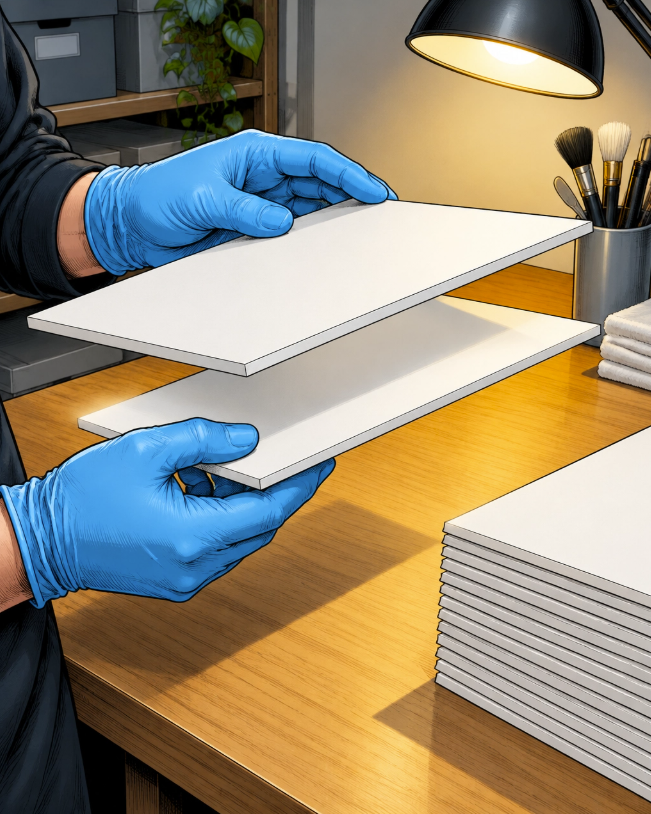
Anyone can press a comic. Handling vintage comic books is an art form.
The difference is not just what happens in the press. It is how the book is handled before, during, and after the work. A professional must inspect every comic under raking light, feel for indentations and creases, examine tears and flaps, and choose an appropriate pressing and cleaning course. All without adding damage.
Inspection itself is handling. That is where the discipline starts.
The number one rule is simple: do no harm. No action, and no movement, should leave the comic worse than it was when it arrived. That is the standard behind careful comic book pressing, comic book cleaning, and comic book preservation. It matters whether your goal is improving comic book grade, preparing a book for CGC pressing, or simply protecting a favorite raw comic.
Before the first move: inspect with a plan
Work on a clean, flat surface with good light. Raking light, a light source directed across the cover at a shallow angle, helps reveal shallow dents, ripples, and creases that can disappear under straight-on light. Look over the front and back covers, spine, edges, corners, tears, and any loose or folded flaps.
Feel only as much as you need to. A fingertip can help you locate an indentation, but it can also make one. Do not press on a fragile area to “see what happens.” The goal is to understand the book’s condition, not test its limits.
Five rules guide that work:
Do no harm.
Do not perform an action on a comic book that it does not need.
Handle each comic with care to avoid causing new damage during any movement.
Document your work with photos to ensure actions have a demonstrable effect and avoid repeating ineffective actions.
Treat every action as having inherent risk, acting strategically rather than on a whim.
Those rules apply to every comic. The handling process below puts them into practice.
1. Remove the comic from its bag and board on a flat surface
Before anything moves, make sure all tape is removed and cleared. A loose tape end can catch a cover or edge at exactly the wrong moment.
Set the bag and board on a flat surface. Slide the comic out while it remains supported. Do not hold the bag and board in one hand and pull the comic out with the other.
That shortcut creates a risk you do not need. A bag gripped in one hand can flex. The board can shift. The comic may bend as it catches or slides, and it is hardest to control right when the book is partly inside and partly outside the bag.
Keep the comic flat. Use both hands. Let the surface do some of the supporting.
2. Decide how resilient the comic is
This is the fork in the road.
A Golden Age comic with thin, dry, chipping paper is not handled like a robust Copper Age or modern key. Some older paper can crease from a light touch. A stronger book may tolerate more routine movement, but “stronger” does not mean indestructible.
Look closely at the paper color and surface. Notice whether the paper appears dry, brittle, or prone to chipping. If you already have the book safely supported, pay attention to how it rests and moves naturally. Do not flex it as a test. The smell may tell you something about storage history, but it is not a reason to bend or open the book further. And if the spine makes a cracking sound, stop. That is a warning, not a diagnostic test to repeat.
Era can inform your expectations. It cannot replace inspection. Books from the same period can have very different histories and conditions.
If the comic is weak, go slowly. Plan every turn, touch, and flip. If it is robust, it can be handled more regularly, but still with support and intention. Experienced handling begins by adjusting to the book in front of you.
3. Use magazine boards to support turns
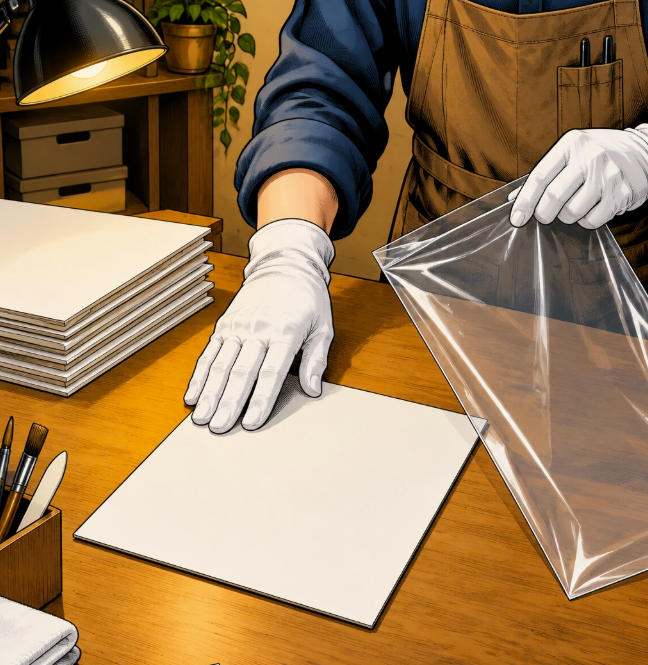
Magazine boards are your friend when you need to flip a book or reposition it.
Slide one magazine board under the comic and place another on top. Then turn the supported pair together. The boards help prevent normal deflection: the bending that happens when a thin comic is moved without support.
That bending matters. When unsupported pages flex, stress travels through the spine and staples. A board beneath and a board above turn a floppy flip into a supported turn.
Use the boards to help move and inspect the comic without asking the cover or pages to carry their own weight. Move slowly, especially with a brittle book. If anything catches, shifts, or resists, stop and reassess before continuing.
4. Remove pressing buffers one at a time
When heat pressing is finished, remove every sheet of SRP, silicone release paper, and every magazine board individually. Never remove the entire stack all at once.
During a press, buffering sheets can become lodged in the spine. Pulling away a whole stack may tug against that area and create spine stress or additional wear at the staples.
Remove one sheet. Check the spine. Then remove the next. Keep the comic supported and pay attention to how the materials release. Slow work takes less time than repairing damage caused by rushing.
5. Re-bag and board without bending the comic
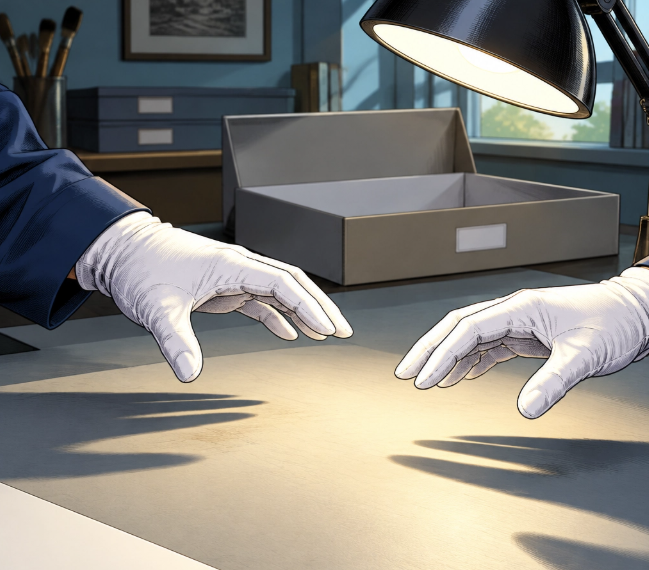
A new finger bend can appear after all the careful pressing work is done. Re-bagging is part of the job, not an afterthought.
Keep the comic flat. Slide a backing board underneath it, let the comic rest on the board, and then insert the supported book into the bag. The sequence matters: board under first, comic on top, bag last.
Do not pick up the bare comic and bend it to fit the bag. Do not force it through a tight opening. If the bag catches, stop and check the alignment. A little patience here protects the work already done.
Bonus: double-board your comics
A single backer board is still flimsy, especially when a comic is being stored or shipped. Two boards make a sturdier sandwich and help maintain a flatter surface.
That extra support is useful when a comic needs to travel and when it sits in a long box. Keep the boards aligned, and avoid packing the box so tightly that books must be forced in or pulled out at an angle.
What I have learned
The most damaging moment is not always the pressing. It can be the quick pull from a bag, the unsupported flip, or the last hurried step before storage.
That is why handling is a craft. You need to see the defect without creating another one. You need to feel the surface without pushing into it. And you need to know when the book’s condition calls for slower, more cautious movement.
A careful process is also a form of preservation. Comic book dry cleaning and pressing may be part of a book’s care, but no treatment can make careless handling acceptable. For more on the principles behind this approach, read The Five Golden Rules of Comic Book Pressing and Cleaning. The Library of Congress also offers useful comic book care and handling guidance.
Our complimentary value analysis includes an inspection before work begins. We keep books unrestored and recommend work only when it makes sense for the individual comic.
Any presser can press. Handling a comic like a professional is what separates hobby pressers from professionals. Every careful movement serves the first rule: do no harm.
And remember: if you love something, buy it, but always use caution.