
In the Age of Whatnot, Your Local Comic Shop Matters More Than Ever
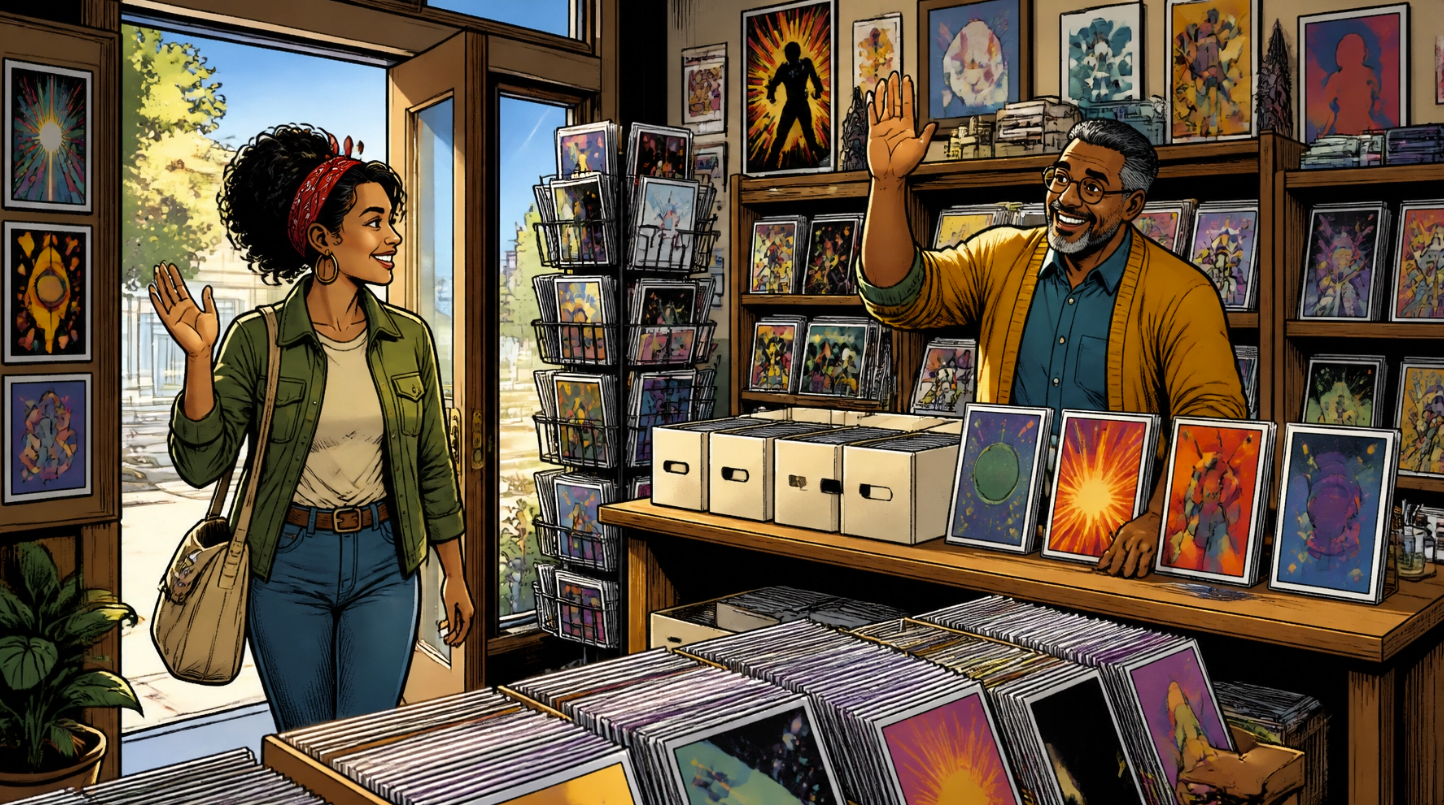
The countdown starts.
Ten seconds. Nine. Eight.
Someone raises the bid. The chat moves faster. A key comic book flashes across the screen, and suddenly you are competing with collectors across the country. The auction ends. The book is yours.
That energy is real. So is the convenience.
Whatnot-style apps and live-stream marketplaces have changed comic book collecting. They have helped collectors find books that may never appear in their local market. They have connected buyers with specialized sellers. They have made the hunt interactive, immediate, and entertaining.
That is a good thing.
But live-stream selling does not make your local comic shop less important. It makes the local comic shop more important.
Streams connect you to the market. Your LCS connects you to the hobby.
You need both.
The Invisible Job of Your Local Comic Shop
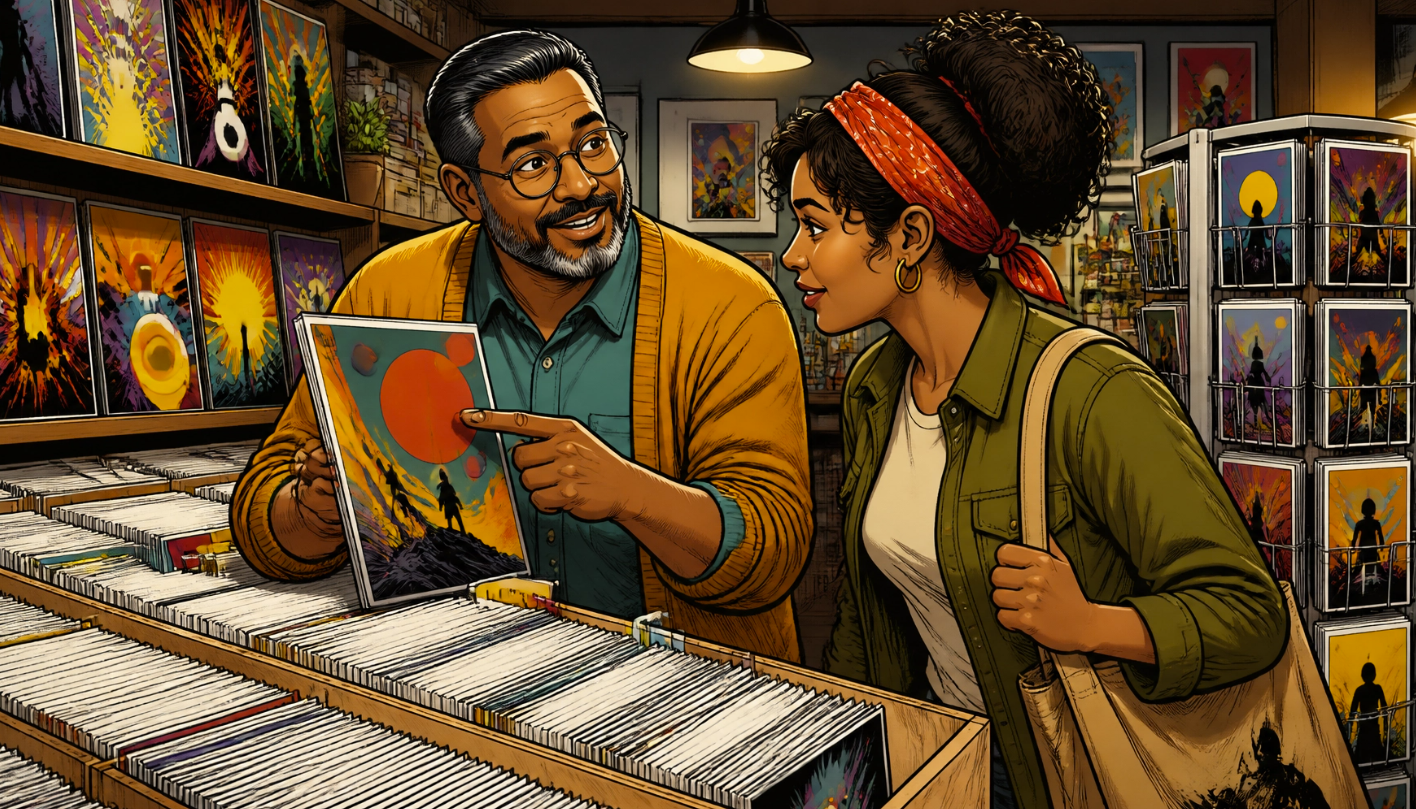
A local comic shop is more than a place to buy new releases.
It is a warehouse filled with inventory that took years to build. It is a museum of sequential art. It is a social club where collectors compare notes. It is an education center for readers who are still learning the difference between a first appearance, a key issue, and a book that simply became popular last week.
Most importantly, the LCS takes risks on your behalf.
Every Wednesday, the shop orders new comics before it knows which titles will sell. It stocks independent books that may not have a major movie attached to them. It buys collections filled with long boxes, then sorts, prices, bags, boards, and organizes them.
The inventory you discover online often began locally.
A shop bought the collection. A staff member identified the key comic books. Someone decided which books deserved wall space and which belonged in the dollar boxes. That work created the supply that online sellers later bring to a national audience.
The LCS also gives new readers a starting point.
A child may walk in looking for a superhero they saw on television. A new collector may ask what to read after discovering the X-Men. Someone may find a copy of Uncanny X-Men #244, the first appearance of Jubilee, before they know why the issue matters.
That discovery is difficult to manufacture with an algorithm.
What a Livestream Cannot Replace
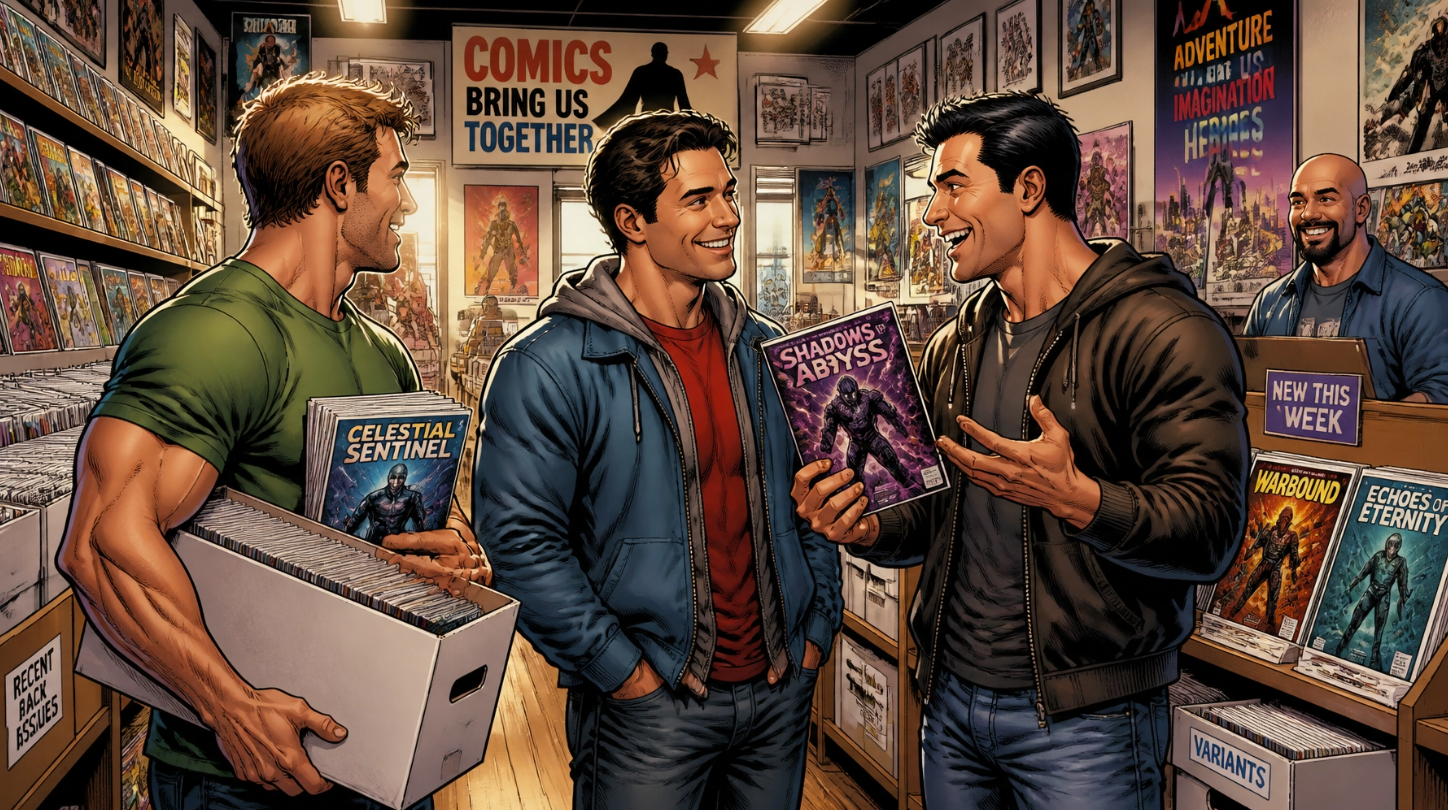
Online buying is fast. It is broad. It can be a powerful tool.
But a livestream cannot give you the same physical inspection as standing at a counter with a comic in your hands.
You can tilt a book toward the light. You can watch how the gloss reflects across the cover. You can feel a spine roll with your fingertips. You can check whether a crease breaks color or only disturbs the paper surface.
Those distinctions matter.
A livestream may show the front cover clearly, but the back cover may receive less attention. A camera angle may hide a spine split. Fast-moving auctions may not leave enough time to discuss interior page quality, rust migration, detached staples, or evidence of prior restoration.
The back cover matters.
The spine matters.
Surface texture matters.
Your local shop gives you time to slow down and inspect closely.
It also gives you access to the entire wall, not just the book currently being featured. You may walk in looking for one issue and leave with an unexpected run, a reader copy, or an under-the-radar X-Men key you did not know you needed.
You might find:
X-Men #129, featuring the first appearances of Kitty Pryde and Emma Frost.
Uncanny X-Men #168, an important early appearance of Madelyne Pryor.
Uncanny X-Men #221, the first appearance of Mister Sinister.
Uncanny X-Men #282, the first appearance of Bishop.
X-Factor #5, the first appearance of Apocalypse.
New Mutants #87, an early Cable key.
X-Men #171, Rogue’s first appearance with the X-Men.
These are not always the first books collectors mention. They are not all priced like blue-chip grails. That is precisely why browsing matters.
Possibility can make us see what we want to see online. In a shop, an experienced dealer can slow the process down.
You can ask, “Is this one pressable?”
You can ask, “Is that a color-breaking crease?”
You can ask, “Does this price make sense for the condition?”
A good dealer will not always tell you what you want to hear. That is useful.
The LCS Is a Human Filter
Comic book market value is not determined by excitement alone.
It is shaped by demand, scarcity, condition, timing, eye appeal, and the number of comparable sales. A livestream can create drama around a book. Your local shop can help you decide whether that drama should affect your wallet.
That human filter has value.
A dealer who has handled thousands of comics may notice a problem before you do. They may recognize a trimmed edge, a replacement staple, a water stain, or a cover that has been cleaned too aggressively. They may also know when a supposedly “hot” book is simply being pushed by short-term speculation.
The same dealer may remember that you collect X-Men first appearances. They may set aside an issue before it reaches the wall. They may tell you about a new series that fits your taste, even if it has no obvious investment angle.
That relationship is part of how to collect comics responsibly.
Apps can recommend what is popular. People can learn what you actually like.
The Economics of the Ecosystem
There is no moral failure in buying a comic online.
The problem appears when the local shop becomes an afterthought.
If collectors move every purchase to distant sellers, marketplaces, and livestream auctions, the LCS is often the first part of the ecosystem to struggle. Rent remains. Staff still needs to be paid. New releases still need to be ordered. Collections still need to be purchased and processed.
When a shop closes, the loss is larger than one retail location.
You lose a place for new readers to enter the hobby. You lose local events, signings, trade nights, and bulletin boards. You lose the person who can explain why Uncanny X-Men #221 matters, or why a lower-priced copy with honest wear may be a better purchase than an overgraded listing online.
The comic book community needs physical entry points.
The next generation may not begin with an auction. They may begin by seeing a wall of colorful covers. They may discover a back issue while looking for a current title. They may learn to read comics because someone in a shop took the time to make a recommendation.
Protecting the LCS protects that pipeline.
The Honest Flip Side
Your local comic shop will not win every transaction.
Online marketplaces can offer better selection. A livestream may have a lower price. An auction can reach a seller in another region who has exactly the issue you have been searching for. Platforms such as Whatnot’s comics marketplace have made that access easier than ever.
Sometimes eBay wins on speed. Sometimes Heritage Auctions wins on high-end selection. Sometimes the best book is simply not available within driving distance.
That is fine.
The point is not that your LCS should be the cheapest option every time. The point is that the LCS wins the hobby’s long game.
It gives you context. It gives you community. It gives you a place to learn before you spend serious money.
For comic book market value research, you can also compare GoCollect, CovrPrice, and then GPA, or GPAnalysis. Those tools can help you evaluate sales data. They cannot replace physically inspecting the comic or understanding the seller’s reputation.
Numbers are useful.
Condition is physical.
A Better System: Use Both Worlds
You do not have to choose between your LCS and live-stream selling.
Use each for what it does best.
Support your LCS with:
A regular pull list.
New-release purchases.
Preorders when possible.
Back-issue browsing.
Local events and signings.
Referrals to friends who are curious about comics.
Fair, respectful conversations about trades and collection purchases.
Use livestreams and online marketplaces for:
Hard-to-find issues.
Niche variants.
Regional discoveries.
Specific X-Men first appearances.
Comparing prices across a broad market.
Connecting with specialized sellers.
Finding books outside your local geography.
Many comic shops now run their own online shows. This creates the best of both worlds. You can buy from a business with a physical location, established inventory, and a reputation in the community while still enjoying the reach and energy of a livestream.
Before you buy anywhere, ask basic questions:
Is the condition clearly shown?
Have the front and back covers been inspected?
Are the seller’s return policies easy to understand?
Does the price match recent comparable sales?
Are you buying the book because you want it, or because the countdown made you anxious?
Slow down.
Where Pressing and Cleaning Fit
A local shop is also where many collectors first learn about comic book preservation.
You may bring home a book from a livestream, then notice a bend or spine tick under daylight. You may dig an older X-Men key out of a long box and discover surface dirt, a light crease, or a small amount of waviness.
That is where careful inspection comes first.
Pressing Candidate Diagram
Professional comic book pressing and dry cleaning may improve presentation when the defects are suitable. They do not replace missing paper. They do not erase color breaks. They do not guarantee a higher CGC grade.
At Pressing Issues, we use a complimentary value analysis before work begins. The goal is to help you understand the book’s condition, possible benefits, and financial limits before making a decision. When appropriate, our process is designed to preserve the book’s unrestored status under grading standards.
No promises. No wishful math.
Just a careful assessment of what can be fixed and what cannot.
What I Have Learned
The best collections are rarely built through one buying channel.
Some of my favorite discoveries have come from careful long-box searches. Others have come from online sellers who specialize in books I would never have found locally. The important part was not where the comic came from.
The important part was slowing down long enough to understand what I was buying.
A livestream can bring a book to your attention. An LCS can help you understand it. A professional preservation service can help you decide what to do with it next.
That is a system.
Key Takeaways
Live-stream comic selling is exciting, useful, and here to stay.
Your local comic shop provides inspection, curation, education, and community.
The LCS is often the entry point for new readers and future collectors.
Online marketplaces may win on selection or price, but local shops support the hobby’s long-term health.
Use both worlds: support your LCS while using livestreams for the wider hunt.
Inspect every purchase carefully before considering grading or pressing.
Comic book pressing and cleaning may improve suitable defects, but neither can overcome every physical limitation.
The hobby is bigger when the local shop is healthy.
Streams connect you to the market.
Your LCS connects you to the community.
You need both.