
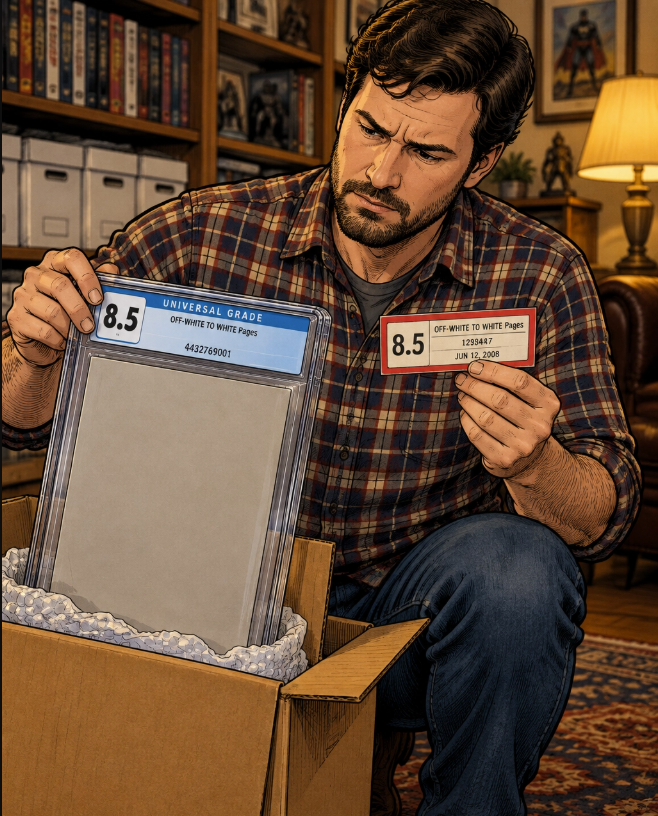
The old-label hunt, and why it worked
In the early 2000s, many collectors were looking for comics graded by the leading third-party grading service in its first few years. Pressing and cleaning weren’t yet mainstream services that collectors could easily access. So plenty of books were graded as they were: with bends, ripples, or surface dirt still present.
That created an opportunity. An older label could be a clue that a comic had never been pressed. Some collectors bought those slabs, had the books pressed and cleaned, then submitted them again. The strategy (crack, press, resubmit) could lead to a higher grade.
The opportunity was real. It still is.
But an old label is a clue, not a promise. It does not prove the book is undergraded, or even that it has never been pressed. And the standards applied to a book today have evolved since those early years. That makes the old-label hunt a different kind of decision.
What changed: the standards moved
Pressing still works on defects it can safely improve. What changed is the bar the book must clear to earn a higher grade. Today’s grading is more demanding and consistent than it was in the early 2000s. A comic that looks like an obvious upgrade candidate may come back at the same grade, or lower.
There are two reasons to slow down.
First, many of the easiest candidates have already been found. For more than two decades, collectors and dealers have looked for older slabs with visible, pressable defects. That does not mean every good candidate is gone. It does mean you shouldn’t assume an old label signals easy upside.
Second, the book is being judged against today’s standard, not its old one. A press may improve the cover’s eye appeal without changing the grade. Imagine a soiled cover that looks dull under room light. Under raking light, you can see a clearer surface, and careful comic book cleaning may lift some removable dirt. The improvement can be obvious to your eye. It still may not be enough to earn a new grade.
Better appearance is a real result. A higher grade is possible, not promised.
This is why comic book pressing and cleaning should be considered part of responsible comic book preservation, not just a bet on a grade bump. If you’re evaluating an under-the-radar X-Men key, for example, the goal is to understand the book’s condition and options before you put more money at risk.
For a useful primer on preservation beyond grading, see Why Raw Comics Need Pressing and Cleaning, Even If You Never Grade Them.
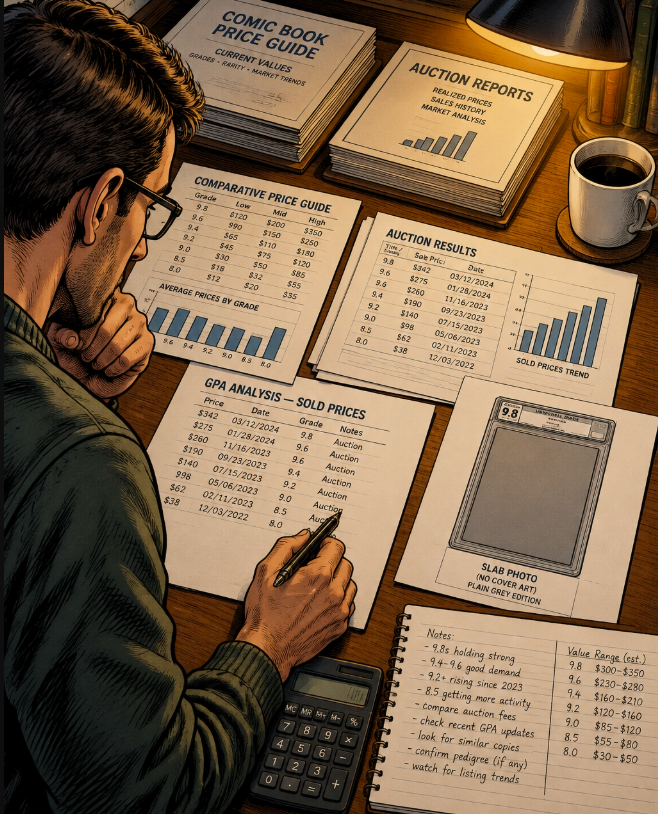
The math of crack, press, resubmit
Do the math before you buy. Include every cost, not just the presser’s fee:
Purchase price: What are you paying for the slab?
Cracking risk: The book can be damaged during removal. Holders aren’t always kind to the comics inside.
Pressing and cleaning fees: Get an estimate based on the actual book.
New grading fees: Check the right submission tier and any applicable charges.
Shipping and insurance: Count both directions.
Time: The book may be away from you for a while.
Possible downside: The grade could stay the same or come back lower.
Then compare the total against the realistic value change at the grade you hope to reach. An under-the-radar key might be worth pursuing if the numbers work. But a projected price at a higher grade is not the same as a likely outcome.
A practical rule: give pressing serious consideration around the $200 level and up. For keys over $500, get professional eyes on the book before you take action. Those aren’t guarantees of profit or fixed cutoffs. They’re reminders that the more money at stake, the more important a careful assessment becomes.
The math has to clear the bar, not just the eye.
A decision table: what might be pressable?
A presser can’t promise what a grader will decide. They can help you separate defects that may improve from damage that will remain. They can also tell you what they can’t assess clearly through a holder.
Why your presser’s opinion matters
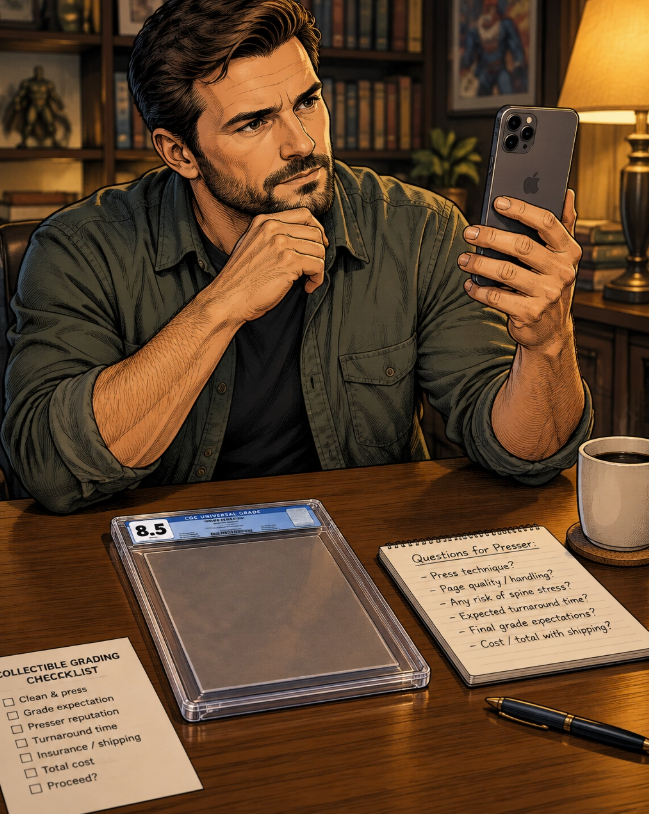
If crack-press-resubmit is your plan, talk to your presser before you buy the slab. Already own it? Share clear photos. If the book is valuable or the photos don’t show enough, ask whether the presser can examine it while it’s still encapsulated.
A useful assessment should cover four things:
What’s visible? Is there soiling, a bend, a ripple, or another defect that may be addressed?
What might improve? Which changes are realistic through comic book pressing or cleaning?
What won’t change? Color breaks, missing paper, tears, or other physical damage remain. Holder wear is a separate issue.
Does the math work? How do the likely benefits compare with the purchase, handling, grading, shipping, and time costs?
A complimentary value analysis can make that conversation concrete: a written, honest view of what may improve before you spend on cracking and resubmission. For guidance on the process, read The Presser Advantage: How to Collect Smarter.
If you decide to submit multiple books, organize them thoughtfully. Batch by era and use the appropriate submission tier. If a prescreen makes sense for your goal (for example, a 9.8 prescreen on modern books) understand its limits and costs. Grade calls can be subjective, especially near neighboring grades. A rejected book is not proof that a resubmission will produce a higher result.
Pre-buy checklist
Before committing to a crack-press-resubmit plan:
Photograph the front, back, and label. Keep the images with your notes.
Record the grade and page-quality description shown on the label.
Inspect the comic through the holder under bright, angled light. Look for surface texture, bends, ripples, soiling, and color breaks.
Ask your presser for an opinion before buying, or before cracking a slab you already own.
Get a written estimate for pressing and cleaning.
Add the purchase price, handling risk, grading fees, shipping, insurance, and time.
Compare that total with a realistic value change. Decide with a number, not a hope.
The same discipline applies throughout comic book preservation. Do no harm. Don’t perform an action the book doesn’t need. Handle it carefully. Photograph your work so you can judge the effect and avoid repeating actions that didn’t help. Treat every action as a risk, and choose it strategically. Those principles are explained further in The Five Golden Rules of Comic Book Pressing and Cleaning.
What I have learned
The old-label hunt taught collectors to see possibility. Today, it should teach you to verify that possibility before spending.
Possibility can make us see what we want to see. A label from an earlier era, a dirty-looking cover, or a visible bend can all feel like evidence of easy upside. They aren’t enough on their own. Slow down. Inspect closely. Get a presser’s honest assessment while the book is still safe in its holder.
If you love something, buy it, but always use caution. The best upgrade path now runs through a conversation, not a crack.
Key takeaways
An old label can point to a candidate. It cannot guarantee an undergrade.
Pressing may improve a book’s eye appeal without changing its grade.
Include every cost and the risk of a same-grade or lower-grade result.
Ask your presser for an assessment before you buy, crack, or submit.
A higher grade is possible, not promised.