
The Hidden Eye Appeal Comic Book Market
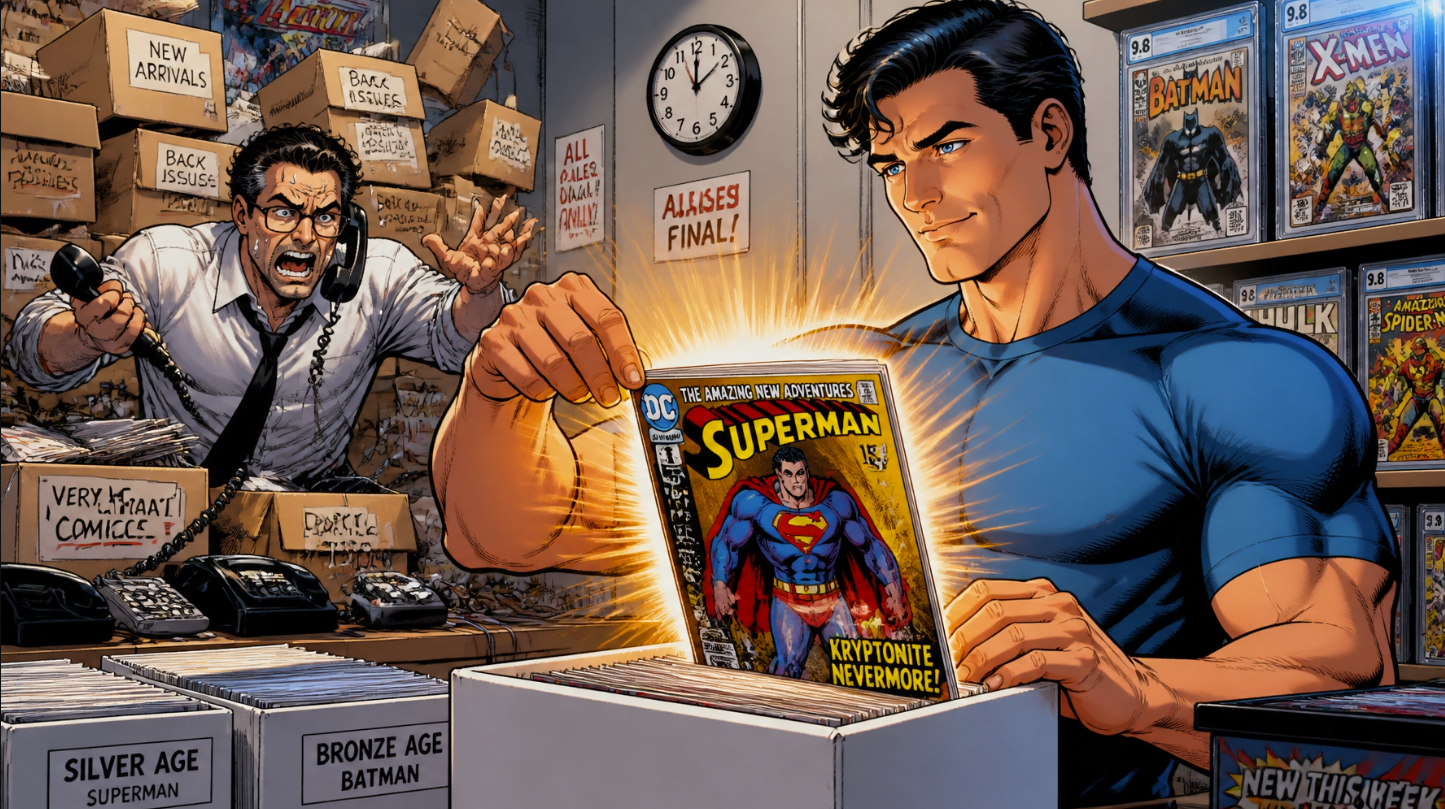
You are standing in front of a white long box. It is one of fifty in a shop that smells of old paper and frantic energy. The dealer is on the phone, arguing about a shipment, while three customers wait at the counter to sell their childhood collections. He doesn't have time to look at the books you’re holding. He certainly doesn't have time to press them.
This is the "Dealer's Dilemma," and it is your greatest opportunity.
In the modern comic market, there is a massive delta between what a book is and what it can be. This gap represents tens of millions of dollars in untapped national potential. While the headlines focus on record-breaking Heritage Auctions sales, the real money is being made in the quiet corners of back-issue bins.
To win, you must stop looking for "deals" and start looking for "alpha." You must learn to see the hidden eye appeal that others: even professionals: are too busy to notice.
The Dealer’s Dilemma: Volume Over Precision

Most comic shop owners are drowning in paper. They deal in volume. When a collection comes in, they have hours, not days, to price it and put it on the floor. They look at the front cover, check Key Collector Comics for importance, and slap a price tag on the bag.
They do not have the luxury of a "pressing-first" mindset. A dealer cannot afford to spend $20 and three weeks of turnaround time on every 8.0 to see if it becomes a 9.4. They need to move the unit. This creates a market inefficiency.
When a dealer prices a raw book, they are pricing its current state. They are not pricing its potential. If you can spot a book that is held back only by non-color-breaking defects: indentations, light bends, or minor waviness: you are looking at a discounted asset.
The Grade Gap: The Logic of Potential
The "Grade Gap" is the financial difference between two technical grades that look identical to the untrained eye.
Take a modern key. A raw copy might sell for $100 on eBay. In a CGC 9.2, it might be $150. But in a CGC 9.6, it jumps to $400. In a 9.8? It could be $1,200.
The physical difference between a 9.2 and a 9.6 is often just a few pressable ripples. The dealer sees the ripples and prices it as a 9.2. You see the ripples and see the path to a 9.6.
This is not "hope." This is math.
The Formula for Alpha
To move from emotional buying to disciplined investing, use this system:
Expected Final Value - (Raw Purchase Price + Pressing Cost + Grading Fees) = Your Alpha.
If the Alpha isn't at least 2x your investment, walk away. Possibility can make us see what we want to see. You must be brutally honest.
The Raw Alpha: The National Market for Unslabs
While the CGC Census tells us how many 9.8s exist, it tells us nothing about the millions of high-grade raw books sitting in collections. There is a massive national market for "High Grade Raw" books.
Collectors are increasingly wary of "slab inflation." They want books they can touch, read, and: most importantly: submit themselves. By sourcing raw books with high eye appeal and performing professional comic pressing and cleaning, you are preparing a product for a market that is hungry for quality.
Sensory Inspection: How to See the Gap
To find alpha, you must change how you interact with a comic book. You cannot inspect a book while it is flat on a table.
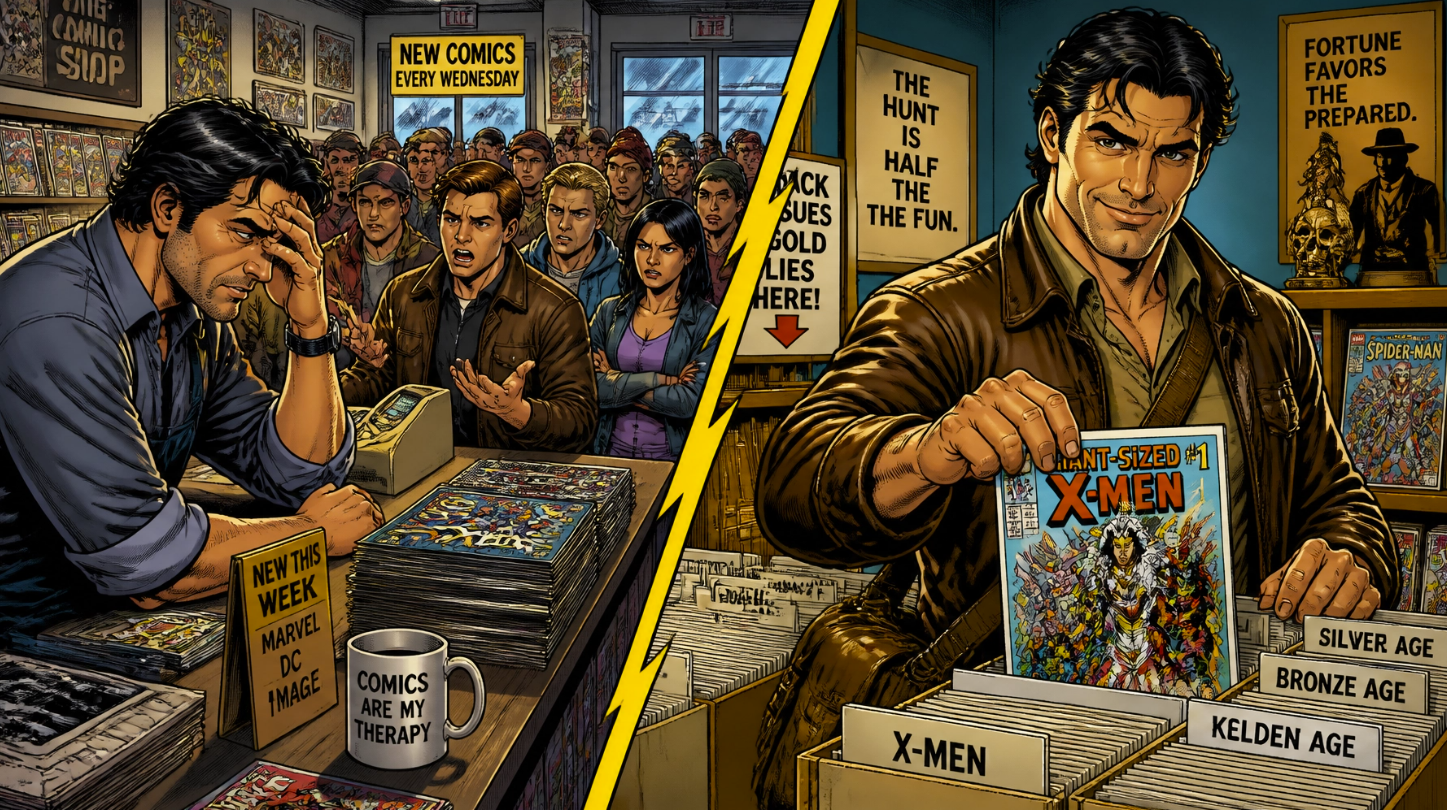
Find the Light: Hold the book at a 45-degree angle to a strong light source. We call this "raking the light."
Inspect the Texture: You are looking for breaks in the gloss. A bend that does not break the ink is a "pressable" defect. A crease that shows white paper is "color-breaking" and permanent.
The Back Cover Matters: Dealers rarely look at the back. Dirt, "foxing," or light staining can often be removed through our specialized cleaning processes, turning a "dirty" 7.0 into a "clean" 9.0.
Slow Down: If you feel rushed by a busy shop environment, you will miss defects. Take the book to a quiet corner.
What I Have Learned: The Protector’s Perspective
In my years of restoring and pressing comics, I have learned that the most expensive mistake you can make is "wishing" a book into a higher grade.
I once saw a collector spend $2,000 on a raw Amazing Spider-Man #129. He was convinced it was a 9.4. He didn't see the tiny, color-breaking "staple pull" on the centerfold. That one non-pressable defect capped the book at a 6.0. He lost $1,200 because he didn't slow down.
My job is to be your protector against that loss. We provide a Complimentary Value Analysis for every book sent to us. If a book cannot be improved, we tell you. We don't want your money; we want your collection to grow in value.
The Problem/Solution Framework
The Problem: You find a beautiful book with "waviness" or "stacking bends" that ruin the eye appeal, making it look lower-grade than it is.
The Solution: Professional pressing. We use controlled heat and pressure to return the paper fibers to their original flat state without altering the "unrestored" status of the book.
Key Takeaways for the Treasure Hunter
Dealers prioritize volume: They leave "meat on the bone" for those with the time to inspect.
Target the 7.5 to 9.2 range: This is where the most "pressable" value is hidden.
The 3x Rule: Only submit for grading if the expected value is 3x the cost of the service.
Eye appeal is the tie-breaker: On sites like GoCollect, books with superior eye appeal consistently outsell their technical peers.
Be a Scientist, Not a Fan: Use light and texture to find the truth of the book's condition.
The market for hidden eye appeal is vast. While others chase the latest ComicBook.com rumors, you should be chasing the physical potential of the paper in your hands.
If you’ve found a "gem" but aren't sure if it’s worth the investment, let us help. From CGC submission assistance to expert cleaning, we ensure you aren't just buying comics: you're building a portfolio.
Slow down. Inspect closely. Let's find the alpha.