
Welcome to the Party: How Comic Collectors Should React as Sports Card Collectors Enter the Hobby
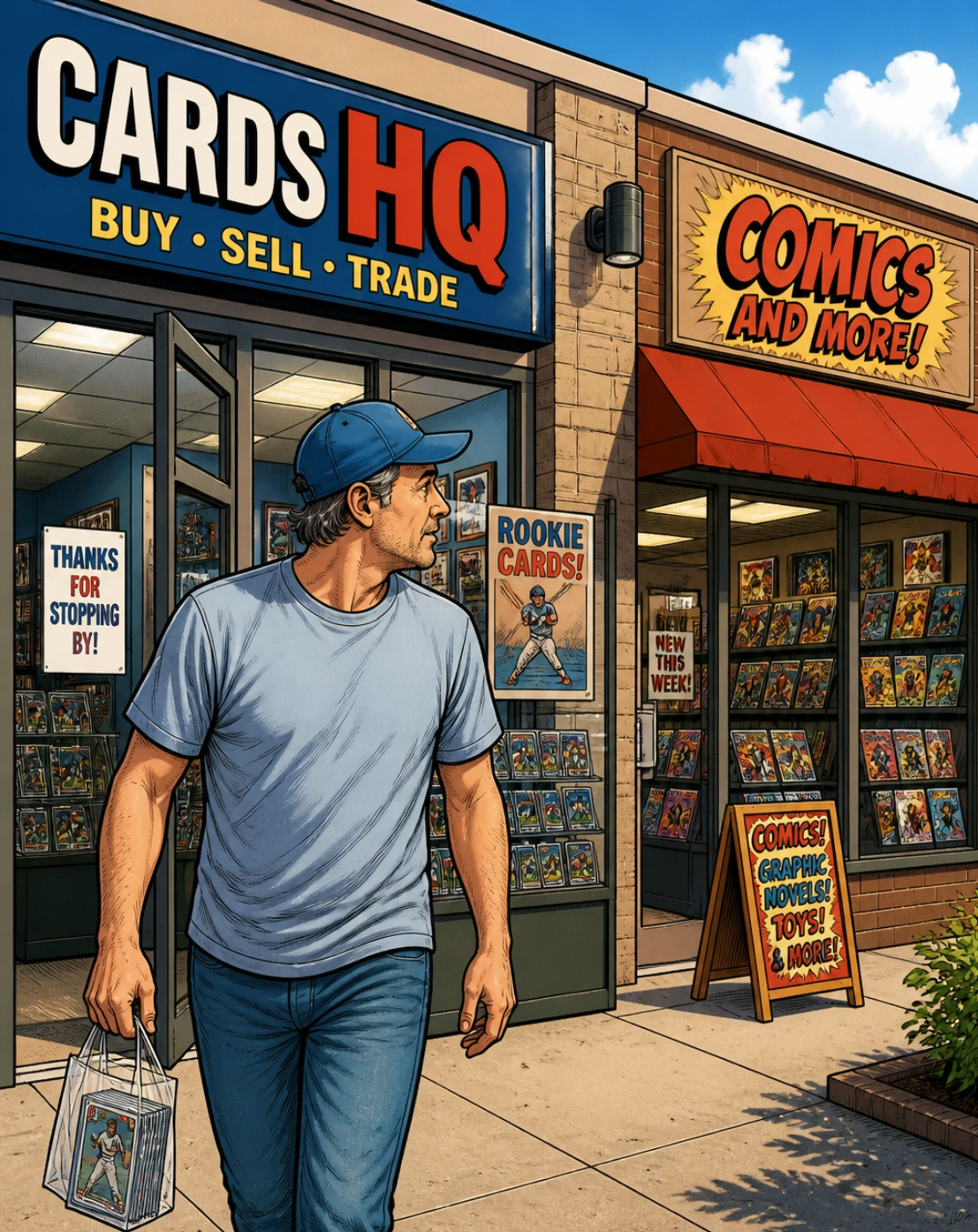
It’s happening - right now sports card collectors and becoming curious about the comic book collecting hobby and market.
The crossover is here.
You will see sports card collectors walking into comic shops, browsing comic sections at card shows, and comparing graded comic books on the same auction platforms they use for cards. PSA’s expansion into comic book and magazine grading has made that crossover more visible, but the overlap was already there.
This is not an invasion.
It is a growth moment.
Every hobby needs new collectors. Comics have always absorbed new communities: readers from different generations, movie fans, artists, investors, convention newcomers, and people who simply found one character at the right moment. Sports card collectors are the latest group crossing the aisle.
Your job is not to protect comic collecting from them. Your job is to help the hobby grow without losing its judgment.
Why sports card collectors are coming to comics
The most obvious reason is the graded collectibles wave. Sports card collectors already understand slabs, condition, population reports, auction results, and the difference between an asking price and a completed sale.
Now the same collectors are seeing comics listed beside cards on major marketplaces. They are encountering graded comic books on eBay, Heritage Auctions, and other auction platforms they already trust.
PSA’s entry into comics adds another bridge. The company now offers comic and magazine grading, pressing, and related services. Its comic program uses a grading scale that may feel familiar to card collectors, even though the physical object is very different.
That shared language makes comics easier to approach.
The appeal is also simple. Comics are an undervalued storytelling medium with decades of character history, cultural influence, and market data behind them. Some new collectors are arriving because they love Spider-Man, Batman, or the X-Men. Some are looking for investment opportunities. Most are here for a mix of reasons.
That is not different from the rest of us.
What new collectors bring to the table
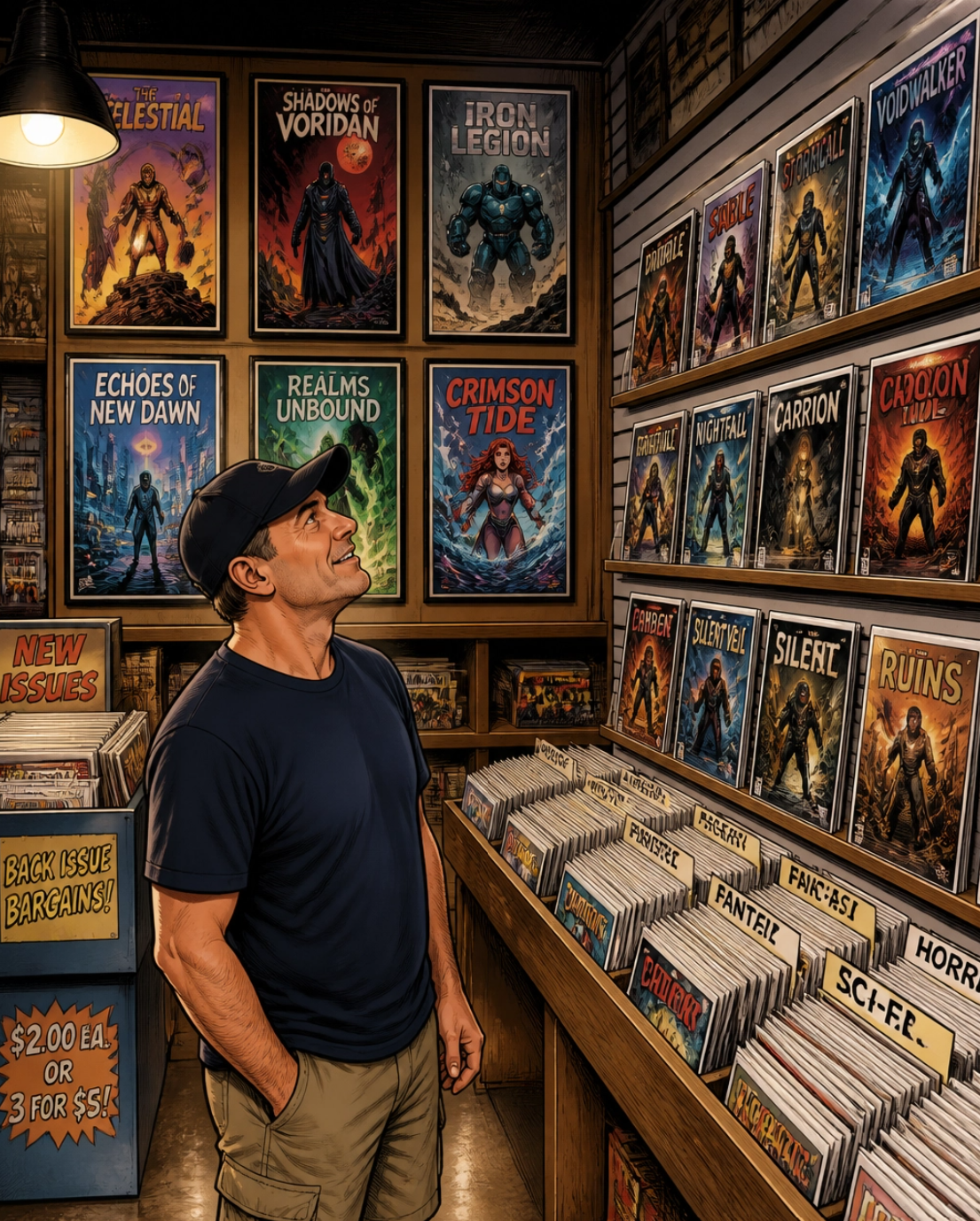
There’s a lot to learn for new comic collectors, especially if they are coming from the sports car world!
Sports card collectors can add real strength to the comic book community.
1. Serious condition discipline
Many card collectors are trained to inspect corners, edges, surfaces, centering, gloss, and print defects under bright light. That level of attention transfers well to comics, even when the defects themselves behave differently.
They also tend to protect their purchases immediately. Better bags, boards, storage systems, insurance records, and inventory habits benefit everyone.
2. Fluency in market data
Card collectors are comfortable tracking auction results and comparing sales across platforms. They understand that a population report is useful, but not the same as true rarity. They know that one spectacular sale does not establish a stable market.
That discipline is valuable in comic book collecting.
Useful tracking tools include GoCollect, CovrPrice, and GPA, also known as GPAnalysis. Use them to study actual transactions, grade spreads, and long-term patterns. Do not rely only on an optimistic listing price.
3. New money and visibility
New demand can raise the profile of the entire hobby. It can support comic shops, dealers, conventions, pressing services, grading companies, publishers, and creators.
A larger market can also make it easier to sell a collection when the time comes.
4. Fresh energy
New collectors ask questions. They create conversations. They bring different ways of displaying, organizing, and discussing collectibles.
That energy is good.
A hobby becomes smaller when experienced collectors stop remembering what it felt like to be new.
What sports card collectors may not understand yet
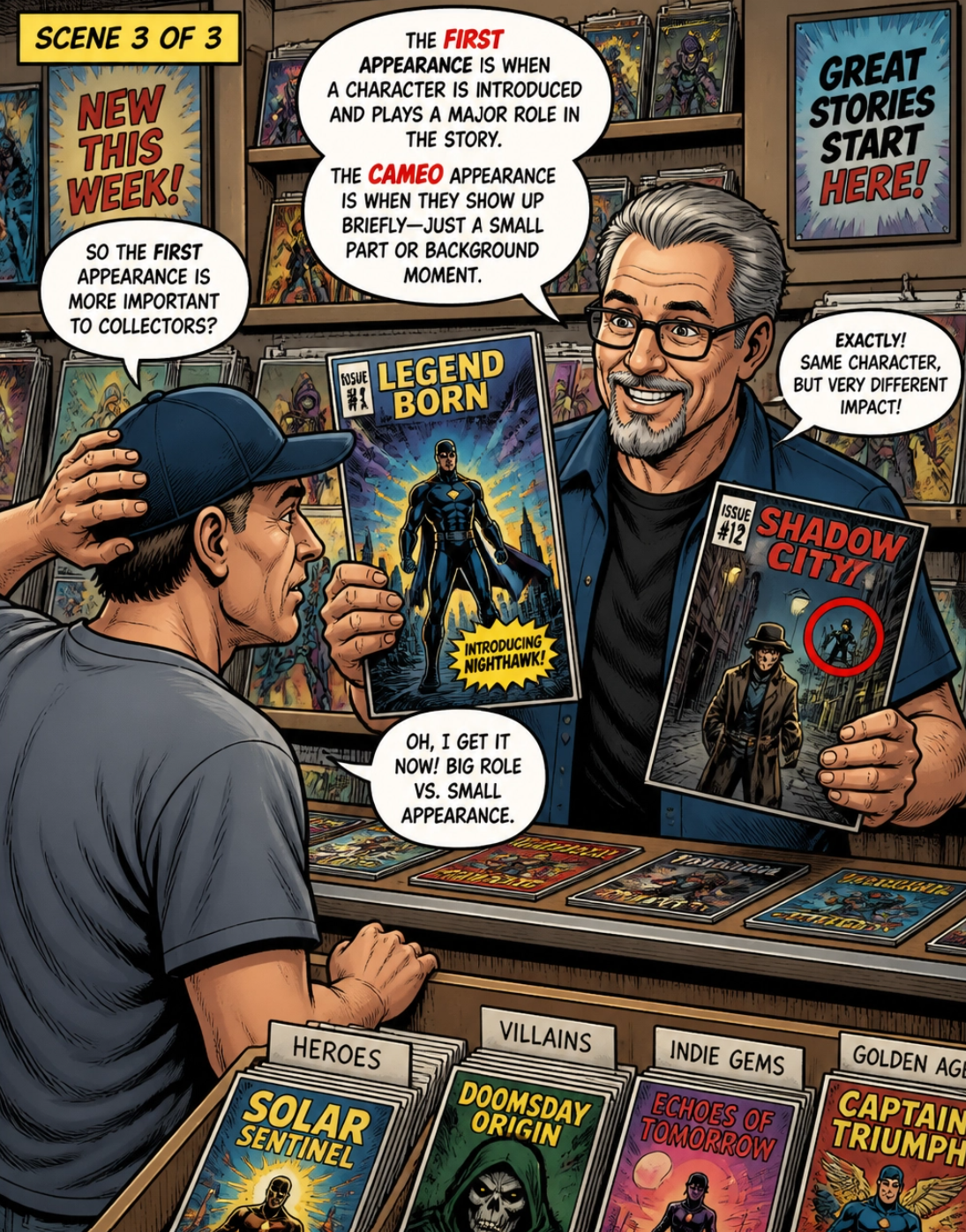
Sports card collectors, get ready! There’s lots of comic book information to take in.
This is where patience matters.
Do not sneer. Explain.
Comics are paper
A comic is not a card with more pages. It is a folded, stapled paper object with a cover, interior pages, spine, staples, inks, coatings, and often fragile newsprint.
A spine tick can break color. A bend may not. A crease can be a surface impression or a permanent paper fracture. A glossy modern cover may react very differently from a Silver Age matte cover.
Slow down. Hold the book under angled light. Move the light across the surface. Watch how the texture changes. Use your fingers carefully to identify a raised ridge, a soft bend, or a true color-breaking crease.
Some defects can be improved through professional comic book pressing. Some cannot.
First appearances are not exactly rookie cards
A first appearance comic may include a cameo, a partial appearance, a first full appearance, or a cover appearance. Those distinctions matter.
So does the story.
A character’s importance is not determined only by the issue number or the age of the book. A quiet first appearance that becomes central to a major storyline may outperform a heavily promoted modern variant with a much larger supply.
For newcomers, this is a good place to begin researching first appearance comics. Key Collector Comics can help identify notable issues, while ComicBook.com is useful for following character, adaptation, and publishing news.
The key is context.
An appearance has meaning because the character, story, creator, or cultural moment matters.
Modern scarcity is often overstated
Modern comics can have enormous print runs and dozens of variants. A book may look scarce because only a small number have been graded, while thousands of raw copies remain in boxes, collections, and dealer inventory.
A low census number is not automatically proof of rarity.
Read more about that distinction in Does the CGC Census Really Prove a Comic Is Rare?.
Comic grades require translation
In the CGC system most comic collectors know, 9.8 is the top numerical grade commonly discussed. There is no CGC 10.
PSA’s comic grading program uses its own 10-point structure, so do not assume that a PSA comic grade translates perfectly to a sports card grade or automatically carries the same market meaning.
Also remember this: professional pressing and appropriate dry cleaning are not the same as restoration under CGC’s standards. Non-additive pressing and dry cleaning can be standard preparation for grading. Water cleaning, solvent cleaning, trimming, color touch, and other alterations can produce a restored designation.
No honest presser should promise a grade increase.
The book decides.
A practical pressing-candidate diagram
Use this simple system before spending money on grading or pressing:
This is the point where cautious patience protects your money.
Pressing is a process, not a lottery ticket.
What comic collectors should not do
Do not gatekeep
Do not lecture someone about “true collecting.” If they are asking questions, they are already giving the hobby a chance.
Do not panic-buy or panic-sell
New demand may move prices. That does not mean every book is about to double. It also does not mean you must sell immediately.
Watch completed sales. Compare grades. Study the spread between raw and slabbed copies.
Do not assume every card collector is a flipper
Some are investors. Some are readers. Some are both. Even a flipper is still a buyer who may pay fair market value for your books.
You do not have to collect the same way to participate in the same hobby.
Do not abandon your standards
If you collect character history, keep collecting character history. If you care about creator runs, keep building creator runs. If you prefer raw books, you do not need to slab everything because the market is getting louder.
The slab is a tool.
It is not the hobby.
Do not resent price movement
If a book you already own becomes more valuable, that is generally good news. Rising prices can make the hobby harder for new collectors, but new collectors can also create more liquidity and attention for the books you love.
The cautionary note
More newcomers bring more speculation.
You may see faster hype cycles around casting announcements, streaming projects, variant covers, and newly identified first appearances. You may see modern books marketed as scarce when the total supply is much larger than the graded population suggests.
Use the signals you already know:
Print runs.
Variant counts.
Completed sales versus asking prices.
Census data.
Grade distribution.
Long-term character and story significance.
The CGC Census can help you understand graded populations. It cannot tell you how many raw copies exist or whether demand will last.
If you love something, buy it, but always use caution.
The rules did not change because new players arrived.
The community playbook
Here is how to respond when a sports card collector asks for help:
Welcome them. Ask what brought them to comics.
Explain the physical differences. Show them spine ticks, color breaks, bends, and paper texture.
Clarify first appearances. Explain cameo versus first full appearance without turning the conversation into a test.
Recommend quiet keys. Under-the-radar X-Men-related books such as Uncanny X-Men #210, #221, #244, and #282 can open a useful conversation about character significance beyond the most expensive blue-chip issues.
Point them toward research. Share GoCollect, CovrPrice, GPA/GPAnalysis, Key Collector Comics, and completed listings on eBay.
Invite them to the local comic shop. A good LCS can teach someone more in ten minutes with a stack of books than an hour of online arguments.
Answer the pressing question honestly. Explain what pressing and comic book cleaning can improve, what they cannot fix, and why no grade increase is guaranteed.
Goodwill compounds.
The collector you help today may become the person supporting your favorite shop, buying your duplicate books, or introducing someone else to the hobby next year.
What I have learned
What I have learned from handling collections is that collectors rarely regret learning more before they buy.
They regret rushing.
I have seen people focus so intensely on a number on a slab that they miss the book itself. They overlook a small color break because the listing says “high-grade candidate.” They pay for pressing without first asking whether the defect is pressable. They buy a supposed first appearance without checking whether it is a cameo, a reprint, or a manufactured marketing event.
That happens in every collecting category.
The solution is a repeatable process:
Inspect closely. Verify the issue. Check real sales. Calculate the total cost. Then decide.
That formula works whether you are buying a raw X-Men key at a comic shop or comparing a graded book at an auction.
Where preservation fits
The service side of the hobby can serve both communities.
At Pressing Issues, professional comic book pressing and dry cleaning are used to improve presentation and preserve the book without adding material or changing it into a restored comic. A complimentary value analysis can help you decide whether a book is worth preparing for grading. CGC submission assistance can help you navigate the next step.
The goal is not to promise a result.
The goal is to give you a clearer decision.
Learn more about how to choose a comic book pressing service and why process transparency matters. Preservation begins with an honest assessment.
Final takeaways
Comics were never a closed club.
Every generation of collectors was new once. Gen X found comics at newsstands. Millennials came through the 1990s boom and the direct market. Gen Z discovered characters through digital platforms, films, games, and social media.
Now sports card collectors are crossing the aisle.
Make room. Share what you know. Keep your standards. Watch the math. Protect the books.
And keep enjoying the stories.
If you love something, buy it, but always use caution.